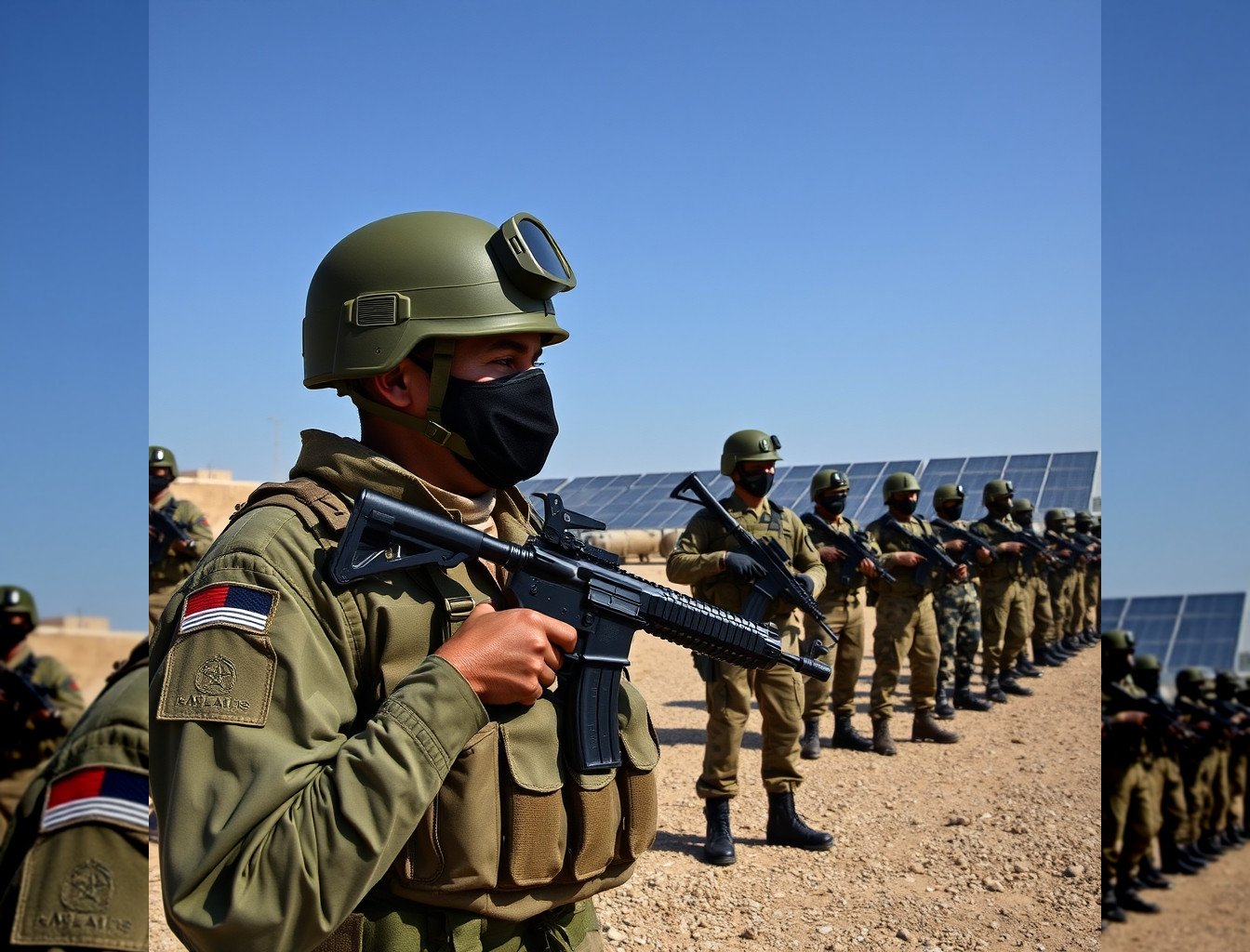
Algeria’s policy shifts this week centered on defense procurement, health-sector rollouts, and slow-motion industrial diversification. The military’s acquisition of Chinese J-10C fighter jets and KJ-500 airborne early warning aircraft underscores an accelerated modernization program. Concurrently, the launch of the national Covid-19 vaccination campaign under the COVAX framework indicates a return to public-health priorities after pandemic delays. In the private sector, the inauguration of Algeria’s first domestic tire manufacturer and a push for solar projects signal incremental industrial expansion, though still below potential. Meanwhile, high-level diplomatic friction with Tunisia over gas pricing and environmental violations by state energy firm Sonatrach adds another layer of uncertainty for cross-border ventures.
Defense: New hardware, regional role
Analysts link the acquisitions to Algeria’s expanding security footprint in the Sahel, where instability in Niger and Mali threatens regional trade corridors. Flight data from the Algerian Air Force shows increased operational sorties into Malian airspace in August and September, coordinated with French forces under Operation Barkhane until August 2022. The purchases also coincide with a 6.5% increase in Algeria’s defense imports in 2023, placing it among the top ten importers globally, according to the Stockholm International Peace Research Institute (SIPRI).
Health: Vaccination drive and sector unrest
However, medical student protests in Algiers and Oran on September 23 highlighted systemic shortages. Protesters cited the lack of 1,800 ventilators, 500 ICU beds, and delays in salary payments for junior doctors. The Ministry of Health acknowledged a 30% budget shortfall in hospital maintenance allocations for 2024 and deferred 80% of procurement tenders due to liquidity constraints.
Private industry: One tire plant, solar hopes
In solar, Algeria’s Renewable Energy Development and Promotion Agency (EDPRS) awarded a 100 MW solar tender to a consortium led by state-owned Sonelgaz and UAE-based Masdar in September. The project in Ouargla, tendered at $1.1 billion, includes a 200 MWh battery storage system to mitigate grid instability. The tender was undersubscribed by 40%, attributed to financing gaps and regulatory delays.
Public infrastructure: Housing, waste, and legitimacy gap
Separately, a public housing project in Bordj Bou Arréridj, falsely linked on social media to Burkina Faso’s interim military leader Ibrahim Traoré, was clarified by local authorities as part of a 2021 national program for 500,000 affordable units. The program has completed 180,000 units since inception, with 85,000 delivered in 2023. Completion rates lag by 20% due to land title disputes affecting 12,000 plots.
Tourism: Underexploited assets
The Ministry of Tourism announced a 25% increase in marketing budgets for 2024, targeting Gulf and European markets. A pilot e-visa system launched in September processed 2,400 applications in the first month, with a target of 50,000 by Q2 2024.
Diplomacy and energy: Gas, fines, and ecological impact
In a separate development, a UK commercial court ordered Sonatrach to pay $290 million to UK-based energy firm Petroceltic International over a 2008 gas field dispute. The ruling requires payment within 60 days, adding to Sonatrach’s $1.8 billion in outstanding international arbitration cases.
Sonatrach also faces environmental scrutiny after an audit by the Ministry of Environment revealed encroachment on 22 protected areas for oil and gas exploration since 2020. Protected zones affected include Tassili n’Ajjer and El Kala National Park, with Sonatrach facing fines totaling $87 million under the 2003 Environmental Law.
Culture and society: Rai music, literature, and politics
In literature, Algerian-French writer Boualem Sansal, known as the “Voltaire of the Arabs,” was awarded the 2023 Prix de la Paix des Libraires Allemands while serving a suspended prison sentence in Algeria for “undermining national unity.” Sansal, sentenced in 2021 for remarks criticizing Algerian state narratives, remains barred from public appearances.
Election turnout in Algeria fell to 20.79% in the September 23 legislative elections, the lowest since 1991. Women accounted for 486 of 2,185 candidates but secured 36 of 407 seats in the new People’s National Assembly. A pilot program allowing 1,200 women to vote remotely from abroad recorded a 12% participation rate, down from 18% in 2017.
Balance of the week
Key takeaway for entrepreneurs
Algeria’s defense-driven economy offers opportunities in logistics, surveillance technology, and maintenance for military assets. The health sector remains constrained by budget shortfalls, creating gaps for private suppliers of medical equipment. Industrial incentives for import substitution favor local manufacturing, particularly in automotive components and energy infrastructure. Tourism operators should monitor visa liberalization pilots and marketing budget increases for 2024. Energy ventures face regulatory and legal risks, requiring due diligence on payment terms and environmental compliance.
Sources
- Nature
- AFP Fact Check
- GIS Reports
- Daraj
- The Arab Weekly
- The Yale Review of International Studies
💡 Starting a business in Algeria? GlobalStart guides you step by step: procedures, real costs, company forms (SARL, EURL, SPA) and CNRC registration.