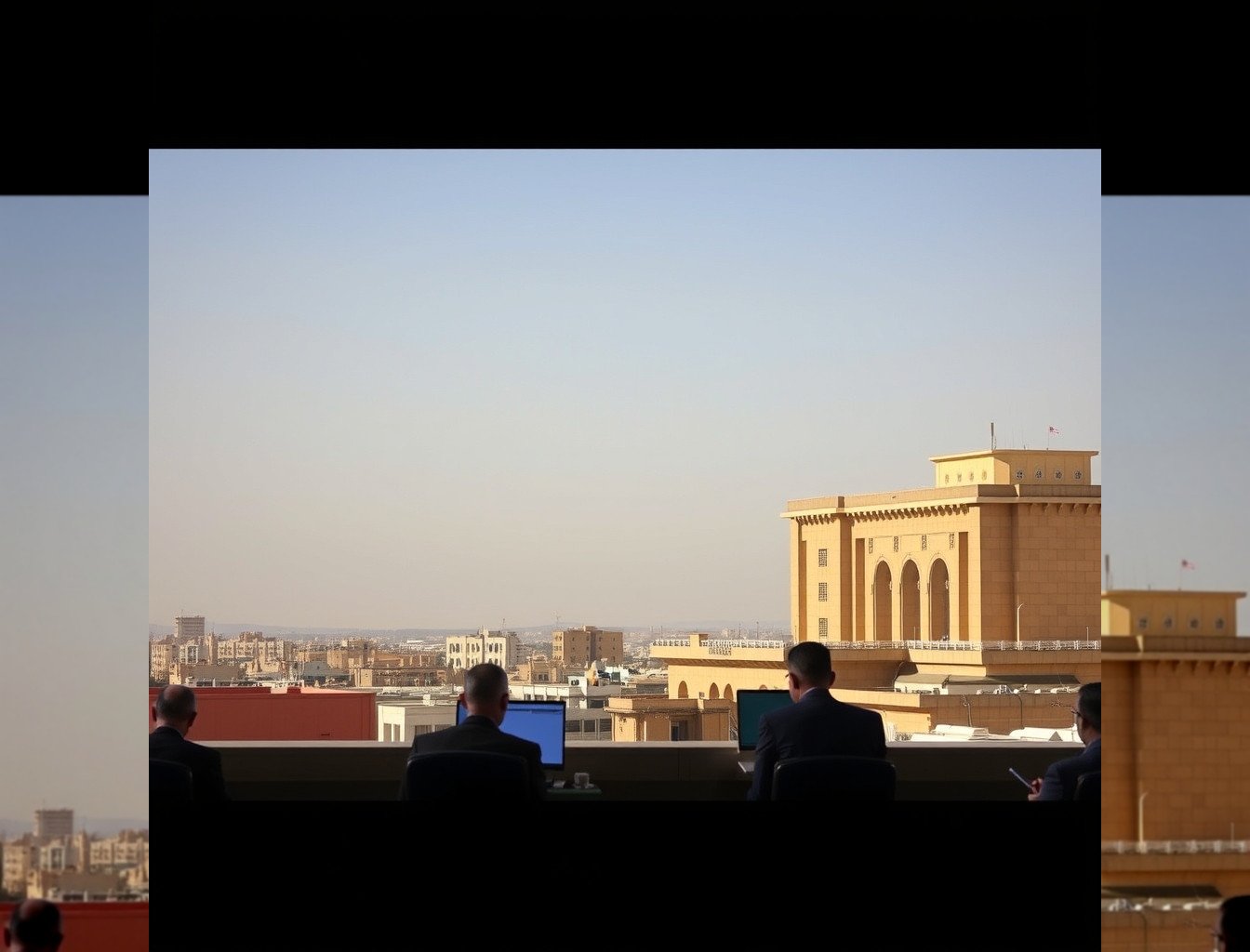
A Week of Security Moves and Economic Realities
The two most critical trends were security-led regional integration and economic hedging. Algeria’s military support for Niger and its push for a Sahel security bloc signal a long-term strategy to counter Western influence. Simultaneously, the dinar’s depreciation and new automotive investments underscore a push to reduce dependence on hydrocarbons and imports.
Security Bloc vs. Western Influence: A New Geopolitical Playbook
Why it matters for businesses:
– Supply chain risks: The Sahel remains unstable. Companies with logistics routes through Mali, Niger, or Libya face higher security costs and potential disruptions.
– Defense contracts: State-linked firms (e.g., Sonatrach, DRS) may benefit from expanded military cooperation, but private sector opportunities are limited without government tenders.
– Diaspora impact: Algerian expatriates in France or Europe may see increased demand for security services in North Africa, creating niche consulting or risk-assessment businesses.
Algeria’s denial of a secret military agreement with Tunisia complicates this picture. The dispute—centered on border security and gas transit—highlights how energy and defense remain intertwined. Tunisia’s reliance on Algerian gas (90% of imports) gives Algiers leverage, but the lack of a formal pact could delay joint infrastructure projects.
The Dinar’s Fall: A Controlled Devaluation with Consequences
Entrepreneur impact:
– Importers face higher costs: A 15% dinar depreciation in six months increases the price of machinery, electronics, and raw materials. Sectors like pharmaceuticals (import-dependent at 70%) and automotive parts are hardest hit.
– Exporters gain a boost: Non-hydrocarbon exports (agriculture, textiles, IT services) now have a 10-15% competitive edge in dollar-denominated markets. The Algerian IT sector (growing at 12% annually) could see more offshoring deals.
– Remittances rise: The diaspora (2.5 million Algerians abroad) sends $3 billion/year in remittances. A weaker dinar makes savings more valuable, but higher costs may reduce discretionary spending on imports.
The government’s English-language push in primary schools (now mandatory from age 6) ties into this. By 2030, 40% of Algeria’s workforce will need English for trade, tech, and services. Private language schools (e.g., Alger’s British Council partners) may see demand shifts, but public sector jobs remain the primary incentive.
Automotive Revival: Foreign Investments, Local Risks
Key figures for entrepreneurs:
– Algeria’s car market is 120,000 units/year, but 90% of vehicles are imported. Local production could reduce costs by 15-20%.
– Opel’s investment is the largest since Fiat closed its Algiers plant in 2019. Success depends on tariff protections (current 20% import tax on cars).
– Supply chain gaps: Algeria has no domestic steel or rubber production. Importers of auto parts face 30-40% duties, squeezing margins.
Diaspora opportunity: Algerian engineers in Europe (especially France, Germany) could return to manage these plants, given local skills shortages in automotive engineering.
AI and Russia: A Calculated Tech Bet
Business implications:
– Government-led projects: Most AI contracts will go to state-linked firms (e.g., ETISalat, Sonatrach’s digital arm). Private startups must partner with these entities to access data or funding.
– Sanctions risk: Russian tech firms (e.g., Yandex, Kaspersky) face EU/US restrictions. Algerian companies using their tools may encounter payment delays or compliance issues.
– Diaspora tech workers: Algerian AI experts in the US/UK could pivot to consulting roles for Algerian firms, given the skills gap in local startups.
Contrast with tourism: While AI gets state backing, tourism remains niche. Pope Francis’s historic visit (first papal trip since 1996) will draw 50,000+ pilgrims, but Algeria’s tourism revenue is $1.2 billion/year—0.5% of GDP. Private sector opportunities lie in religious tourism infrastructure, but returns are slow.
Women in Sports and Politics: Symbols with Limited Economic Leverage
Entrepreneur takeaways:
– Sports economy: Khelif’s success could boost sports sponsorships (currently $80 million/year in Algeria). Brands like Sidi Salem (local conglomerate) may increase marketing spend.
– Political impact: Female candidates lack party backing. Their presence reflects social change, not immediate policy shifts. Women-owned businesses (30% of Algeria’s SMEs) see no direct policy support yet.
– Diaspora engagement: Algerian women in tech (e.g., Paris-based AI founders) may find mentorship opportunities through state-backed initiatives like the National Agency for the Promotion of Women’s Entrepreneurship.
Morocco vs. Algeria: Rivalry Limits Regional Trade
For businesses:
– Trade diversion: Algeria imports $5 billion/year from Turkey and China to bypass Moroccan goods. No cost advantage—just higher logistics costs.
– Diaspora divide: Algerian expatriates in Spain (500,000+) face visa restrictions if Morocco-Algeria tensions escalate.
– Opportunity in niche markets: Pharmaceuticals (Algeria imports 70% from Europe) could shift to Turkish or Indian suppliers, creating arbitrage opportunities.
Weekly Balance: Security Overrides Economics
Key sectors to watch:
1. Automotive: Local production could cut costs but requires government protection.
2. AI/Tech: State-led projects dominate; private firms must partner with public entities.
3. Diaspora Services: Remittances and skills repatriation offer high-margin opportunities.
4. Agri-Exports: Food imports cost $8 billion/year; local production (e.g., dates, olives) has untapped potential.
Key Takeaway for Entrepreneurs
Sources
- Worldcrunch
- NPR
- aciafrica.org
- National Geographic
- Trendsnafrica
- AUTOJOSH
💡 Starting a business in Algeria? GlobalStart guides you step by step: procedures, real costs, company forms (SARL, EURL, SPA) and CNRC registration.