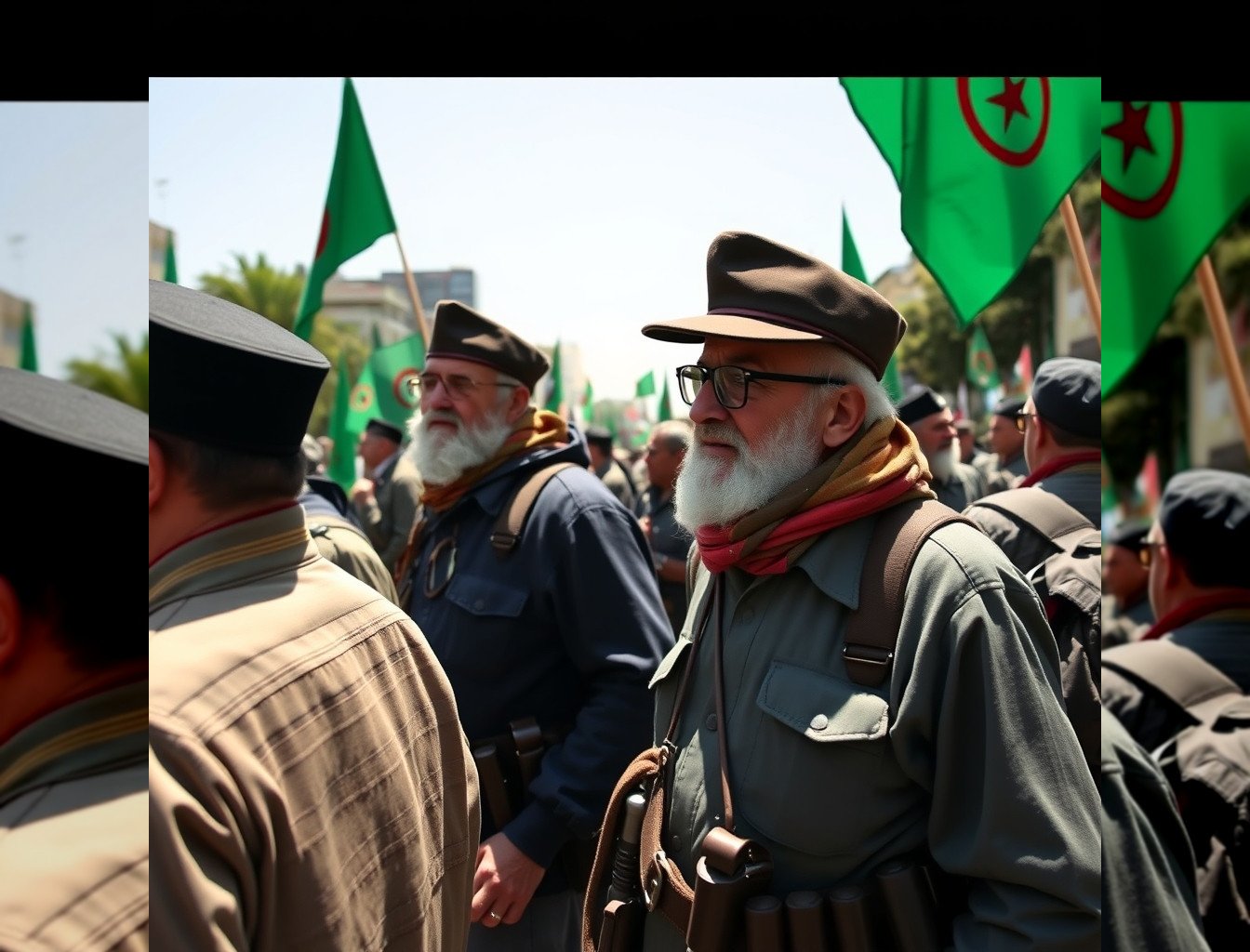
Algeria’s veterans of the War of Independence have publicly endorsed the mass protests sweeping the country, lending weight to calls for President Abdelaziz Bouteflika to end his decades-long rule, according to VOA – Voice of America English News. The endorsement from the National Organisation of Moujahidine (ONM), which represents former fighters who battled French colonial forces between 1954 and 1962, marks a pivotal shift in the political landscape. For entrepreneurs and the Algerian diaspora, the veterans’ stance signals both heightened uncertainty and potential opportunities in the coming months.
The ONM’s support for the demonstrations follows weeks of nationwide unrest, triggered by Bouteflika’s announcement that he would seek a fifth term in office despite his fragile health. Veterans, many of whom are now in their 80s and 90s, have historically been a key constituency for the president, whose legitimacy is partly tied to his status as a former freedom fighter. Their decision to align with protesters underscores the depth of public frustration and the erosion of Bouteflika’s once-unassailable support base, according to VOA – Voice of America English News.
For Algeria’s business community, the veterans’ move introduces new variables into an already volatile economic environment. The North African country, heavily reliant on hydrocarbon exports, has struggled with sluggish growth, high youth unemployment and a lack of diversification. The ongoing protests have disrupted daily life, with reports of roadblocks, school closures and business disruptions in major cities like Algiers, Oran and Constantine. The Algerian dinar has come under pressure, and foreign investors have adopted a cautious stance, waiting for clarity on the political transition.
The ONM’s endorsement could accelerate the momentum for change, but it also raises questions about the stability of Algeria’s institutions. The veterans’ organisation wields significant moral authority, and its alignment with protesters could embolden other groups, including trade unions and civil society, to intensify pressure on the government. Entrepreneurs, particularly those in sectors dependent on state contracts or subsidies, may face delays in payments or approvals as the political crisis unfolds. SMEs, which account for the bulk of private sector employment, are especially vulnerable to disruptions in supply chains and reduced consumer spending.
For the Algerian diaspora, many of whom maintain close ties to the homeland, the veterans’ stance offers both a cause for concern and a potential opening. Remittances, a vital source of foreign currency for Algeria, could be affected if the crisis persists. In 2017, remittances from Algerians abroad totalled nearly $2 billion, or about 2% of GDP, according to the World Bank. A prolonged political standoff could deter diaspora investors from repatriating funds or launching new ventures in Algeria. Conversely, a transition toward a more open political system might create opportunities for diaspora-led startups, especially in technology, renewable energy and services.
The ONM’s decision also highlights the generational divide in Algerian society. While veterans have traditionally been seen as pillars of the regime, younger Algerians, frustrated by corruption and lack of opportunity, have been at the forefront of the protests. This split within the veterans’ community could further fragment the political landscape, making it harder for any single faction to dictate the pace of change. For entrepreneurs, this means navigating a landscape where the rules of engagement—whether regulatory, fiscal or administrative—could shift rapidly.
Business leaders in Algeria have already begun to signal their preferences. Earlier this week, the Algerian Business Leaders Forum (FCE) called for dialogue to resolve the crisis, warning that prolonged instability could deter foreign investment. The FCE, which represents the country’s largest private companies, has urged the government to address economic grievances, including the dominance of state-owned enterprises in key sectors like energy and banking. Entrepreneurs in Algeria’s growing tech scene, centred in cities like Algiers and Oran, may see an opportunity to push for reforms that could unlock venture capital and innovation funding.
The veterans’ endorsement also raises the spectre of a power vacuum. Bouteflika, who has ruled since 1999 and has not been seen in public since suffering a stroke in 2013, has named his brother Saïd Bouteflika and other allies as key decision-makers. The military’s role in any succession remains unclear, and entrepreneurs should prepare for potential shifts in the balance of power. Historically, Algeria’s military has been a stabilising force, but its intervention in politics could introduce new uncertainties for the private sector.
For diaspora entrepreneurs with Algerian roots, the current crisis presents a test of long-term commitment. Those considering investments in Algeria may opt to wait for clearer signs of stability, while others could see the moment as an opportunity to enter a market hungry for reform. The tech sector, in particular, has shown resilience in past crises, and diaspora-led startups in fintech, e-commerce and renewable energy could benefit from a more open regulatory environment.
Key takeaway for entrepreneurs
Algeria’s veteran-led endorsement of anti-Bouteflika protests increases pressure on the regime and could accelerate political change. Entrepreneurs should prepare for potential disruptions in supply chains, payments and regulatory approvals amid ongoing unrest. Diaspora founders may reassess remittances and investment plans, while those in tech could explore opportunities in a post-transition economy.
Sources
- VOA – Voice of America English News
💡 Starting a business in Algeria? GlobalStart guides you step by step: procedures, real costs, company forms (SARL, EURL, SPA) and CNRC registration.