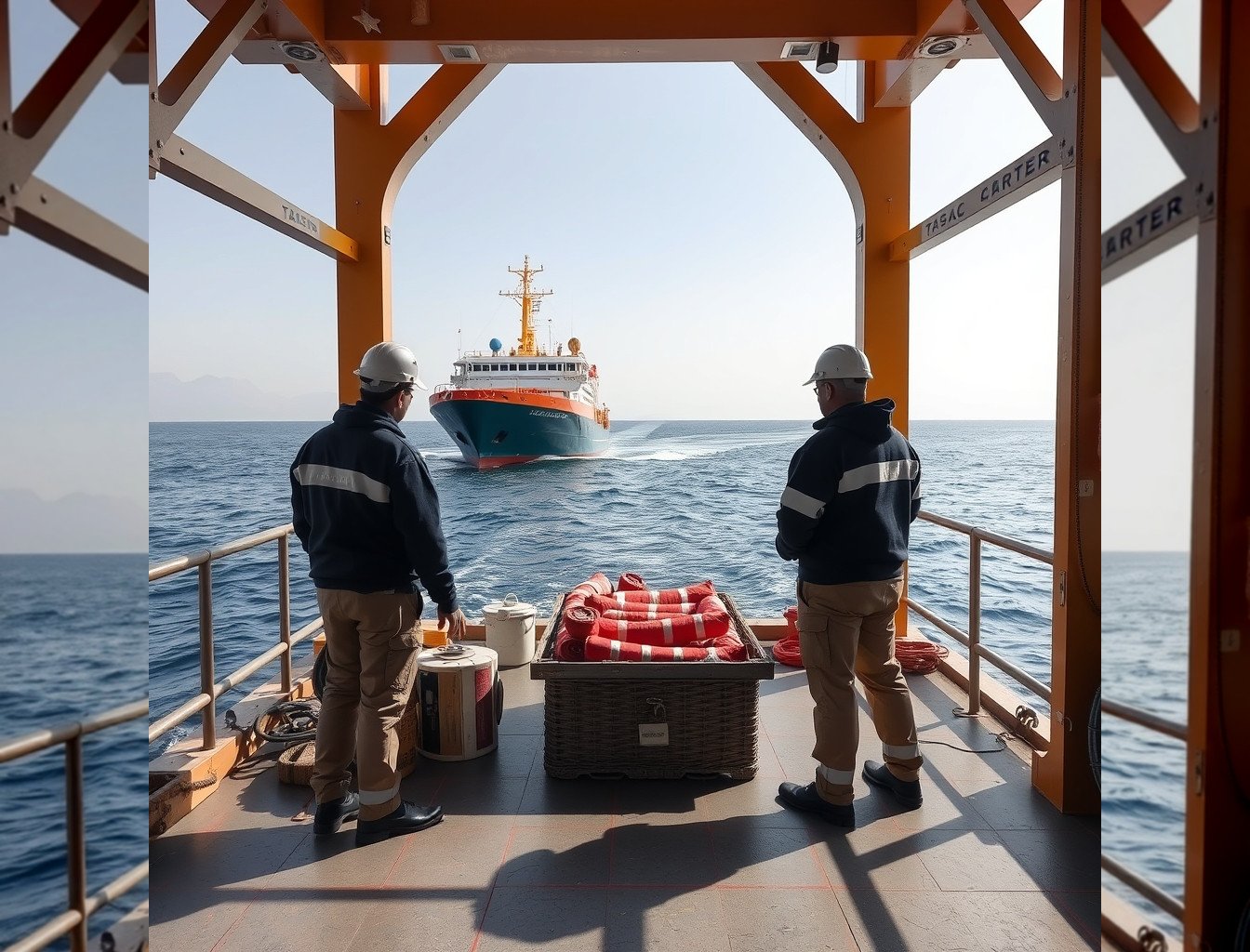
Algeria’s state-owned maritime rescue operator TASAC (Transport Algérien par les Services de l’Action de Sauvetage et de Coordination) has recently unveiled a 120-million-dinar (approximately 880,000 USD) upgrade to its search-and-rescue fleet, adding two new high-speed vessels and a command center in Algiers. According to APS, the vessels—delivered by the Algerian shipyard ECRAN—can reach 35 knots and are equipped with thermal cameras, sonar, and satellite tracking. The upgrade doubles TASAC’s operational range to 200 nautical miles off the Algerian coast.
The investment is part of a broader 2024–2027 modernization plan that includes 15 new rescue stations along the 1,200-kilometer coastline, from Oran to Annaba. TASAC’s director, Mohamed Benamar, told El Watan that the plan aims to reduce response times from 90 minutes to under 30 minutes in high-traffic zones like the Gulf of Arzew and Skikda, where LNG tankers and container ships converge.
Why maritime safety matters for Algerian business
Private logistics firms are already adjusting. Algiers-based freight forwarder SOTRAV reports that insurance premiums for vessels calling at Algerian ports have dropped by 8 % since TASAC began publishing its response-time data in 2025. “Shippers now see Algeria as a safer alternative to Tunis or Casablanca,” said SOTRAV’s CEO, Karim Bouziane, in a recent interview with La Tribune Afrique.
Foreign investors take notice
TASAC’s Benamar confirmed that the agency is in talks with European maritime safety agencies to align Algerian protocols with EU standards. “We’re working toward mutual recognition of rescue certificates, which would allow Algerian vessels to operate in Mediterranean waters without additional inspections,” he told APS. Such recognition could lower operational costs for Algerian-flagged ships by 12–15 %, according to a 2025 study by the Algerian Chamber of Commerce.
Opportunities for local entrepreneurs
Entrepreneurs in adjacent sectors are also benefiting. Algiers-based startup NavTech, which develops maritime tracking software, secured a 50-million-dinar contract to integrate TASAC’s command center with the National Meteorological Office. “Our system now predicts storm risks and reroutes vessels in real time,” said NavTech’s founder, Amine Khelifi, in an interview with El Moudjahid.
Diaspora engagement
Key takeaway for entrepreneurs
Algeria’s maritime safety upgrades are reducing trade risks and lowering costs for exporters, making the country more attractive for logistics and shipping investments. Local SMEs can tap into subcontracting opportunities linked to TASAC’s expansion, while diaspora entrepreneurs can leverage expertise from European markets to build partnerships in Algeria’s growing maritime sector.
Sources
- dailynews.co.tz
💡 Starting a business in Algeria? GlobalStart guides you step by step: procedures, real costs, company forms (SARL, EURL, SPA) and CNRC registration.