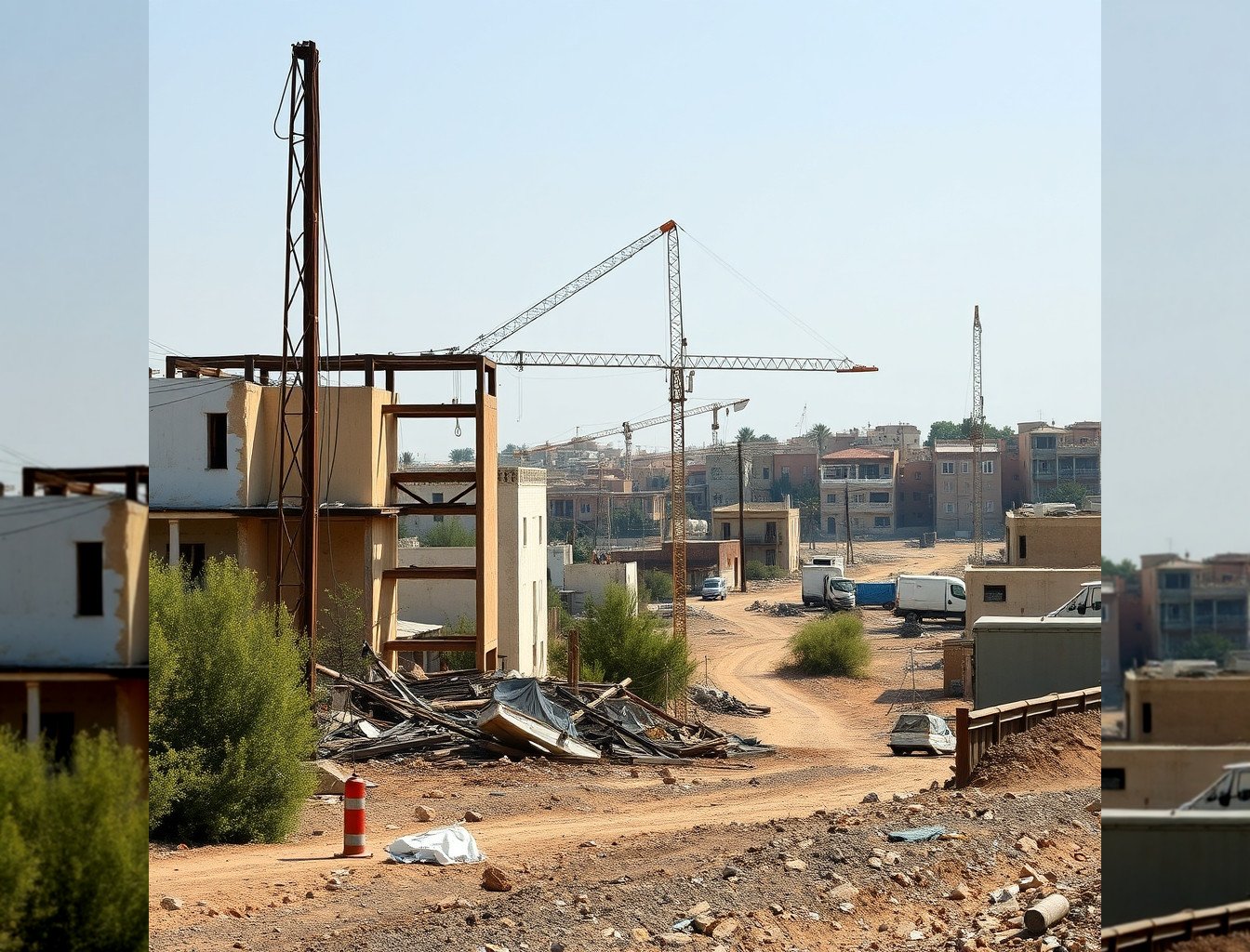
Algeria’s recent wildfires have left behind a financial reckoning—and a business opportunity. With compensation notices now rolling out to thousands of affected residents, entrepreneurs, contractors, and diaspora investors are eyeing a reconstruction windfall. The question isn’t if the rebuilding will happen, but who will lead it.
A $1.2 billion question mark
The Ministry of Interior estimates that recent wildfires—including the devastating blaze in Tizi Ouzou last year—have displaced over 50,000 people and destroyed at least 12,000 homes. The government’s compensation payouts, delivered this week, average 1.5 million dinars ($12,000) per severely damaged property, according to APS. That’s a minimum $1.2 billion in direct payments alone, not counting indirect costs like temporary housing or infrastructure repairs.
For local businesses, this is a double-edged sword. On one hand, demand for construction materials, labor, and services will surge. On the other, competition among contractors—many of them informal—could drive down margins. “The real winners will be those who can prove reliability and speed,” says Mohamed Benali, a civil engineering consultant in Algiers. “The state won’t tolerate delays.”
Diaspora investors circle for contracts
Algerians abroad, particularly in France and Canada, are already positioning themselves. Many have ties to small-scale builders or suppliers back home. “I know at least 20 entrepreneurs in Lyon who are discussing partnerships with local firms,” says Samir K., an Algerian-French real estate developer. “They’re not just sending money—they’re bringing in expertise.”
The catch? Bureaucracy remains the biggest hurdle. Foreign investors must navigate Algeria’s 49% local ownership rule for construction projects, a policy that favors state-linked firms like SONATRACH’s real estate arm. “The diaspora can bring capital, but the real contracts will go to those with government connections,” warns a source at the Algerian Chamber of Commerce.
Opportunities beyond bricks and mortar
While reconstruction dominates headlines, side industries are also benefiting. Insurance claims for lost crops and livestock have spiked, creating demand for agricultural recovery programs. In Bejaïa, where wildfires scorched olive groves, local cooperatives are scrambling to secure loans for replanting. “The bank is offering 5% interest rates for affected farmers—unheard of in normal times,” says a regional agricultural official.
For tech-savvy entrepreneurs, disaster recovery presents a niche market. Apps tracking compensation progress or connecting displaced families with rental housing are already popping up. “There’s no official platform yet, but someone will fill that gap,” predicts Amina T., a startup founder in Oran.
The shadow of corruption looms
Not all opportunities are legitimate. In Kabylie, where wildfires were most severe, rumors persist of inflated damage assessments to boost payouts. “Some families are reporting inspectors who ‘forgot’ to note minor damage, then demanded kickbacks for corrections,” says a local activist. The government has denied wrongdoing, but transparency remains a concern for foreign investors wary of reputational risks.
Key takeaway for entrepreneurs
The wildfire aftermath is a once-in-a-decade economic stimulus—but success depends on speed and connections. Local builders with state ties will dominate large contracts, while diaspora investors must partner with trusted Algerian firms to bypass bureaucracy. For everyone else, niche markets—from insurance tech to agro-recovery—offer the fastest entry points. One thing is certain: Algeria’s reconstruction won’t be just about rebuilding homes. It’ll be about who controls the money behind it.
Sources
💡 Starting a business in Algeria? GlobalStart guides you step by step: procedures, real costs, company forms (SARL, EURL, SPA) and CNRC registration.