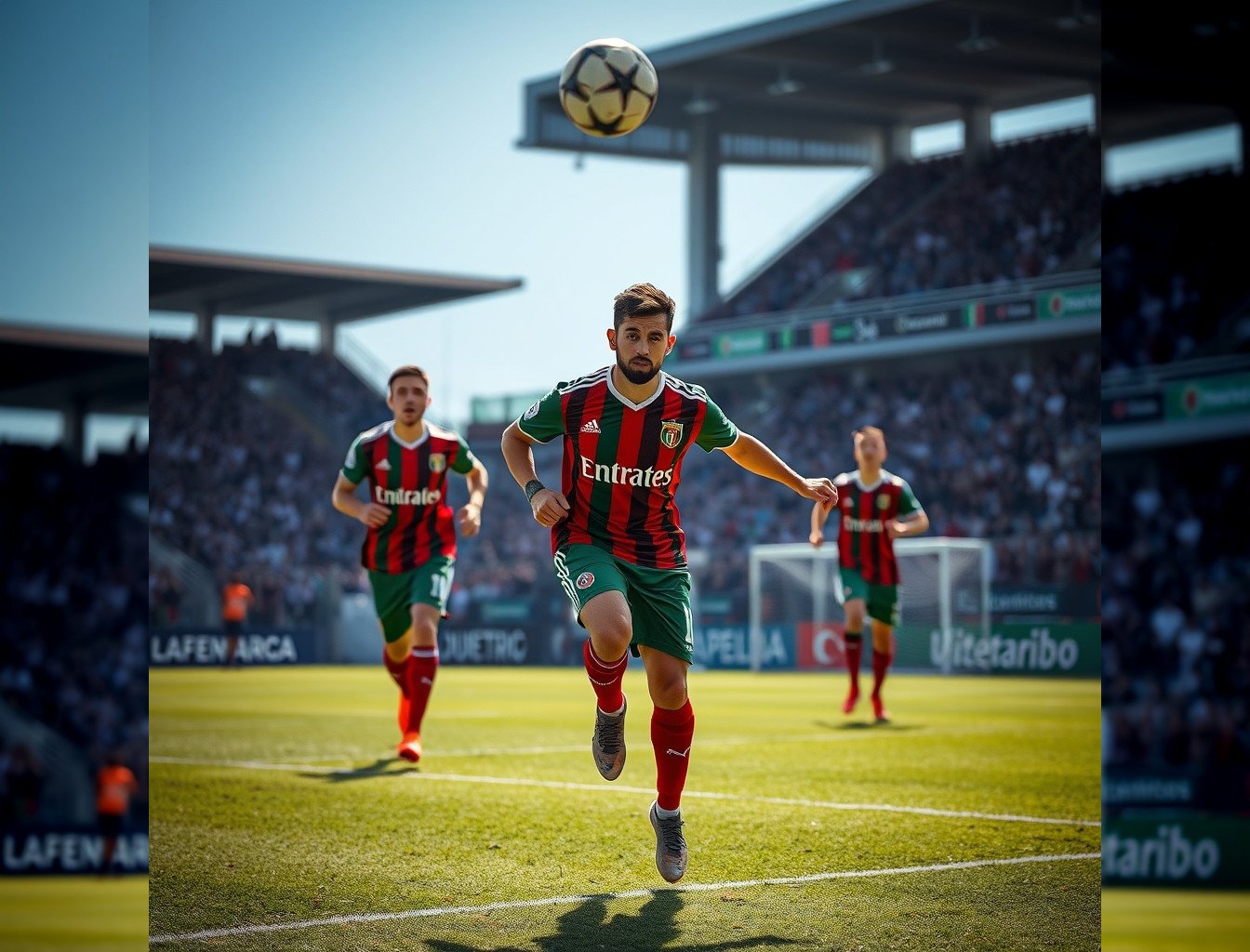
Recent developments at Algerian football club USM Alger threaten to destabilise one of the country’s most valuable sports assets at a time when the sector is seeking deeper commercial ties with private investors. Reports from BBC this week confirmed that the club’s owner, Raouf Melliani, remains in jail more than four years after his arrest, leaving USM Alger’s future uncertain and casting doubt on the club’s ability to service debts or fund transfers.
USM Alger owes an estimated 7 billion Algerian dinars (about 52 million euros) to creditors including SONATRACH, the state hydrocarbons giant that remains a major creditor after providing bridging finance during Melliani’s detention. According to club insiders, the debt pile has grown because of frozen commercial revenues and the absence of new sponsorship deals while Melliani remains incarcerated. The club’s average home attendances have fallen from 15,000 in 2021 to under 8,000 this season, reducing gate receipts that once covered 40 % of operating costs.
The crisis highlights structural weaknesses across Algeria’s professional football economy. Most clubs depend on state-linked entities for sponsorships and loans, creating a closed loop that offers little room for private capital to enter. USM Alger’s predicament shows how quickly a single ownership crisis can ripple through the system. The club’s annual commercial revenue—estimated at 1.2 billion dinars in 2023—has been halved due to delayed marketing campaigns and the loss of broadcast income from reduced match exposure.
Local business founders who once saw football as a marketing channel are now wary. “We sponsored USM Alger in 2022 because the club promised national TV coverage and brand association with Algeria’s most popular team,” said one Algiers-based entrepreneur who requested anonymity. “When broadcasts stopped and debts mounted, our ROI vanished. We will not repeat the experiment until governance improves.” The episode underscores the lack of investor safeguards in Algerian club football, where contracts are often verbal and enforcement mechanisms weak.
Algeria’s football authorities have acknowledged the gap. In 2025, the Algerian Football Federation (FAF) launched a licensing system aimed at professionalising clubs, but compliance remains patchy. USM Alger is one of several top-flight teams that missed the June 2025 deadline to submit audited accounts. Failure to comply can lead to points deductions, a penalty that could further depress matchday income and sponsor interest.
For the Algerian diaspora, the crisis offers a cautionary tale. Many in France and Canada have backed clubs through fan associations and private donations, but the Melliani case shows how quickly funds can be frozen. “Our group sent 500,000 euros to USM Alger in 2023 via a French-Algerian payment platform,” said a Paris-based organiser. “Half is still blocked in an Algerian court account. We are now redirecting contributions to smaller clubs with cleaner governance.”
The broader question is whether Algeria’s football economy can diversify before another ownership crisis erupts. Private investors cite the need for transparent governance, enforceable contracts and a functioning transfer market where players can be sold to generate liquidity. Without these, clubs will remain dependent on state-linked creditors and vulnerable to sudden shocks.
Key takeaway for entrepreneurs: Football sponsorships in Algeria carry high legal and liquidity risks until clubs publish audited accounts and adopt transfer-market discipline; diaspora funding can be blocked by court orders, so diversify across smaller, compliant clubs to reduce exposure.
Sources
- Al Jazeera
- 365Scores
- The New York Times
- Bleacher Report
- cafonline.com
- Morocco World News
💡 Starting a business in Algeria? GlobalStart guides you step by step: procedures, real costs, company forms (SARL, EURL, SPA) and CNRC registration.