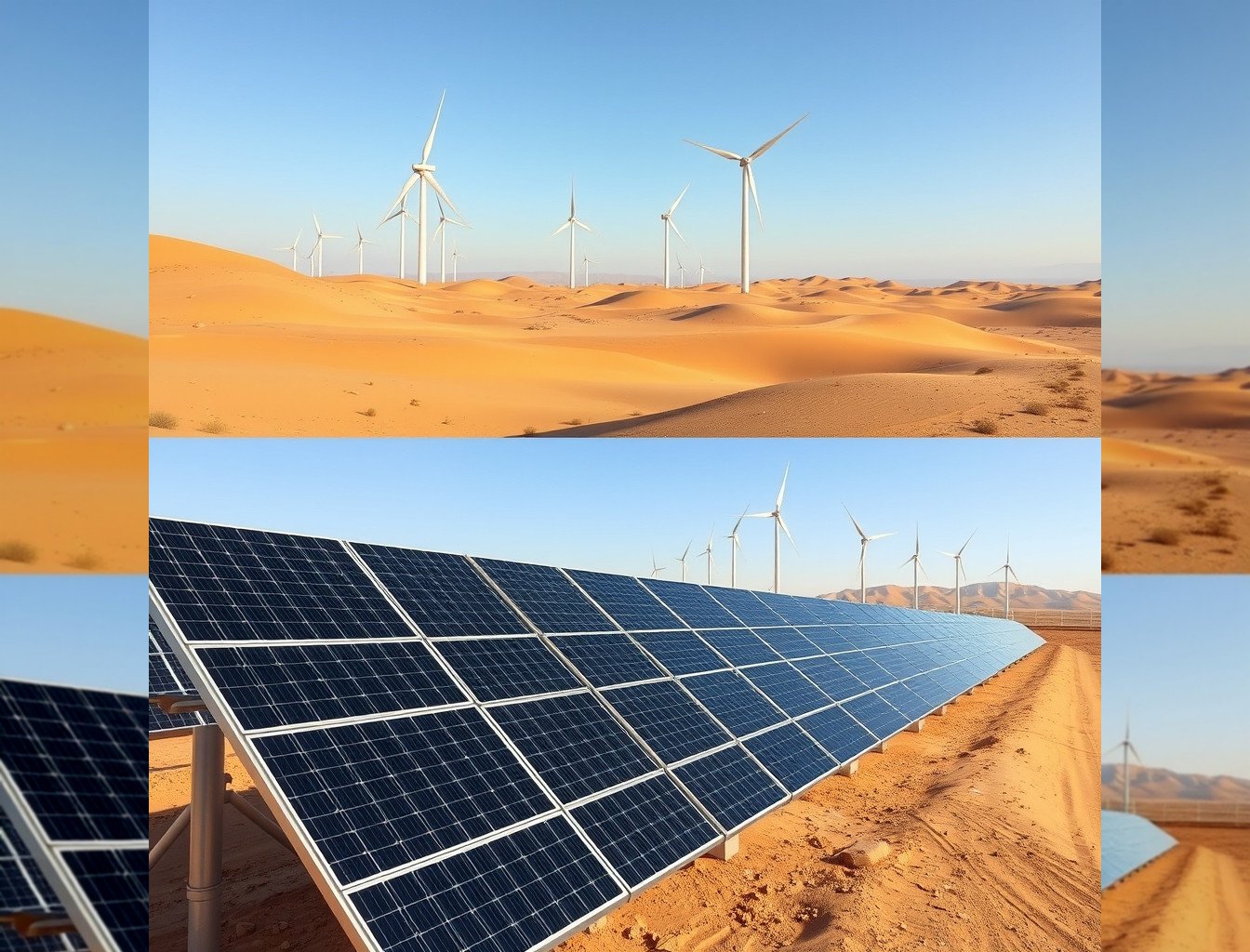
A €50 million photovoltaic plant with battery storage in Béni Mhira, Tataouine—the first of its kind in Tunisia—marks a turning point for North African energy markets. The project, backed by the European Bank for Reconstruction and Development (EBRD) and the Tunisian Electricity and Gas Company (STEG), is more than just a solar farm. It’s a blueprint for how Algeria’s entrepreneurs, diaspora investors, and energy startups could unlock financing, technology transfers, and regional partnerships to accelerate the continent’s green transition.
A €50 Million Model for Algeria’s Renewable Future
The 50 MW solar plant, paired with a 10 MW battery storage system, is Tunisia’s first large-scale solar project directly connected to the national grid with integrated energy storage. For Algerian business leaders, this is a case study in how blended finance—public guarantees plus private investment—can de-risk renewable energy projects.
The EBRD’s involvement is particularly significant. The bank has a long history of supporting energy transitions in North Africa, including Algeria’s own solar ambitions. In 2022, the EBRD approved a €100 million loan for Algeria’s 250 MW solar plant in Adrar, proving demand exists for similar structures. The Tunisian deal now offers a tested framework for Algerian developers seeking to replicate this model.
How Algerian Entrepreneurs Can Capitalize
For Algerian startups and SMEs in solar, storage, or grid infrastructure, the Tunisian project highlights three immediate opportunities:
1. Supply Chain Partnerships
The Béni Mhira plant will require panels, inverters, battery systems, and high-voltage transmission lines. Algerian firms—such as CEM (Centrale Électrique de Mitidja) or private solar installers—could position themselves as suppliers to Tunisian contractors. The STEG’s direct involvement means Algerian companies with ISO certifications or EBRD-approved credentials could win tenders for subcontracting roles.
2. Financing and Guarantee Mechanisms
The dual agreements (financing + guarantees) used in Tunisia are identical to those the EBRD has deployed in Algeria. Entrepreneurs developing smaller-scale solar microgrids (e.g., for agriculture or industrial zones) could leverage similar structures. The key: local banks must offer partial guarantees to reduce perceived risk for international lenders.
3. Diaspora-Led Investment
Algerian expatriates in France, Canada, or the UAE—where clean energy funding is abundant—could channel capital into Tunisian-Algerian joint ventures. The EBRD’s track record in Tunisia suggests it may extend similar terms to Algerian projects if they meet carbon reduction and grid stability criteria.
Why Algeria’s Energy Sector Needs This Signal
Algeria’s solar potential is among the highest globally, yet progress has been slow due to bureaucratic hurdles and financing gaps. The Tunisian project demonstrates that storage-integrated solar is no longer experimental—it’s a commercial reality with proven bankability.
For Algerian policymakers, the lesson is clear: accelerating renewable deployment requires three things:
– Simpler permits for private solar developers (Tunisia’s process took 18 months; Algeria’s often exceeds 3 years).
– Blended finance structures like those used in Tunisia to attract EBRD or African Development Bank (AfDB) support.
– Regional collaboration—Algeria could replicate Tunisia’s model by partnering with Moroccan or Egyptian firms on cross-border solar parks.
A Warning for Algerian Businesses: Move Fast
The Tunisian deal shows that first-mover advantage in North African renewables is shrinking. While Algeria’s 5,000 MW solar target by 2030 remains ambitious, private sector participation is lagging. Entrepreneurs who secure EBRD-approved partnerships now—whether as suppliers, developers, or financiers—will shape the sector’s future.
The Béni Mhira plant is proof that clean energy projects can attract European capital if they meet two conditions: grid integration and storage solutions. Algerian business leaders ignoring this trend risk being left behind as Tunisia, Morocco, and Egypt race ahead in the green economy.
Sources
💡 Starting a business in Algeria? GlobalStart guides you step by step: procedures, real costs, company forms (SARL, EURL, SPA) and CNRC registration.