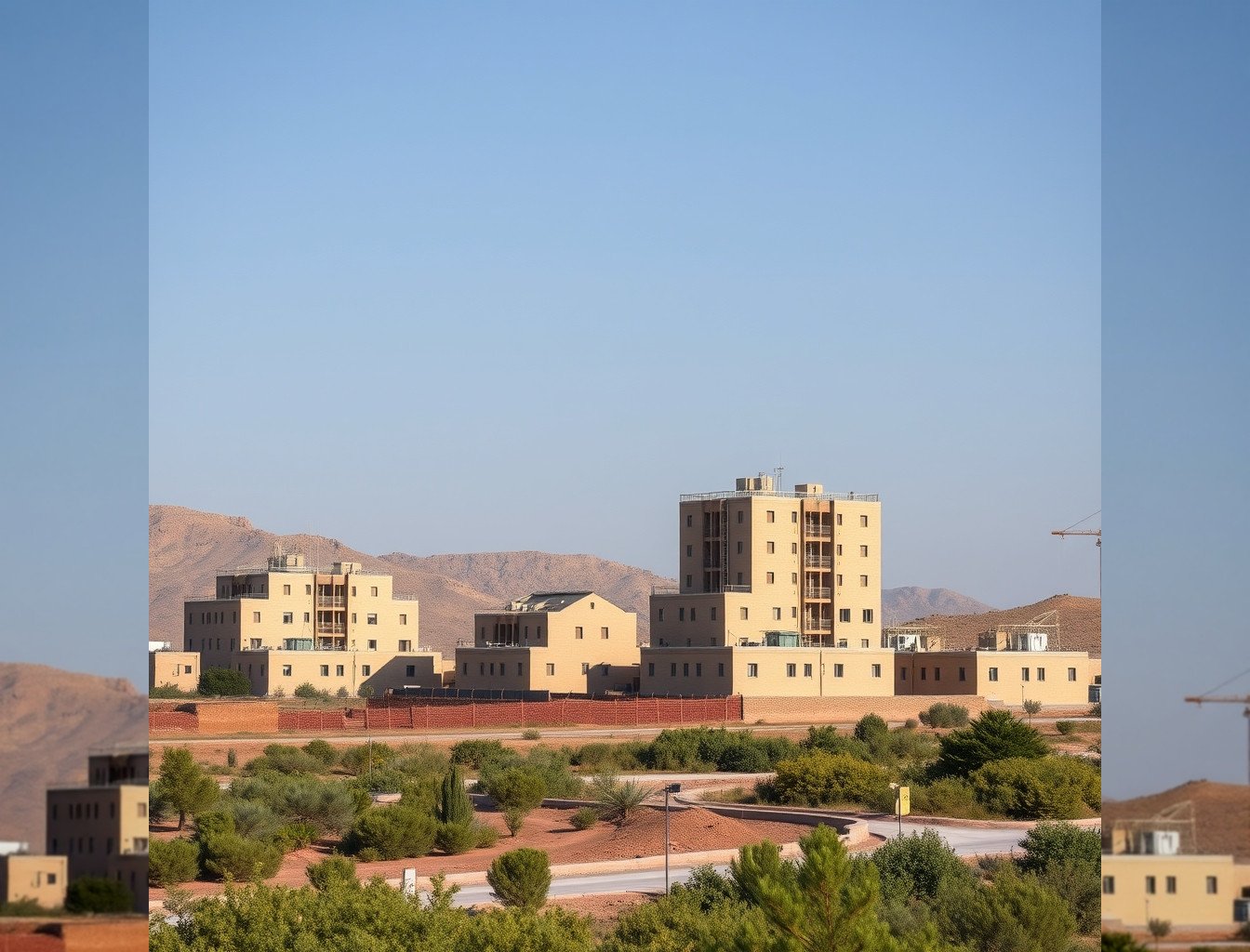
Satellite images confirm Iran’s underground construction boom at Pickaxe Mountain, a site near Natanz already under Western intelligence scrutiny. The acceleration of work—documented by U.S. analysts—raises alarms about a potential undeclared nuclear enrichment facility. For Algeria, this development is not just a regional security concern. It is a direct threat to trade, investment, and financial stability in a market where Algerian exporters already operate under heightened uncertainty.
The implications extend far beyond geopolitics. Iran remains a critical destination for Algerian hydrocarbons, pharmaceuticals, and agricultural products. Any escalation tied to Pickaxe Mountain could trigger secondary sanctions or trade embargoes, forcing Algerian firms to abandon contracts or seek last-minute alternatives. The risk is not hypothetical. Similar disruptions have already reshaped supply chains in neighboring regions, leaving smaller businesses particularly vulnerable.
A Hidden Project with Global Ramifications
Algeria’s economic ties to Iran are deeply embedded. Sonatrach, the state-owned oil giant, has long relied on Iranian partners for gas and condensate exports. These deals are now at risk. If sanctions materialize, Algerian energy firms could face restrictions on payments, shipping, or even access to Iranian ports. The fallout would ripple through the entire sector, from refineries to logistics providers.
Beyond energy, Algeria’s agribusinesses—dates, olive oil, and dairy—supply Iranian markets with consistency. A sudden freeze in trade would leave warehouses overflowing and farmers with unsold stock. Smaller exporters, already strained by currency fluctuations and inflation, would struggle most. Unlike multinational corporations, they lack the resources to pivot quickly or absorb losses.
The nuclear standoff also threatens remittances, a lifeline for Algerian families. Estimates suggest Algerians in Iran send back $500 million annually. If repatriation channels are blocked—whether through bank freezes or capital controls—these funds could disappear overnight. For households dependent on these transfers, the impact would be immediate and severe.
Supply Chains Under Pressure
The most immediate danger lies in secondary sanctions. If Iran faces U.S. or EU penalties, Algerian firms with Iranian ties could be caught in the crossfire. Banks may refuse transactions involving Iranian entities, and insurers could withdraw coverage for shipments. Even neutral trade could become a liability.
Take Sonatrach’s gas deals. Iranian buyers rely on Algerian condensate, but if sanctions disrupt payments, contracts could collapse. The same applies to pharmaceutical exports. Algerian drugmakers supply Iran with generics, but if Western sanctions tighten, shipments could be intercepted or delayed. The cost of compliance—legal fees, alternative routes, or lost revenue—would fall on Algerian businesses.
For agribusinesses, the risk is equally real. Iranian importers of Algerian dates and olive oil operate on tight margins. If trade halts, they may default on orders, leaving Algerian exporters with stranded inventory. The agricultural sector, already facing climate challenges, cannot afford another shock.
Smaller players—truckers, freight forwarders, and local distributors—would bear the brunt. Without guaranteed payments or insurance, they may abandon Iranian markets entirely. The result? A cascading effect on Algeria’s export-driven economy.
Diaspora Investors Face Uncertainty
French-Algerian investors have long used Iran as a gateway to Central Asia. Properties, joint ventures, and trade networks in Tehran have provided access to markets beyond the Middle East. But if Pickaxe Mountain becomes a geopolitical flashpoint, this strategy could unravel.
Banks may classify Iranian assets as high-risk, making financing impossible. Insurance premiums for Iranian-linked investments could skyrocket or vanish altogether. Even remittances—critical for many Algerian families—could be flagged as suspicious under sanctions regimes. The uncertainty would force diaspora investors to liquidate holdings or pull out entirely.
The impact on Algeria’s financial sector would be indirect but significant. If Iranian trade dries up, banks may reduce exposure to Algerian firms tied to the region. Credit lines could tighten, making it harder for entrepreneurs to expand. The ripple effect would hurt sectors far removed from nuclear diplomacy.
Opportunities in Diversification
Algeria cannot afford to wait for the crisis to pass. The Algerian Investment Authority (ANDI) has already signaled a shift toward North Africa and Europe. Entrepreneurs with ties to the EU or Gulf markets should act now.
Algerian tech startups, for example, could partner with European firms to bypass Iranian intermediaries. A pharmaceutical company could redirect exports to Morocco or Tunisia instead of Iran. Agribusinesses might explore new buyers in the UAE or Saudi Arabia. The key is agility—replacing Iranian demand with alternative markets before sanctions force the issue.
Diversification is not just about survival. It is about seizing opportunities. Algeria’s proximity to Europe and its growing industrial base make it an attractive hub for trade. Firms that adapt early will emerge stronger when the Iranian market stabilizes—or when it no longer exists as a viable option.
A Warning for Local Businesses
The Iranian nuclear standoff will not resolve itself. For Algerian exporters, the question is no longer if tensions will escalate, but when. Proactive businesses will prepare for disruptions by diversifying markets, securing alternative financing, and strengthening supply chain resilience.
Those who ignore the risks may face sudden contract cancellations, frozen assets, or lost revenue. The lesson is clear: geopolitical shocks do not announce themselves. By acting now, Algerian entrepreneurs can turn a potential crisis into a strategic advantage.
Key takeaway for entrepreneurs: The Iranian nuclear site is a warning sign, not a distant threat. Algerian businesses must treat it as an immediate call to diversify trade routes, lock in alternative buyers, and insulate themselves against sanctions. Those who fail to act may find their Iranian investments—and their entire export strategy—at risk of collapse.
Sources
💡 Starting a business in Algeria? GlobalStart guides you step by step: procedures, real costs, company forms (SARL, EURL, SPA) and CNRC registration.