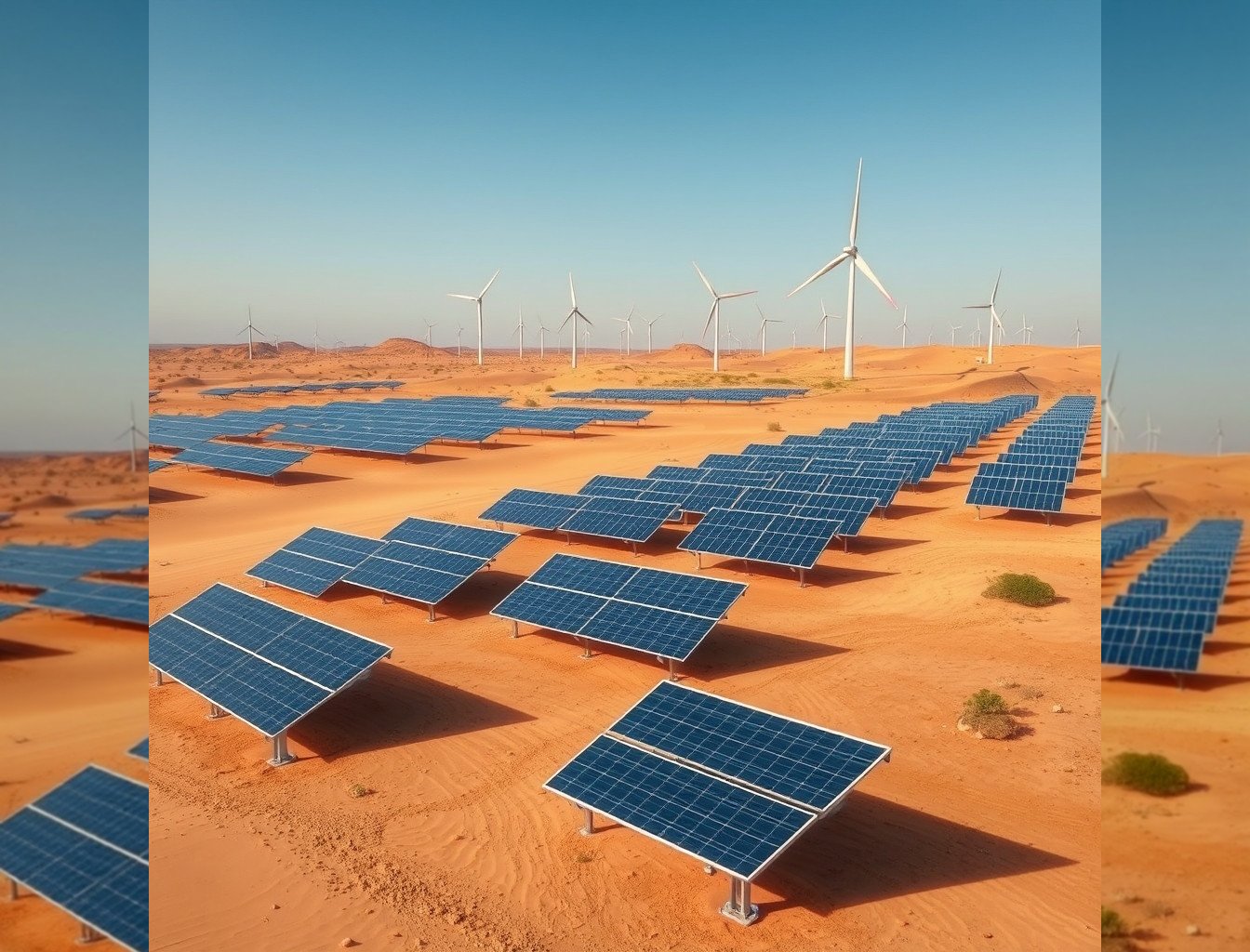
Algeria’s energy sector is on the brink of a transformation—one that could redefine its economy, but only if local entrepreneurs and investors move fast. The European Union’s T-MED investment platform, launched this month, is injecting €4.5 billion in guarantees to accelerate renewable energy and green tech projects across the Mediterranean. For Algeria, this is a rare opportunity to attract private capital, reduce reliance on hydrocarbons, and create high-value industries. But with bureaucratic hurdles and financing gaps still plaguing the sector, the question is: Will Algerian business leaders seize the moment—or will foreign firms dominate the green rush?
A €4.5B Windfall—But Algeria’s Banks Are Still the Bottleneck
Yet, local entrepreneurs face a cold reality: Algerian banks remain hesitant to fund renewable projects, citing unfamiliarity with the sector and perceived risks. “The biggest obstacle isn’t capital—it’s the lack of bankable projects with clear revenue models,” says Karim B., a renewable energy consultant based in Algiers. “Investors need to see proven demand, not just government promises.”
The EU’s guarantee fund could change that. By covering up to 50% of project costs, T-MED reduces the financial burden on Algerian firms. But success hinges on local partners—whether they’re private developers, state-backed entities like SONELGAZ, or foreign firms with Algerian subsidiaries.
The Diaspora’s Silent Opportunity: How Expat Algerians Can Lead the Charge
Recent examples show promise:
– Nexans Algeria, a subsidiary of the French cables giant, is expanding its high-voltage transmission infrastructure to support solar farms in Béchar.
– Masdar (UAE) and Engie (France) have partnered with SONATRACH on hydrogen pilot projects in Skikda, but local firms have been sidelined in favor of foreign-led consortia.
“The diaspora can bridge the gap by co-investing with Algerian firms,” says Amir R., founder of a renewable energy startup in Paris. “But they need simpler visa rules, tax incentives, and a faster permitting process.” Currently, setting up a solar farm in Algeria can take 18–24 months—far longer than in Morocco or Egypt.
The Hidden Cost: Why Algeria’s Green Transition Is Still Stalled
1. Grid Limitations
The national grid, managed by SONELGAZ, is not equipped to handle decentralized energy. Without upgrades, even the best solar or wind farms risk wasted potential. “We built a 100MW solar plant in Adrar, but it’s only operating at 30% capacity because the grid can’t absorb the power,” says Yacine K., an energy engineer.
2. Subsidy Distortions
Algeria’s heavily subsidized electricity (priced at $0.05/kWh, vs. $0.15–0.20/kWh in Europe) makes renewables uncompetitive. “No private investor will build a wind farm if they can’t recover costs,” warns Badr Eddine S., an economist at the University of Algiers.
3. Permitting Chaos
Obtaining licenses for renewable projects involves multiple ministries, leading to delays. “In Morocco, a solar permit takes 6 months; in Algeria, it’s 2 years,” says a French developer working on a hybrid solar-wind project in Tindouf.
Who Stands to Gain—and Who Could Get Left Behind?
– Solar & Wind Farm Developers
The EU’s guarantees could cut financing costs by 30–40%, making projects viable for mid-sized Algerian firms. Startups like Algeria Green Energy (AGE) and Renewable Horizons are already positioning themselves—but they need €50–100 million in seed capital to compete.
– Hydrogen & Green Ammonia
With SONATRACH’s Arzew LNG terminal and Skikda’s industrial zone, Algeria is a natural hub for green hydrogen exports. The EU’s REPowerEU plan offers €1 billion in grants for Mediterranean hydrogen projects—but Algerian firms must move now before European players lock in deals.
– Energy Storage & Smart Grids
The lack of battery storage is a major bottleneck. Firms like Tesla’s Algerian partner, Nexans, or local tech startups could fill this gap—but only if the government fast-tracks approvals.
The risk? If Algeria doesn’t reform its banking, permitting, and subsidy systems, foreign firms will dominate the sector, leaving local entrepreneurs with low-margin contracts or no role at all.
Sources
Key takeaway for entrepreneurs
Sources
💡 Starting a business in Algeria? GlobalStart guides you step by step: procedures, real costs, company forms (SARL, EURL, SPA) and CNRC registration.