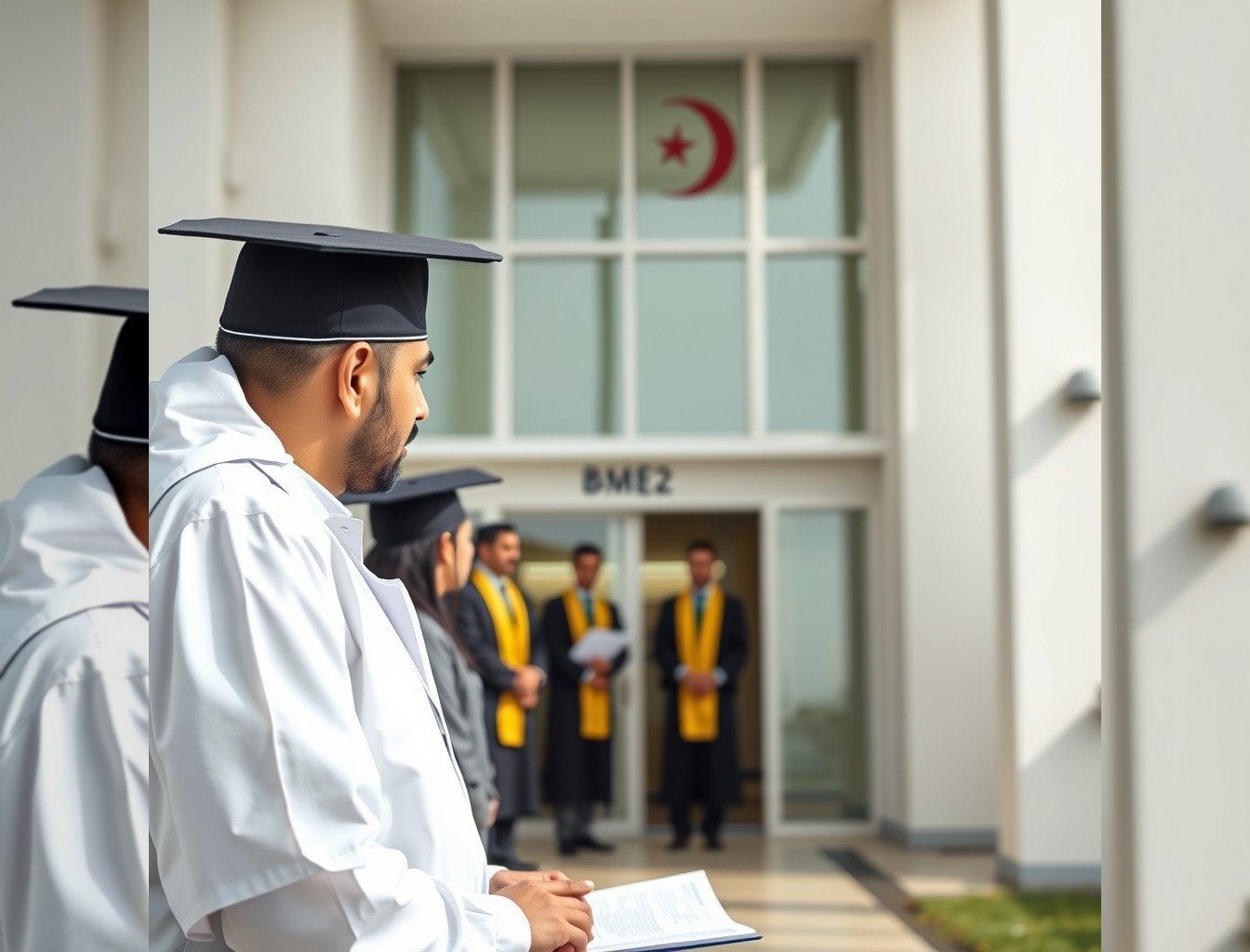
This week, Spain’s Bolsas y Mercados Españoles (BME) announced the expansion of its partnership network with Algerian universities, marking a new phase in academic and financial collaboration between the two countries. According to a statement from BME, the initiative aims to strengthen ties with Algerian higher education institutions, particularly in finance, technology, and entrepreneurship. The move follows a series of agreements signed in 2025 between BME and Algerian universities, including the University of Algiers 1 and the École Nationale Supérieure de Technologie (ENST) in Oran.
BME, which operates Spain’s stock exchanges and provides financial market infrastructure, has been actively engaging with North African markets in recent years. The company’s latest effort in Algeria focuses on joint research programs, student exchanges, and training sessions for Algerian academics and professionals in capital markets, fintech, and data analytics. A BME spokesperson told local media that the partnerships will include workshops on blockchain applications in finance, a sector where Algeria has shown growing interest but limited local expertise.
The expansion comes as Algeria seeks to diversify its economy beyond hydrocarbons, a priority under President Abdelmadjid Tebboune’s administration. The government has repeatedly emphasized the need for a skilled workforce in emerging sectors, particularly in digital finance and renewable energy. In 2025, Algeria’s Ministry of Higher Education and Scientific Research launched a national strategy to align university curricula with market demands, targeting fields like artificial intelligence, cybersecurity, and green energy. BME’s involvement aligns with this strategy, offering Algerian students and researchers access to European financial markets and best practices.
For Algerian entrepreneurs, the partnerships could provide critical exposure to international financial systems. Startups in Algiers and Oran, particularly those in fintech and e-commerce, have struggled with limited access to venture capital and regulatory hurdles. BME’s training programs may help bridge this gap by equipping local talent with the skills needed to navigate global markets. According to a 2025 report by the Algerian Startup Association, only 12% of Algerian startups secure external funding, a figure the government hopes to double by 2030.
The collaboration also extends to Algeria’s diaspora, which plays a significant role in the country’s economic development. Many Algerian professionals abroad, particularly in France and Spain, work in finance and technology. BME’s initiatives could create opportunities for diaspora members to contribute to Algeria’s financial sector through mentorship, investment, or knowledge transfer. In 2024, remittances from the Algerian diaspora reached $2.1 billion, according to the Bank of Algeria, underscoring the community’s economic influence.
Algeria’s higher education sector has faced criticism for its slow adaptation to market needs. A 2025 study by the World Bank found that only 30% of Algerian university graduates secure jobs in their field of study within a year of graduation. The BME partnerships aim to address this mismatch by introducing practical, industry-relevant training. For example, the University of Algiers 1 will host a BME-led program on sustainable finance, a growing field in Algeria as the country ramps up investments in solar and wind energy.
The initiative also reflects broader trends in Algeria’s foreign policy. Under Tebboune, Algeria has sought to deepen ties with European partners, particularly in education and technology. In 2025, Algeria and Spain signed a memorandum of understanding to enhance cooperation in higher education, with a focus on joint degrees and research projects. BME’s expansion is part of this larger framework, positioning Spain as a key partner in Algeria’s economic modernization.
For Algerian universities, the partnerships offer a chance to enhance their global standing. The École Nationale Supérieure de Technologie (ENST) in Oran, one of BME’s key partners, has been working to establish itself as a hub for innovation in North Africa. The school recently launched a startup incubator, which has already supported 15 early-stage companies in sectors like agritech and renewable energy. BME’s involvement could attract more international investors to these startups, providing much-needed capital.
The BME partnerships also come at a time when Algeria is pushing to reform its financial sector. In 2025, the government introduced a new law to modernize the Algiers Stock Exchange, aiming to attract more listings and foreign investment. However, the exchange remains underdeveloped, with only 10 listed companies and a market capitalization of $5 billion. BME’s expertise in market infrastructure could help Algeria develop its capital markets, making it easier for entrepreneurs to access funding.
Key takeaway for entrepreneurs
Algerian startups and business founders should monitor BME’s training programs and research collaborations, as these could provide access to international financial networks and expertise. The partnerships may also open doors for diaspora professionals to engage with Algeria’s growing fintech and green energy sectors. Entrepreneurs in Algiers and Oran, particularly those in digital finance, should explore opportunities to participate in BME-led workshops or joint research projects to gain a competitive edge.
Sources
- fundsforNGOs
- KCUR
- Lawrence Journal-World
- New Lines Institute
- BME
- The Times of Israel
💡 Starting a business in Algeria? GlobalStart guides you step by step: procedures, real costs, company forms (SARL, EURL, SPA) and CNRC registration.