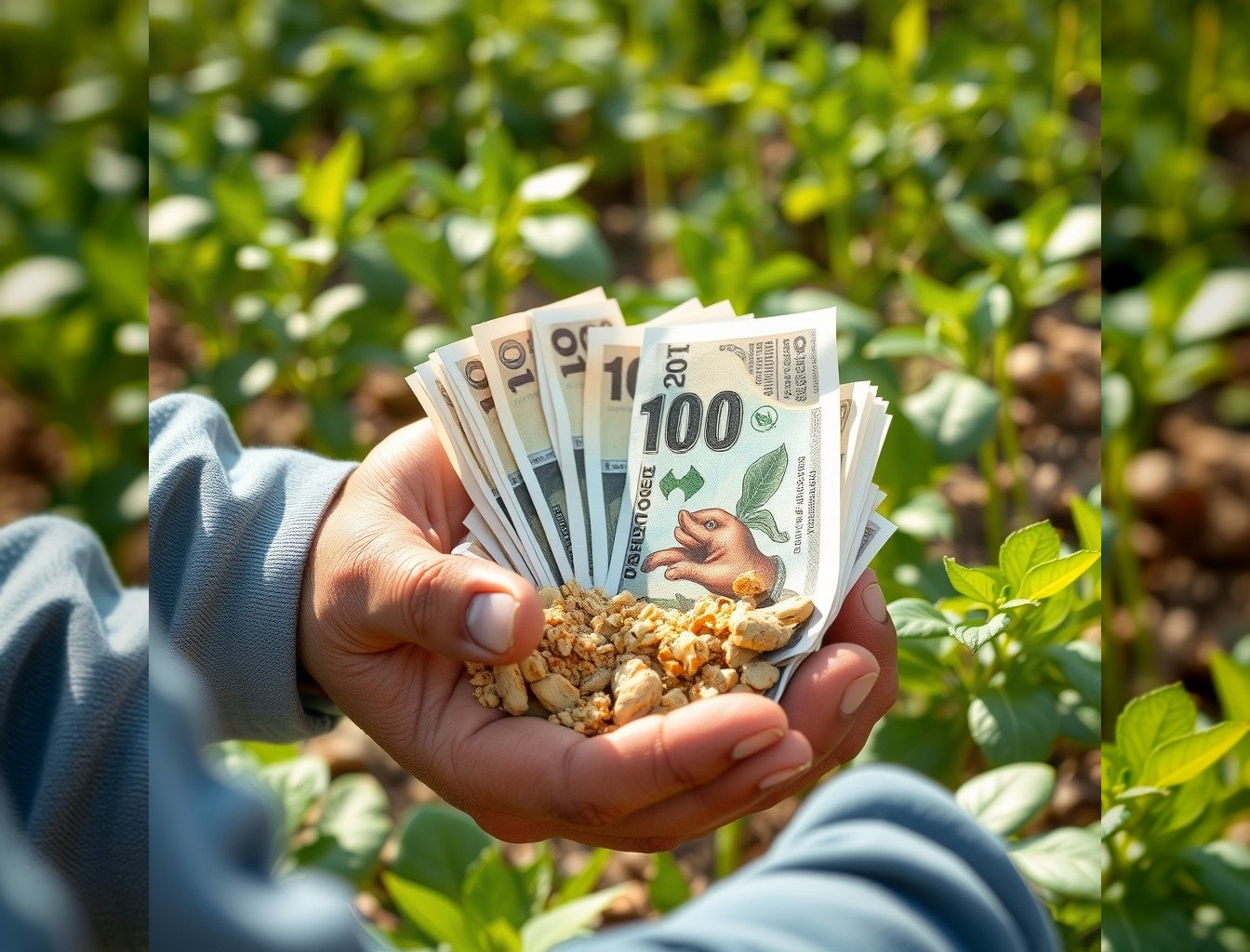
Algeria’s farming sector sits on a paradox: billions of dinars in government and private funds remain untapped while entrepreneurs struggle to access capital for modernisation. The issue is not a lack of money, but a mismatch between rigid banking rules and the reality of agricultural leases. Lenders demand fixed-asset collateral worth 150% of loan values—a threshold most start-ups cannot meet, even when leases are the only viable security.
Billions in Funds, No Access for Leaseholders
Fruit and vegetable exporters in Tlemcen and Béjaïa confirm the problem. They approach FNAR and FAI repeatedly, only to be told they need collateral equal to 150% of the loan value. Younger growers who lease land cannot comply because banking rules still reject leases as security. Kamel Touati, an exporter in Tlemcen, lost a 75 million dinar EU cherry tomato contract to a Moroccan competitor who undercut prices. His greenhouse expansion stalled because banks refused loans without land titles—titles he does not possess.
When Public Money Works: Sidi Fredj’s Success
Yet even here, operational challenges persist. Officials at Agropole d’Oran SPA admit only 65% of plots are fully functional. The remaining investors struggle to secure working capital for fertilisers and fuel. The issue is not infrastructure, but short-term liquidity—a problem that rigid collateral rules worsen.
Diaspora Entrepreneurs Bypass the System
Lounis’s experience highlights the core issue: Algerian lenders prioritise bricks over plants. Banks see leases as risky, even though Algeria’s banking law technically allows them as collateral. Local bankers argue that the Central Bank’s prudential circulars still treat leases as off-balance-sheet items, discouraging lenders from accepting them.
A Skills Gap Worsens the Crisis
Experts say a skills upgrade could unlock idle capital. The National Institute of Agricultural Sciences (INSAA) in Algiers runs a six-month accelerator called “AgriTech Start”. Graduates have raised 320 million dinars in combined private and public funding. One cohort company, HydroDrip, uses drip-irrigation kits and blockchain traceability to supply 300 tonnes of tomatoes monthly to French supermarkets. Its co-founder, Yacine Benabdelkader, says the programme’s main benefit was teaching founders how to package business plans banks can understand.
The Collateral Trap
The solution may lie in flexible collateral rules and better business plan training. Until then, Algeria’s farming funds will remain idle—while imports drain the economy and young graduates struggle to find work.
Key takeaway for entrepreneurs
Public funds of 410 billion dinars sit unused because lenders reject leases as collateral, locking out leaseholders. Agro-industrial zones like Sidi Fredj show that targeted infrastructure can boost exports—but only if working capital follows. Returning diaspora entrepreneurs with foreign savings can bypass local rules, but most growers need banking reforms and skills training to compete.
Sources
- Ministry of Agriculture, Rural Development and Fisheries (Algeria)
- Journal officiel (JORADP) — Algerian official gazette
💡 Starting a business in Algeria? GlobalStart guides you step by step: procedures, real costs, company forms (SARL, EURL, SPA) and CNRC registration.