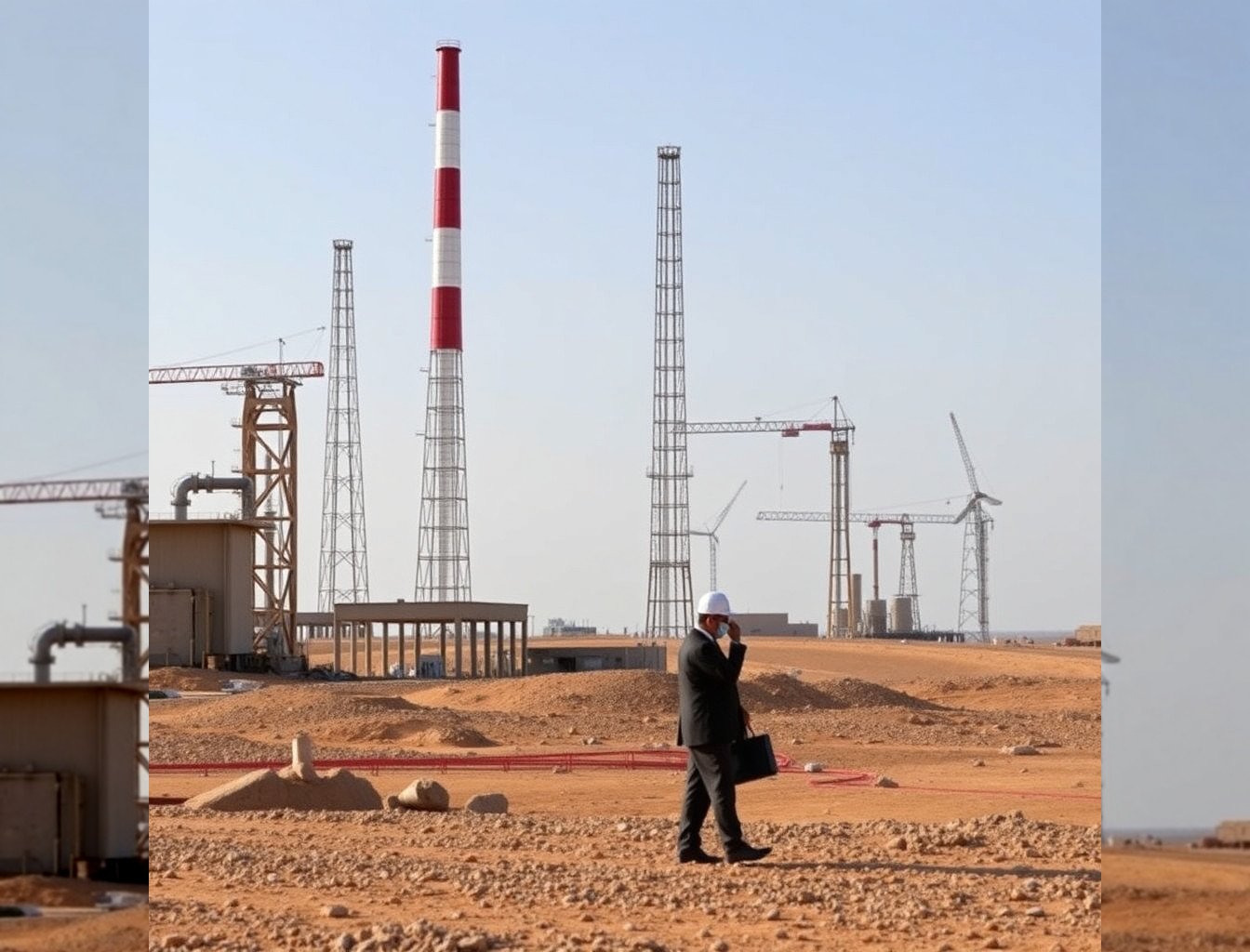
Algeria’s energy push: shale ambitions and foreign investment hurdles
Algeria’s hydrocarbons sector remains the cornerstone of its economy, but recent developments reveal both strategic ambitions and persistent challenges. The government’s push to unlock shale gas reserves has drawn interest from international energy majors, yet foreign participation remains tightly controlled. Meanwhile, the launch of Algeria Bid 2026—offering seven new oil and gas exploration blocks—marks a calculated effort to modernize production. However, the terms of engagement for foreign firms, particularly in shale, remain restrictive, limiting the scale of investment.
The Algeria Bid 2026 initiative follows years of stagnation in upstream exploration, as state-run Sonatrach has struggled to sustain output amid declining conventional fields. The seven blocks on offer target both conventional and unconventional reserves, including potential shale plays in the southern Sahara. Yet the process is designed to favor Algerian partners, with foreign companies required to operate through joint ventures or service contracts rather than direct ownership. This approach reflects Algeria’s long-standing preference for maintaining control over its energy assets, even as global oil firms—including U.S. majors—see opportunity in its untapped shale potential.
For international players, the appeal lies in Algeria’s vast, underdeveloped shale basins, which could rival the productivity of North American shale fields. However, the absence of a clear legal framework for foreign-led shale projects creates uncertainty. Sonatrach’s dominance in the sector means that any major shale development will likely proceed under its supervision, with limited room for independent foreign operators. This model contrasts with neighboring Morocco, which has actively courted foreign investment in its own shale exploration. The result is a missed opportunity for Algeria to accelerate production growth through broader international collaboration.
Reforms and resistance: education, labor, and human rights under scrutiny
Algeria’s social and economic reforms are moving at uneven speeds, with progress in some sectors overshadowed by deep-rooted inequalities. The education system, for instance, has seen rising enrollment rates, particularly among women, yet gender disparities persist in critical fields like STEM. Despite women now making up a majority of university graduates, their employment in technical and scientific roles remains 34 percentage points lower than men’s. This gap reflects both cultural barriers and systemic challenges, including limited access to high-skilled jobs in male-dominated industries.
The emergence of independent unions in the health and education sectors signals growing labor activism, a rare development in Algeria’s tightly controlled political landscape. These unions, operating outside the state-sanctioned UGTA, represent a shift toward greater worker autonomy, particularly in public services where wages and conditions have long been stagnant. Their rise coincides with broader demands for economic transparency and better working conditions, though their sustainability remains uncertain in a system where dissent is often suppressed.
On the international stage, Algeria’s election to a UN human rights body in July 2026 underscores its diplomatic influence, but also highlights contradictions in its human rights record. While the government portrays itself as a regional advocate for social justice, domestic critics point to ongoing restrictions on civil society, press freedom, and political opposition. The election to the UN body—where Algeria will oversee human rights oversight—may force it to confront these inconsistencies, though past experience suggests it will prioritize state interests over reform.
Diplomatic and economic shifts: Vietnam’s rise, Berber heritage, and regional tensions
Algeria’s economic diversification efforts are gaining traction in unexpected sectors, with Vietnam emerging as a key trade and investment partner. Bilateral ties have expanded beyond traditional energy cooperation, with Algerian and Vietnamese businesses exploring joint ventures in pharmaceuticals and construction. Algeria’s Ministry of Pharmaceutical Industry has positioned the country as a hub for generic drug production, leveraging its existing manufacturing capacity to supply African and Middle Eastern markets. Meanwhile, Vietnamese firms are eyeing opportunities in Algeria’s booming real estate sector, particularly in affordable housing projects.
The push to internationalize Berber cultural heritage has also become a diplomatic priority, with Algeria seeking UNESCO World Heritage status for ancient Amazigh mausoleums. This effort aligns with broader Maghreb-wide recognition of Amazigh identity, though it remains controversial in neighboring Morocco, where similar claims have fueled political tensions. The symbolic value of this push extends beyond archaeology, reinforcing Algeria’s narrative of cultural sovereignty in a region where historical narratives are often contested.
Yet regional stability remains fragile, with border tensions between Algeria and Morocco escalating into a new phase of confrontation. Military exercises near the disputed borders—including a high-profile drill supervised by Algeria’s chief of staff—signal a hardening of positions. The dispute, rooted in territorial claims and historical grievances, threatens to disrupt trade and energy transit routes, particularly the proposed Trans-Saharan Gas Pipeline, which would carry Algerian gas to Europe via Niger and Nigeria. The pipeline’s feasibility now hinges on political detente, but current tensions cast doubt on its timeline.
Climate, cinema, and credibility: Algeria’s mixed signals
Algeria’s environmental policies are caught between ambition and reality. The Green Dam, a massive afforestation project launched in 1971 to combat desertification, remains one of Africa’s largest green belts. Yet its long-term effectiveness is questioned, as climate change accelerates land degradation in the Sahel. The government’s recent announcement to expand the Green Dam reflects a recognition of these challenges, though funding and maintenance remain critical hurdles.
In contrast, Algeria’s liquefied natural gas (LNG) sector faces credibility tests as global buyers scrutinize its ability to deliver. Despite holding Africa’s second-largest gas reserves, Algeria’s LNG exports have struggled to compete with Qatar and Australia. The Arzew LNG terminal, a key export hub, has seen delays and capacity constraints, raising doubts about Algeria’s ability to meet rising European demand. These challenges coincide with a broader shift in global energy markets, where gas is no longer the default transition fuel, forcing Algeria to rethink its strategy.
The documentary film sector, once a vibrant part of Algeria’s cultural landscape, has yet to fully recover from the COVID-19 pandemic. Events like the Algerian Documentary Film Week have faced disruptions, with organizers citing funding shortages and reduced international participation. The sector’s struggles reflect broader economic constraints, where state support for the arts remains inconsistent. Yet documentaries continue to play a crucial role in shaping public discourse, particularly on social and political issues that official media often avoids.
Key takeaway for entrepreneurs
Algeria’s hydrocarbons sector offers limited foreign participation in shale and exploration blocks, forcing investors to navigate Sonatrach’s dominant role. Women in STEM face a persistent 34-point employment gap despite high education enrollment, limiting talent pools for tech-driven businesses. Meanwhile, Vietnam’s growing ties in pharmaceuticals and construction present niche opportunities for Algerian firms to collaborate in generic drugs and housing—sectors where local expertise is in demand.
Sources
- Energy Intelligence
- energynews.pro
- Africa Defense Forum
- Middle East Monitor
- The Arab Weekly
- The North Africa Journal
💡 Starting a business in Algeria? GlobalStart guides you step by step: procedures, real costs, company forms (SARL, EURL, SPA) and CNRC registration.