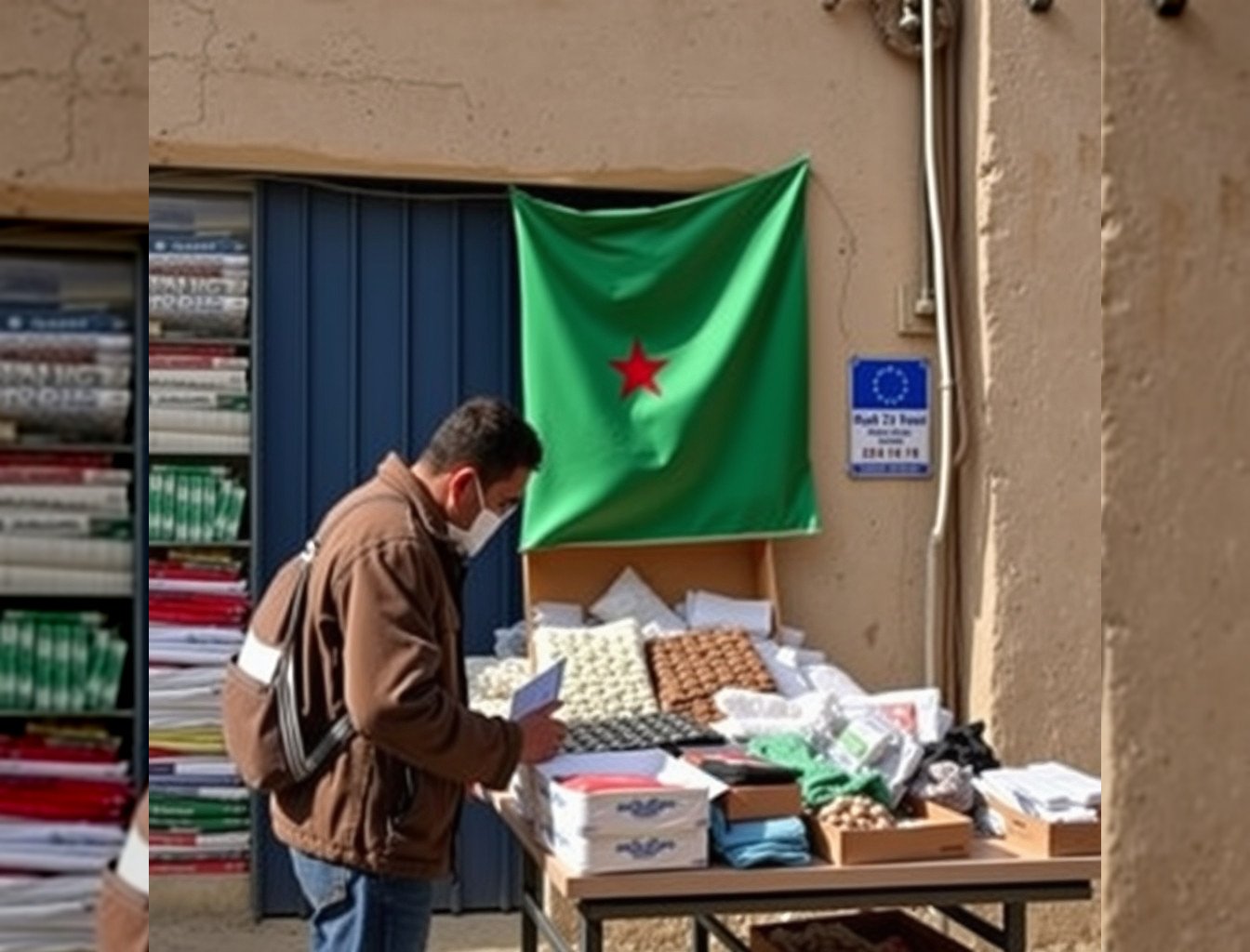
Trade Surge and Industrial Push: China’s $9B Boost vs. Local Constraints
For entrepreneurs, this means raw material costs remain volatile—Chinese steel imports surged 18% in Q2, squeezing margins for local metalworkers. Meanwhile, President Tebboune’s order to launch a “one-stop shop” for investors by September 30 aims to streamline permits. Current processing times average 45 days—double the regional average—creating bottlenecks for SMEs.
Key link: The trade boom contrasts with domestic industrial delays. A Gouiaa survey found 68% of firms entering 2024 with limited cash reserves, citing rising utility costs (up 12% YoY) and bank loan rejection rates at 40%.
Financing Gap Widens: SMEs Choke on Credit, Startups Go Underground
This forces entrepreneurs into informal channels: 43% of startups now rely on peer-to-peer lending or family capital, according to a 2024 Startup Algeria report. The corporate tax debate—Zimbabwe’s 2% digital tax pushing businesses offline—serves as a warning. Algeria’s 10% VAT on e-commerce already discourages 38% of digital sellers from formalizing, per the National Tax Authority.
Red thread: The ALRIM corruption case (10-year prison terms sought for defendants) adds legal uncertainty. Entrepreneurs report audit delays of 6–9 months, freezing working capital.
E-Commerce and Aviation: Diaspora Demand vs. Local Logistics Lag
Example: A 2024 Algerian E-Commerce Association survey found 72% of online retailers lose 15–20% of sales to cross-border platforms (Amazon, Noon). Meanwhile, startups in robotics (like Kenya’s deaf-signing limbs) show potential, but Algeria’s R&D spending stands at 0.3% of GDP—far below Tunisia’s 0.8%.
Diaspora angle: Remittances cover 12% of Algeria’s trade deficit, but 45% of diaspora entrepreneurs cite bureaucracy as their top hurdle when repatriating profits.
Government Moves: Investment Incentives vs. Corruption Risks
Contrast this with ALRIM’s corruption crackdown, which could accelerate audits but also freeze projects mid-process. Example: A 2023 World Bank report found Algerian firms spend 120 hours/year navigating red tape—40% more than Morocco.
For entrepreneurs:
– Opportunity: Faster permits could cut DZD 500,000 in annual compliance costs for mid-sized firms.
– Risk: ALRIM fallout may trigger sudden tax reviews on unregistered transactions.
Corporate Tax and Informalization: The Zimbabwe Parallel
Impact on startups:
– Revenue loss: Informal sellers miss tax deductions, paying 25% more in operational costs.
– Exit barrier: 62% of failed startups cite tax complexity as a reason, per Startup Algeria 2024.
Diaspora workarounds: 35% of Algerian expat entrepreneurs use offshore entities to avoid local taxes, siphoning $800 million annually out of the formal economy.
Startups and Innovation: Local Gaps, Global Models
But: Diaspora networks (e.g., Algerian expats in France/Canada) provide 30% of seed capital for tech startups. Example: DeepSense AI (Algeria-UK) raised $1.8M via diaspora investors.
Weekly Balance: Trade Up, Financing Down, Bureaucracy Stuck
Biggest disconnect: Algeria’s $9B China trade vs. SMEs operating on DZD 500,000/month budgets. The one-stop shop could cut red tape, but ALRIM’s corruption crackdown may offset gains.
Key Takeaway for Entrepreneurs
💡 Starting a business in Algeria? GlobalStart guides you step by step: procedures, real costs, company forms (SARL, EURL, SPA) and CNRC registration.