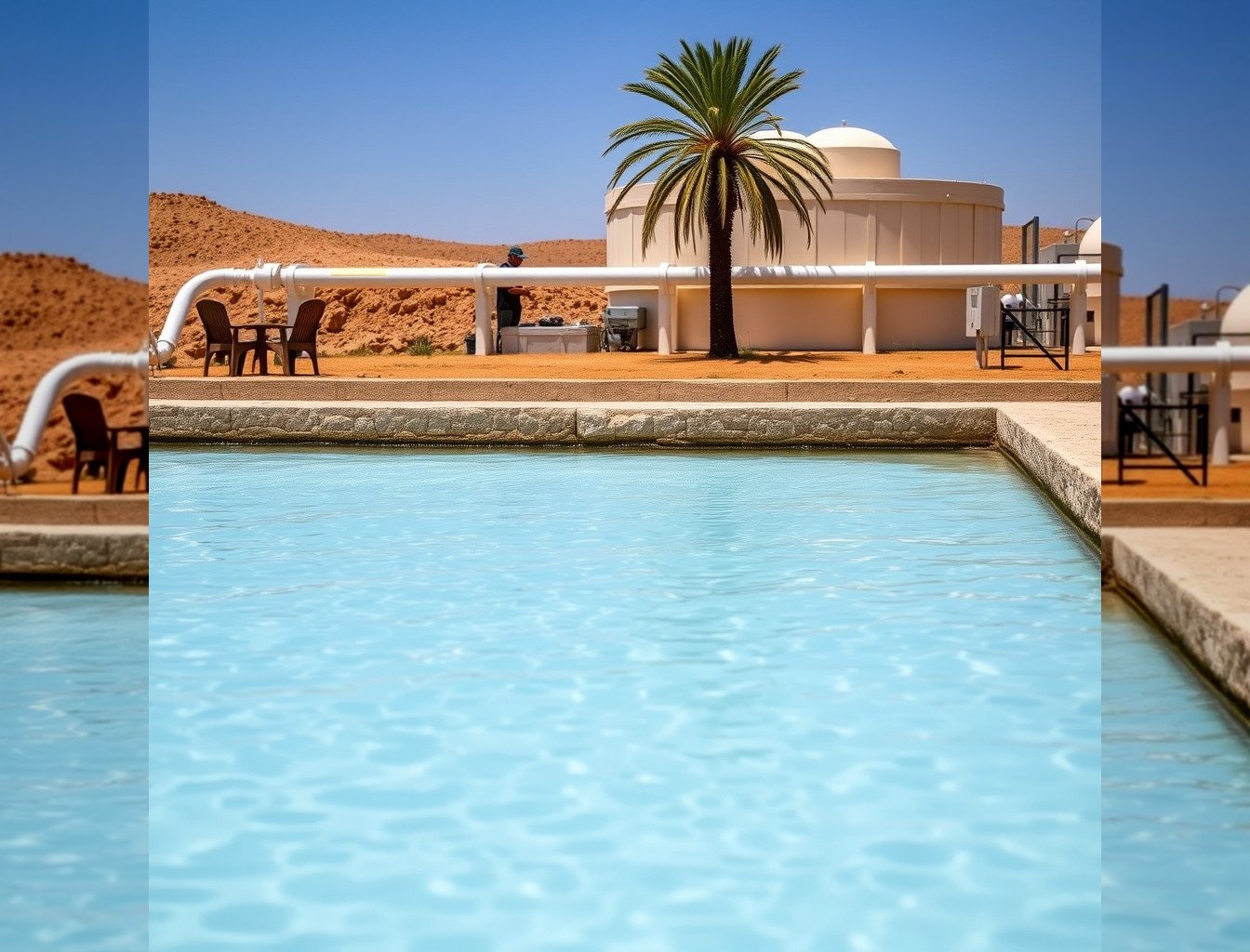
Algeria will soon break ground on three large-scale seawater desalination plants, a move that promises to redraw the country’s water map and unlock new opportunities for entrepreneurs, farmers, and the Algerian diaspora. The plants—planned for Oran, Béjaïa, and Skikda—are part of a wider strategy to double desalinated water production to 3.8 million cubic metres per day by 2030, according to recent statements from the Ministry of Water Resources and the state-owned Algerian Energy Company (AEC).
The Oran plant, the largest of the three, is expected to produce 500,000 cubic metres per day, enough to supply 2.5 million people. Construction contracts have already been awarded to a consortium led by Spain’s Acciona and Algeria’s Cosider, with financing secured through a €1.2 billion loan from the African Development Bank (AfDB) and the Islamic Development Bank (IsDB). The Béjaïa and Skikda plants, each targeting 300,000 cubic metres per day, are slated for completion by 2028, according to APS.
For entrepreneurs, the desalination push is more than a public infrastructure project—it is a catalyst for private-sector growth. The plants will create demand for local subcontractors in engineering, maintenance, and logistics. AEC has already announced plans to train 1,500 Algerian technicians in membrane filtration and energy recovery systems, opening pathways for startups in vocational training and technical consulting. The Oran plant alone is expected to generate 1,200 direct jobs during construction and 300 permanent positions once operational, according to a report by El Watan.
The desalination programme also addresses a critical bottleneck for Algeria’s agri-food sector. The country currently loses an estimated $1.5 billion annually due to water shortages in key agricultural regions like the Mitidja plain and the Sétif highlands, according to the Ministry of Agriculture. The new plants will supply water to industrial zones in Oran and Béjaïa, where food processing companies—including dairy producer Groupe Cevital and tomato paste exporter Condor—have faced production cuts due to water rationing. Entrepreneurs in hydroponics and vertical farming, such as Algiers-based startup GreenTech, are already positioning themselves to leverage the new water supply, with plans to expand greenhouse operations in the Béjaïa region.
The diaspora is also taking notice. Remittances from Algerians abroad, which reached $2.1 billion in 2023 according to the Bank of Algeria, are increasingly flowing into water-efficient ventures. Diaspora investors, particularly in France and Canada, are funding startups in drip irrigation and wastewater recycling, with at least three Algerian-Canadian entrepreneurs securing permits in 2024 to launch water-tech incubators in Algiers and Constantine. The government’s decision to allow 100% foreign ownership in water-related industries—announced in the 2023 Finance Law—has further accelerated this trend.
Energy costs remain a hurdle. Desalination is energy-intensive, and Algeria’s reliance on natural gas for power generation means that fluctuations in global gas prices could impact the plants’ long-term viability. The Oran plant will consume an estimated 4.5 kWh per cubic metre of desalinated water, according to AEC’s technical specifications. To mitigate this, the government is exploring solar-powered desalination, with a pilot project in Ghardaïa already producing 10,000 cubic metres per day using photovoltaic panels. Entrepreneurs in renewable energy, such as Algiers-based Solaire Direct, are eyeing opportunities to supply solar farms for future desalination plants.
The desalination push also signals a shift in Algeria’s economic priorities. For decades, the country’s growth model has been anchored in hydrocarbons, which still account for 95% of export revenues. The new plants, however, are part of a broader diversification strategy outlined in the 2020-2030 National Water Plan, which aims to reduce dependence on groundwater by 30% and increase desalinated water’s share of total supply from 18% to 40%. This pivot aligns with the government’s efforts to attract foreign investment in non-oil sectors, with water infrastructure now listed as a priority in the 2024 Investment Law.
Local opposition has surfaced in some coastal communities, where fishermen and environmental groups warn of potential harm to marine ecosystems. The Béjaïa plant, for instance, has faced protests from artisanal fishing cooperatives concerned about brine discharge affecting local fish stocks. The Ministry of Environment has responded by mandating environmental impact assessments and requiring desalination plants to use diffusers to dilute brine before release. Entrepreneurs in marine biotechnology, such as Oran-based startup AquaTech, are developing solutions to monitor and mitigate these effects, with plans to commercialise water-quality sensors for desalination plants.
For the diaspora, the desalination programme offers a tangible entry point into Algeria’s economy. Many Algerians abroad, particularly those in Europe and North America, have hesitated to invest due to bureaucratic hurdles and perceived instability. The desalination projects, however, are backed by multilateral financing and international partnerships, reducing some of the risks associated with local contracts. Diaspora entrepreneurs are already leveraging these opportunities, with at least five Algerian-French startups securing contracts in 2024 to supply filtration membranes and control systems for the new plants.
Key takeaway for entrepreneurs
Algeria’s desalination plants will create demand for water-efficient technologies, maintenance services, and renewable energy solutions, with the Oran, Béjaïa, and Skikda projects generating immediate opportunities in construction, training, and agri-food. The government’s push to diversify water sources reduces business risks in drought-prone regions, while the 2024 Investment Law’s incentives for foreign ownership make the sector attractive for diaspora investors. Entrepreneurs should focus on partnerships with state-owned entities like AEC and local subcontractors to secure early-mover advantages.
Sources
- Smart Water Magazine
- Middle East Institute
💡 Starting a business in Algeria? GlobalStart guides you step by step: procedures, real costs, company forms (SARL, EURL, SPA) and CNRC registration.