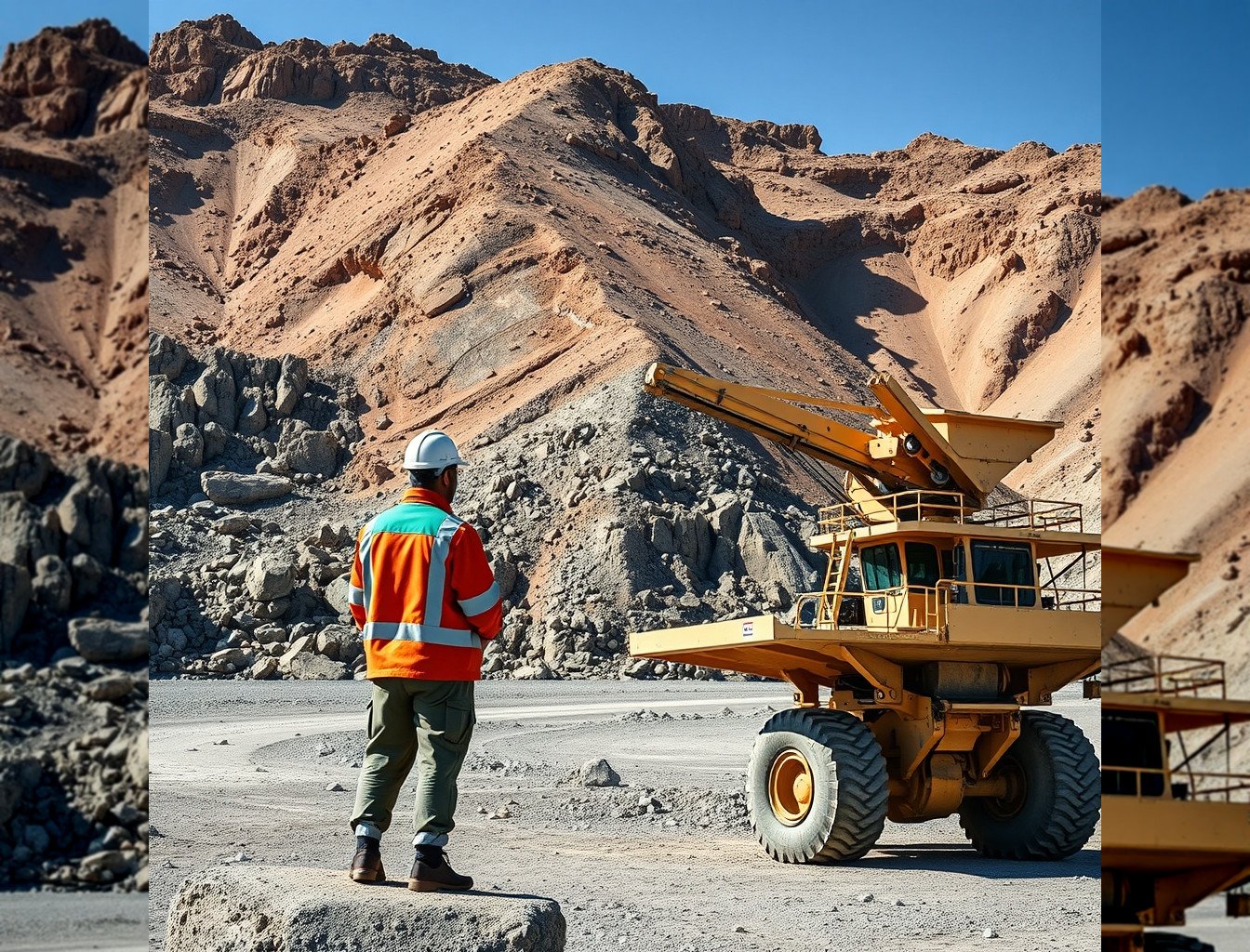
Algeria has just rewritten its mining rulebook. In June 2025, the government approved a law that allows foreign companies to own up to 80% of mining projects on Algerian soil. The move ends decades of strict caps and opens the door to billions of dollars in fresh capital, new technology and international partnerships. For Algerian entrepreneurs and the country’s 2 million-strong diaspora, the timing could not be more strategic.
The headline number – 80% foreign equity – is the clearest signal yet that Algiers wants to fast-track its mining revival. Sitting on Africa’s third-largest phosphate reserves and vast troves of gold, zinc, copper and rare earths, Algeria is betting that foreign cash can turn geological assets into engines of industrial growth. “Algeria is establishing a qualitative shift,” announced the Algerian Press Service (APS) in March 2026, framing the policy as a “real mining renaissance.”
Figures tell the broader story. Algeria’s phosphate sector alone is projected to attract $7 billion in new investment for a mega-project centred on Bled El Hadba. According to APS, phosphate exports from the new terminal are scheduled to begin in March 2027, just 21 months after the foreign-ownership law was passed. Pupuk Indonesia confirmed in January 2026 that it had secured long-term phosphate supply deals with Algerian state agencies, a tangible sign that buyers are already placing bets on future output.
What the new law changes
Until recently, foreign investors in Algerian mining were limited to 49% ownership unless they partnered with a state-owned firm such as SONATRACH or ASMIDAL. The 80% cap removes that ceiling for the first time in decades. According to Mining.com and Business Insider Africa, the new rule applies across the board: exploration licences, feasibility studies and full-scale mining ventures are all eligible for majority foreign control.
The legislation also streamlines licensing. A single window at the Ministry of Industry and Mines now handles applications, cutting red tape that previously took years. “This is not just about ownership,” said an Algerian mining consultant who asked not to be named. “It is about unlocking capital that can build rail links, desalination plants and industrial zones around the mines.”
Who stands to benefit
For international miners, the calculus is simple. Algeria offers high-grade phosphate, rare earths required for electric-vehicle batteries and proximity to European markets via Mediterranean shipping lanes. The country’s energy costs are low thanks to domestic gas reserves, and the government guarantees long-term offtake agreements to reduce commercial risk.
Local entrepreneurs can also play. The diaspora, in particular, is expected to channel savings and expertise back into projects. “The diaspora has capital and know-how,” noted an analyst at the National Agency for Investment Development (ANDI). “Now they can lead or co-lead ventures instead of being minority partners.” Examples already exist: in 2025, a London-based Algerian fund acquired a 30% stake in an early-stage zinc project near Tlemcen, with plans to raise the share to 60% once permits are granted.
Industry 5.0 and downstream ambitions
Algeria is not content merely shipping raw ore. The mega-phosphate project announced in September 2025 is designed to supply both global fertiliser markets and domestic agro-industrial clusters. Trendsnafrica reports that the complex will integrate Industry 5.0 technologies—automation, AI-driven quality control and green hydrogen for processing—to cut emissions and raise margins.
For entrepreneurs, the downstream pull is powerful. A phosphate fertiliser plant with 1.2 million tonnes annual capacity is under construction near Annaba, according to AGBI. When completed, it will create thousands of jobs and reduce Algeria’s $2 billion annual bill for imported fertilisers.
Risks and bottlenecks
The new regime is not risk-free. Infrastructure gaps remain: rail lines from Tébessa to Annaba run at 60% capacity, and port facilities at Djen Djen are still expanding. Foreign exchange controls could complicate profit repatriation despite the ownership liberalisation.
Moreover, the 80% rule is not automatic. Each licence must still pass a “national interest” test conducted by a ministerial committee. In practice, this means sensitive metals like lithium or rare earths may face higher scrutiny than bulk commodities such as phosphate.
Next steps and timelines
The Ministry of Industry and Mines published draft implementation decrees in March 2026. Companies have until the end of 2026 to submit expressions of interest for the first tranche of licences. APS reports that the Bled El Hadba terminal, currently under accelerated expansion, will be inaugurated in stages between late 2026 and March 2027.
For Algerian founders and diaspora investors, the message is clear: licences will be awarded on a first-come, first-served basis for the most advanced projects. “Speed matters,” said a senior ANDI official. “Projects that can show financing, technology and social-impact plans by mid-2026 will be prioritised.”
Key takeaway for entrepreneurs
Algeria has legally capped foreign ownership at 80% for mining projects, opening majority stakes to international and diaspora capital. Early licence applications—especially for phosphate, zinc and rare-earth ventures—are due by the end of 2026, with first exports scheduled for March 2027. Entrepreneurs who combine Algerian geological assets with export offtake agreements and green-process technologies will gain priority in the licensing queue.
Sources
- World Fertilizer
- Muslim Network TV
- aps.dz
- en.antaranews.com
- Business Insider Africa
- Mining.com
💡 Starting a business in Algeria? GlobalStart guides you step by step: procedures, real costs, company forms (SARL, EURL, SPA) and CNRC registration.