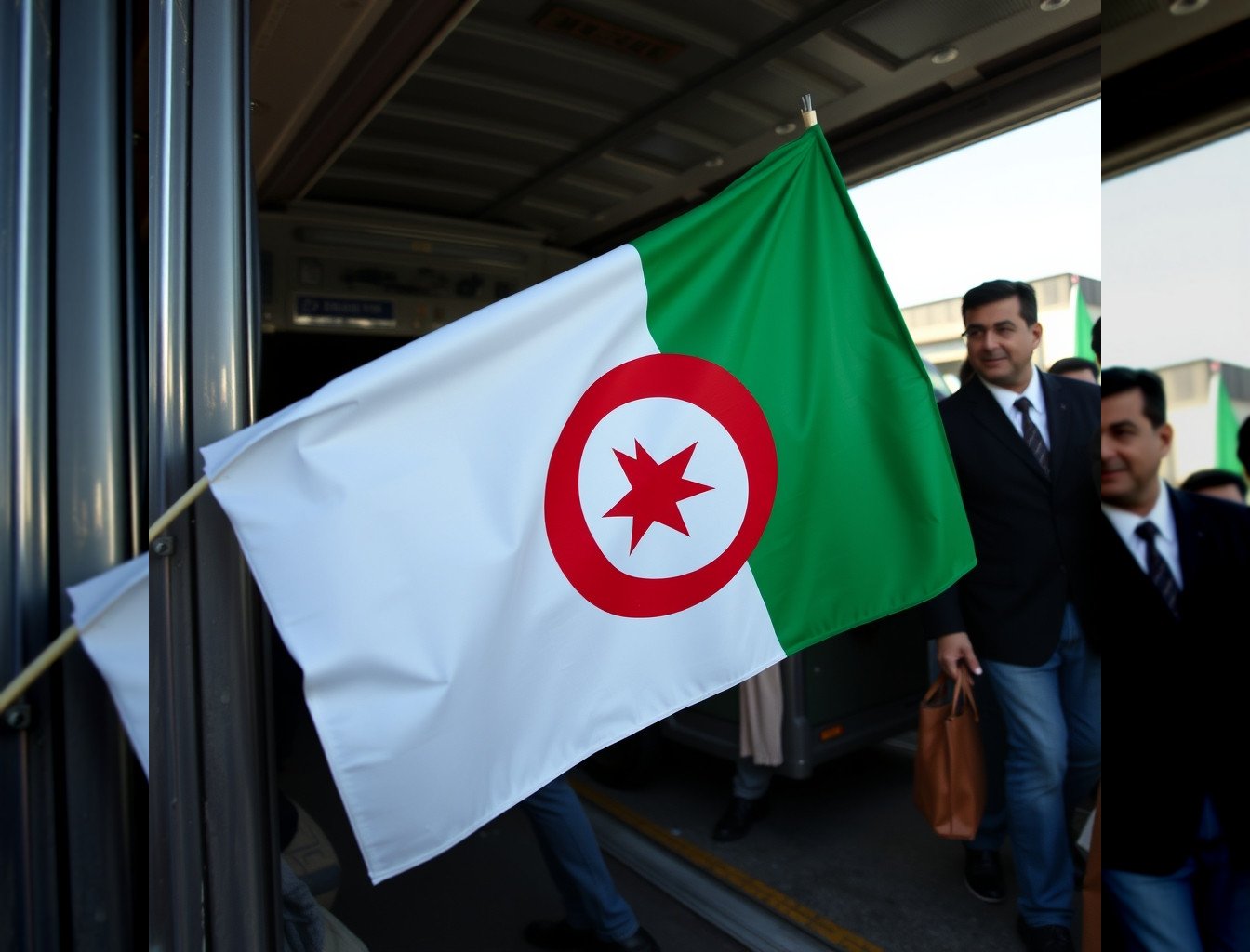
Political dynamics: leadership changes amid ongoing protests
Cultural sectors: cinema and heritage under strain
Separate reporting highlights Algeria’s historical sites in the Sahara, including rock art sites near Tassili n’Ajjer and Tadrart Acacus. These locations contain over 15,000 documented paintings and engravings dating to between 12,000 and 1,500 BCE. Climate studies cited alongside the archaeological findings note that the Sahara transitioned from savanna to desert approximately 5,000 years ago.
Industrial and trade policy: ammonia and phosphate expansion
In parallel, Turkish President Recep Tayyip Erdoğan hosted Algerian counterpart Abdelmadjid Tebboune in Ankara. The two sides agreed to expand bilateral trade, targeting $10 billion in annual exchanges within five years. Key sectors include automotive components, construction materials, and food products.
Russia and Algeria concluded a bilateral cooperation review in Moscow, with agriculture, energy, and infrastructure listed as priority areas. Ministerial-level discussions covered joint phosphate shipments and port infrastructure projects.
China and Algeria advanced a joint dredging venture at Annaba Port and expansion of the phosphate terminal. The projects are financed under a 2023 framework agreement valued at $380 million. Algeria’s phosphate exports rose to 3.7 million metric tons in 2023, up from 3.2 million in 2022.
Civil society and elections: union activity and voting pressure
Human Rights Watch reported that authorities have “halted repression of civic space” in advance of the vote, citing a temporary reduction in arrests and summons of activists. The government has not commented publicly on the claim.
The UAE has rejected Algeria’s accusation of interference in the electoral process. A foreign ministry statement called the allegations “unfounded and contrary to diplomatic norms.”
Three candidates have declared their intention to run in the presidential election: incumbent Abdelmadjid Tebboune, former prime minister Youcef Yousfi, and independent figure Abdelkader Bengrine. Campaigning begins on July 19.
Infrastructure and logistics: rail and metro progress
The MCDF approved $2 million in grants for projects in Algeria, Egypt and Kazakhstan, targeting climate resilience and digital innovation. Algeria’s share will focus on railway safety systems.
The European Investment Bank approved a €747 million loan for the first phase of a 495 km railway between Tlemcen and Béchar. Phase 1 covers 180 km at an estimated cost of €480 million and is expected to reduce road transport time by 40%.
Real estate and economy: foreign partnerships and tender notices
The Algerian Ministry of Pharmaceutical Industry announced a national tender for 50,000 metric tons of soft milling wheat, valued at approximately $22 million. The tender is open to international suppliers and closes on June 20. The wheat will be used for flour production and packaged food manufacturing.
The ministry also outlined plans to add 12 new pharmaceutical production lines by 2026, increasing domestic output by 30%. Priority areas include generics, vaccines and oncology drugs.
Diaspora and community initiatives
Bilateral talks between Algeria and France continue on dual citizenship and consular services for the estimated 2.3 million Algerians living in France.
National identity debates and Amazigh politics
Algeria’s Islamist parties have framed the Amazigh issue as a threat to national unity, while secular and left-wing groups advocate constitutional reforms that would recognize pluralism.
Business context for entrepreneurs
– Capacity expansions in ammonia-urea and phosphate terminals increase export potential for chemical and fertilizer producers.
– The €747 million railway loan signals a long-term commitment to logistics infrastructure, potentially lowering transport costs for industrial zones in the southwest.
– Tender opportunities in pharmaceutical raw materials and wheat imports are open to foreign suppliers with registered Algerian subsidiaries.
– Joint ventures in housing and tourism can access Algeria’s state-backed financing programs, including low-interest loans for construction.
Balance of the week
Political: New party leadership amid protest movements
Cultural: Film festival canceled due to Covid-19; heritage sites documented under climate studies
Industrial: Ammonia capacity up 50%; phosphate port expansion; Turkish trade targets
Civil Society: Unions mobilize ahead of elections; HRW notes easing of repression
Infrastructure: Heavy haul railway inaugurated; €747m rail loan approved
Real Estate: Vietnamese delegation discusses housing; pharmaceutical tender open
Diaspora: Summer camps conclude; France talks continue
Identity: Amazigh political mobilization grows; Islamists counter with national unity framing
Key takeaway for entrepreneurs: Algeria’s industrial capacity expansions in ammonia and phosphate create export opportunities for chemical and mining investors. Rail infrastructure upgrades and housing tenders offer entry points for logistics and construction firms. Foreign suppliers can bid on pharmaceutical and food raw material tenders closing this month. Diaspora-linked summer programs and France-Algeria talks on dual citizenship remain relevant for community-oriented ventures.
Sources
- Geographical
- Financial Times
- Amnesty International
- Al Jazeera
- VOA – Voice of America English News
- Arab Reform Initiative
💡 Starting a business in Algeria? GlobalStart guides you step by step: procedures, real costs, company forms (SARL, EURL, SPA) and CNRC registration.