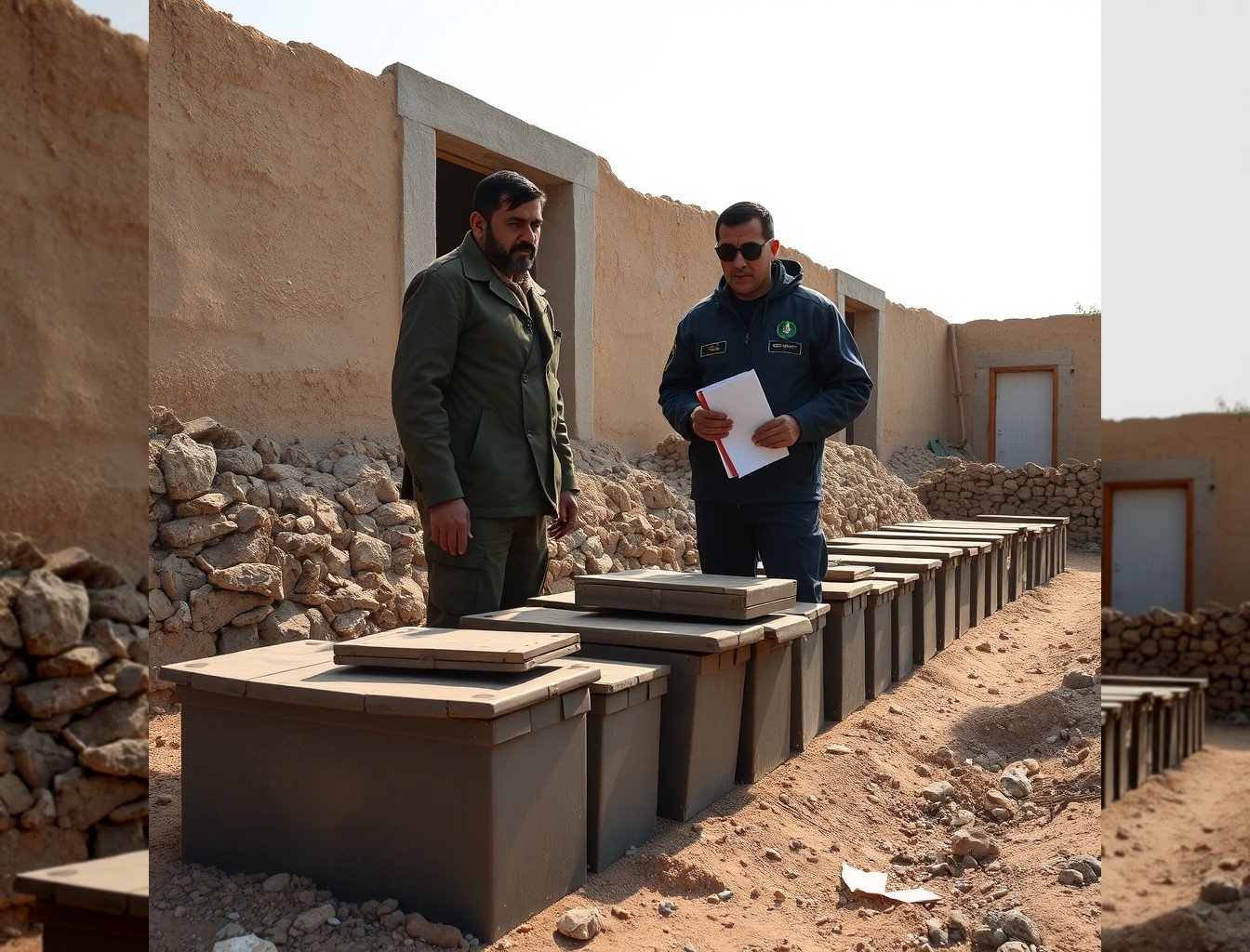
France controls most archives on the Algerian War (1954-1962) through strict secrecy laws inherited from its colonial administration, according to a recent investigation by Sylvie Braibant and Pierre Audin published in Orient XXI on 25 November 2020. These documents—held by the French National Archives, the French Army, and the French Ministry of Foreign Affairs—remain largely inaccessible to Algerian researchers, historians, and families of victims. The lack of transparency obstructs academic study and delays long-overdue justice for survivors, while also distorting economic narratives tied to Algeria’s colonial and post-colonial periods.
The French National Archives in Pierrefitte-sur-Seine house thousands of classified files on Algeria, including records that could reveal atrocities committed during the war and settlement policies. The French Army and the Ministry of Foreign Affairs also withhold documents under the guise of national security, despite laws requiring declassification after 50 years. Some files remain sealed indefinitely using pretexts such as “defense secrets” or “protection of privacy,” effectively erasing historical evidence that could inform Algeria’s economic and social recovery.
The secrecy has real consequences for Algeria’s development. Economic historians, entrepreneurs, and diaspora investors seeking to reconstruct Algeria’s colonial-era business landscape—such as oil contracts, land confiscations, or infrastructure projects—are hindered by missing documentation. Without verified archives, claims about resource ownership, intellectual property, and historical injustices remain disputed, slowing foreign investment and complicating heritage-based ventures.
Algerian researchers like Fatima Besnaci-Lancou, daughter of a war veteran, have spent decades fighting to access these archives. According to Orient XXI, she has repeatedly requested access to military and administrative files related to forced displacement, torture, and disappearances, but each request has been denied or delayed indefinitely. “We are not asking for state secrets,” Besnaci-Lancou was quoted saying. “We are asking for the truth about our own history.” Her struggle highlights how archival closure reinforces cycles of impunity and undermines Algeria’s ability to build a shared national narrative.
France’s archival opacity also affects diaspora entrepreneurs and investors. Many second- and third-generation Algerians abroad seek to reclaim family assets or reclaim business ties rooted in colonial-era enterprises. However, without access to land registries, corporate records, or judicial files, claims over property seized during the war or under state expropriation laws remain unverifiable. This legal uncertainty discourages diaspora investment in sectors like real estate, agriculture, and tourism—key areas for Algeria’s diversification away from hydrocarbon dependence.
The French government has occasionally released small batches of declassified documents, but these are often heavily redacted or irrelevant to core historical questions. In 2018, French President Emmanuel Macron acknowledged “the torture and killings committed by the French army” and called for historical truth, yet concrete archival access has not followed. Meanwhile, Algeria continues to demand full disclosure as part of ongoing reparations negotiations and bilateral relations.
For entrepreneurs, the archival blockade is not just a historical issue—it’s a business one. Disputes over land titles, unclear mineral rights, and contested infrastructure legacies all stem from missing or controlled archives. Without transparent access to colonial-era documents, due diligence on property acquisitions or resource deals remains incomplete. Diaspora investors, in particular, face added risk when reconstructing family business histories in Algeria.
France’s refusal to fully open the archives of the Algerian War perpetuates a cycle of ignorance that hurts Algeria’s economy and its people. Until these documents are made accessible, the past will continue to obscure the present—especially for those trying to rebuild Algeria’s future.
Key takeaway for entrepreneurs
Algerian entrepreneurs and diaspora investors cannot verify property claims or historical business ties due to sealed colonial-era archives in France. This legal uncertainty increases risk in sectors like real estate, oil, and tourism. Access to declassified files would improve due diligence and unlock heritage-based ventures.
Sources
- Orient XXI
💡 Starting a business in Algeria? GlobalStart guides you step by step: procedures, real costs, company forms (SARL, EURL, SPA) and CNRC registration.