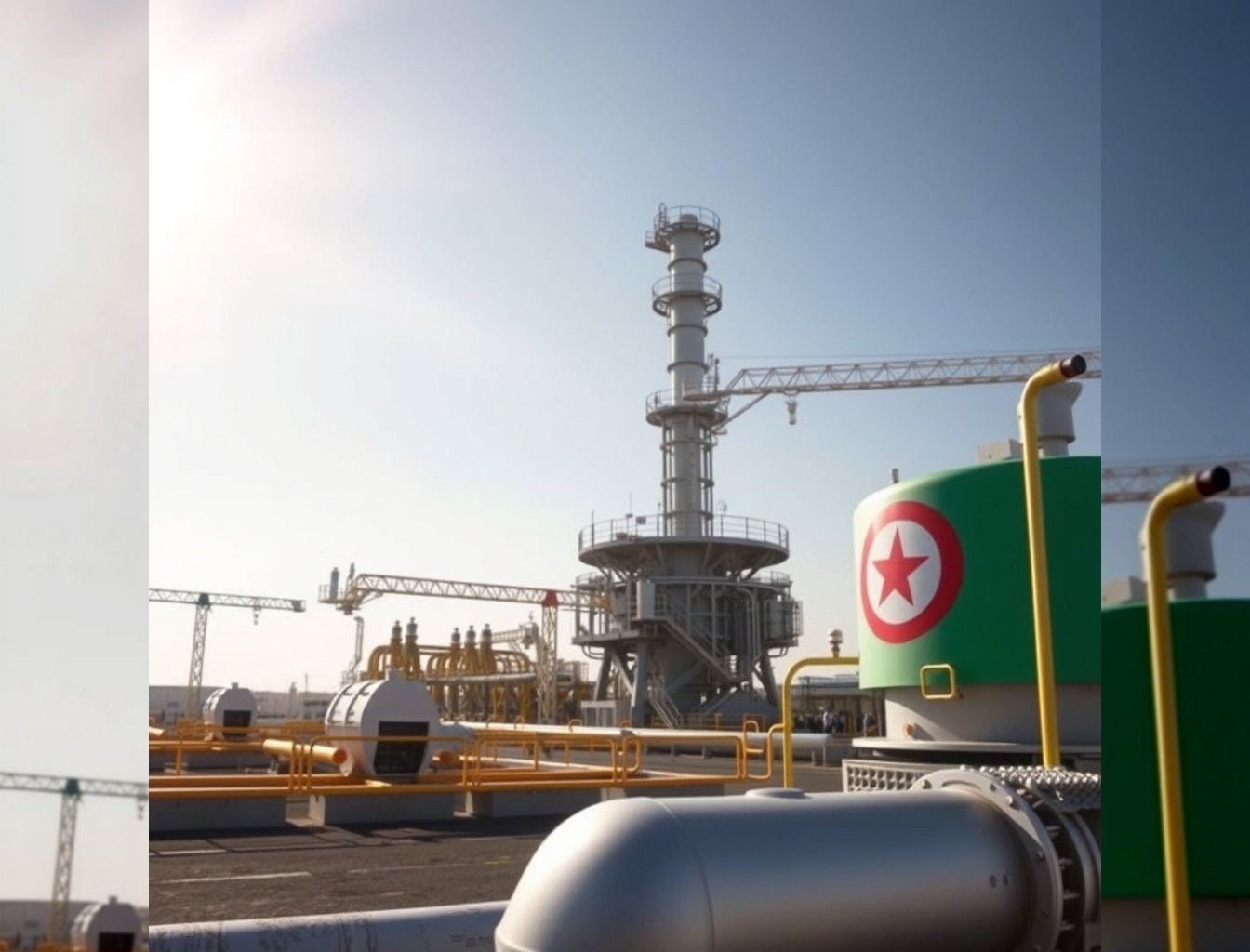
South Korea’s state-owned Korea Gas Corporation (KOGAS) recently signed a long-term liquefied natural gas (LNG) supply deal with Algeria and Libya to diversify its energy sources. The agreement, announced in mid-April 2026, secures additional LNG volumes for South Korea as it reduces reliance on Middle Eastern suppliers amid regional instability. For Algerian entrepreneurs and the diaspora, this deal signals new commercial opportunities across logistics, downstream industries and energy services.
The KOGAS deal adds to Algeria’s growing role as a swing supplier in global LNG markets. According to Discovery Alert, Africa’s LNG exports surged 27% in 2026 as global buyers seek alternative sources to Russian pipeline gas and volatile Middle Eastern cargoes. Algeria’s state energy company SONATRACH, already Africa’s top LNG exporter, is positioned to benefit from rising Asian demand. Industry analysts note that SONATRACH’s Skikda and Arzew plants are operating near capacity, with recent maintenance upgrades allowing for higher export volumes.
Sonatrach’s CEO Toufik Hakkar confirmed in a March 2026 interview with Capmad that Algeria is targeting an additional 10 billion cubic meters of LNG exports annually by 2028. This expansion hinges on bringing new gas fields onstream in the Berkine Basin and extending pipeline links to the Mediterranean. For entrepreneurs, this means opportunities in project logistics, maintenance services and local content supply chains.
The KOGAS deal also underscores Algeria’s strategic pivot toward Asia. Since 2024, Sonatrach has signed multiple MoUs with India’s GAIL and Japan’s JERA to supply LNG through long-term contracts. These agreements align Algeria with Asia’s decarbonization goals, where gas is seen as a transition fuel alongside renewables. For the Algerian diaspora in energy hubs like Dubai or Singapore, this shift creates consulting, trading and investment openings.
However, structural bottlenecks remain. Capmad reports that Algeria’s gas export capacity is constrained by aging infrastructure, bureaucratic delays in new project approvals and underinvestment in storage. SONATRACH’s upstream projects in the Ahnet Basin have faced repeated postponements due to financing hurdles and environmental reviews. Entrepreneurs eyeing gas-related ventures should factor in these risks when planning local partnerships or supply contracts.
For logistics firms, the KOGAS deal implies higher container traffic through Algiers and Oran ports. SONATRACH’s shipping subsidiary, Sonatrach Shipping, is expanding its fleet to meet rising LNG cargo demand. Port operator Entreprise Portuaire d’Oran (EPO) recently tendered a $120 million upgrade to handle larger LNG tankers, offering contracts for Algerian logistics companies in dredging, stevedoring and cold chain services.
Downstream, Algerian entrepreneurs can explore value-added industries such as petrochemicals and fertilizers. SONATRACH’s planned $4 billion ammonia plant in Arzew, slated for completion in 2027, will require local engineering, construction and maintenance services. Diaspora investors familiar with Asian markets can facilitate technology transfers or joint ventures to supply equipment or expertise.
On the policy front, President Abdelmadjid Tebboune’s administration has introduced incentives for private participation in energy services. A new investment law passed in 2025 allows foreign-owned firms to operate in energy services without local partnership requirements, provided they reinvest 30% of profits locally. This could attract diaspora capital into gas-related startups or consulting firms.
Yet geopolitical risks persist. The Carnegie Endowment warns that a prolonged Gulf crisis could disrupt LNG shipping lanes through the Strait of Hormuz, affecting Algerian cargoes bound for Asia. Entrepreneurs should diversify revenue streams by targeting European buyers as well, where Algeria’s proximity offers a competitive edge over U.S. or Qatari LNG.
Key takeaway for entrepreneurs
Algeria’s LNG export surge to South Korea creates immediate demand for logistics, maintenance and downstream services. Entrepreneurs can tap into SONATRACH’s $4 billion ammonia project in Arzew or its port upgrades in Oran, while diaspora investors can leverage Asian partnerships. Structural delays in upstream projects remain a risk, so firms should secure long-term contracts early.
Sources
- Carnegie Endowment for International Peace
- Capmad
- Discovery Alert
- Atlantic Council
💡 Starting a business in Algeria? GlobalStart guides you step by step: procedures, real costs, company forms (SARL, EURL, SPA) and CNRC registration.