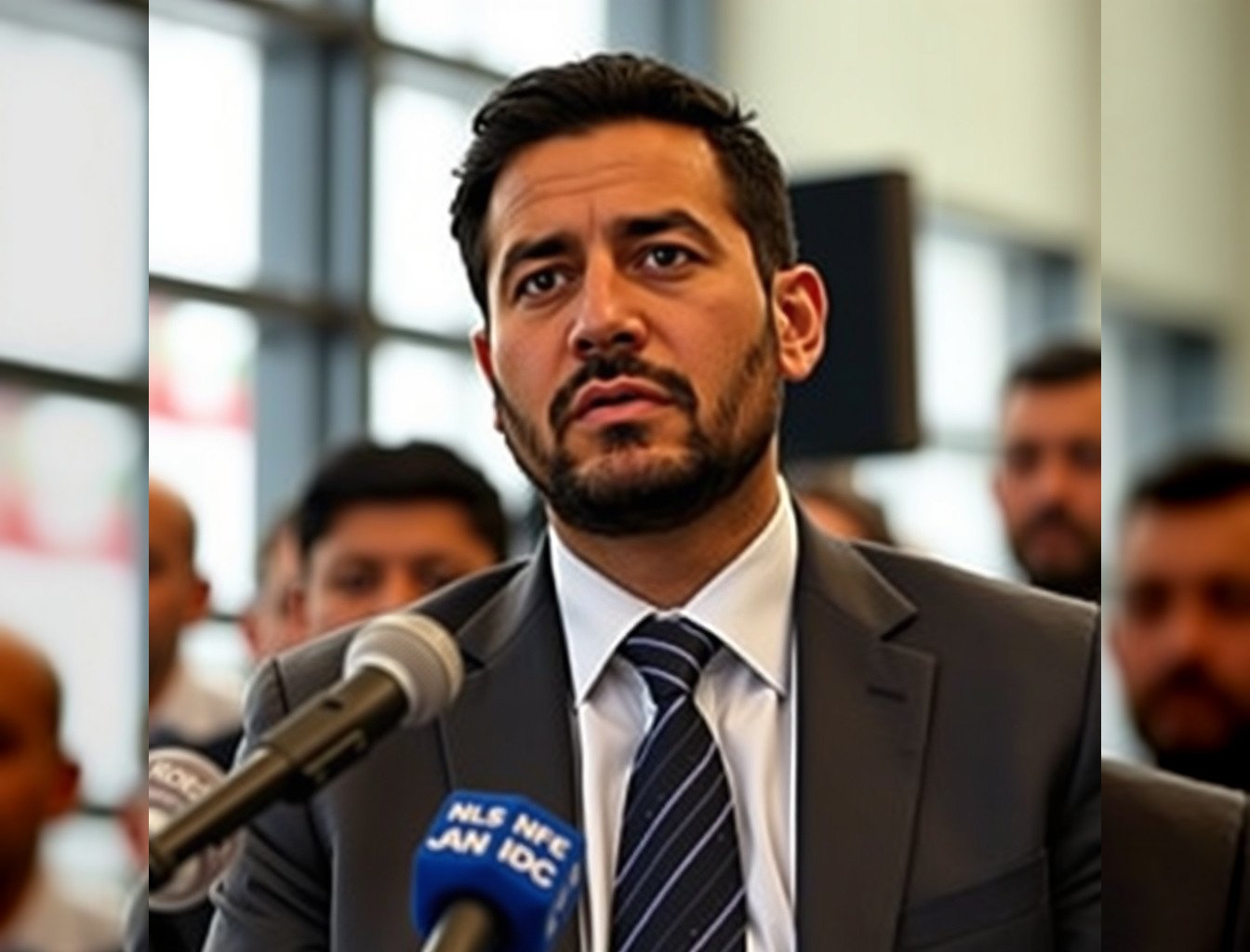
Abdelmadjid Tebboune’s re-election with 94.7 percent of the vote this month has left Algerian entrepreneurs divided between cautious relief and deep concern over policy continuity. While the election results confirm President Tebboune’s grip on power, the opposition’s allegations of fraud and the low voter turnout—estimated at under 30 percent by independent monitors—point to a society frustrated by stagnation. For business founders, the president’s second term raises urgent questions about economic reform, inflation control and the role of foreign investment.
Tebboune’s landslide victory, reported by Al Jazeera on September 8, extends a mandate focused on stability and hydrocarbon-driven growth. Yet the scale of the win—nearly 7 million votes out of 7.4 million cast—has been widely disputed. Opposition figures such as Karim Younes and Rachid Nekkaz have publicly questioned the transparency of the vote, while dozens of officials and activists were arrested in August over alleged fraud, according to Genocide Watch. These developments undermine investor confidence in Algeria’s institutional credibility, a critical factor for entrepreneurs seeking predictable regulatory environments.
The business climate remains shaped by Algeria’s heavy reliance on oil and gas, which account for over 90 percent of export earnings and 60 percent of state revenue, per official statistics. Despite fluctuations in global energy prices, state revenues have remained volatile, complicating budget planning for private firms. Inflation, hovering near 10 percent in 2024, has eroded purchasing power and increased operating costs for small and medium-sized enterprises across sectors such as retail, construction and manufacturing.
Recent government measures, including the 2025 budget proposal that maintains subsidies on essential goods, aim to cushion the impact on households but offer little relief to entrepreneurs facing rising fuel and electricity costs. The budget also extends tax incentives for industrial zones in the south, a move welcomed by investors in renewable energy and mining. However, bureaucratic hurdles persist: the World Bank’s latest Doing Business report ranks Algeria 157th out of 190 economies for ease of starting a business, citing lengthy registration processes and limited access to credit.
Foreign investors continue to eye Algeria’s renewable energy potential, particularly solar and wind, given the country’s vast untapped capacity. In 2024, Algeria launched a 3 gigawatt solar program under state utility Sonelgaz, with tenders expected in 2025. Yet foreign firms remain cautious due to currency controls and restrictions on profit repatriation. The central bank’s decision to devalue the dinar by 20 percent in 2023 has improved export competitiveness but increased import costs for machinery and technology.
For the Algerian diaspora, Tebboune’s re-election signals limited near-term change in policies governing remittances or investment incentives. While the government has pledged to streamline procedures for diaspora entrepreneurs, implementation has been slow. The National Agency for Investment Promotion (ANDI) reports a 12 percent increase in diaspora-led projects in 2024, primarily in real estate and tourism, but bureaucratic delays and unclear legal frameworks continue to deter larger ventures.
The president’s platform emphasizes industrialization and import substitution, with flagship projects such as the $11 billion phosphate complex in Tébessa and the $5 billion car assembly plant in Relizane. However, delays in project execution and funding gaps have raised doubts about delivery timelines. Entrepreneurs in the automotive sector, for example, face uncertainty over local content requirements and tariff policies, which have fluctuated in recent years.
Critics argue that Tebboune’s economic strategy lacks coherence. The government’s push for public-private partnerships in infrastructure has stalled due to red tape, while state-owned enterprises like Sonatrach dominate key sectors. The energy giant Sonatrach, Algeria’s largest company, reported net profits of $3.2 billion in 2023, yet its dominance limits opportunities for smaller firms in oil services and downstream industries.
In Algiers, small business owners describe a climate of cautious optimism. “The government talks about diversification, but every time we try to expand, we hit a wall,” said Fatima Zohra, owner of a textile factory in Rouiba. “The energy subsidies help reduce costs, but the paperwork to qualify is overwhelming.” Her complaint reflects a broader trend: while macroeconomic stability is necessary, micro-level reforms are what Algerian entrepreneurs need to scale up.
The diaspora’s role remains pivotal. According to Algeria’s Ministry of Foreign Affairs, remittances from Algerians abroad reached $10.5 billion in 2024, equivalent to nearly 5 percent of GDP. Yet only a fraction of these funds flow into productive sectors due to regulatory barriers. The government’s 2025 investment law promises to ease restrictions, but entrepreneurs say past promises have not translated into action.
Tebboune’s second term begins with a paradox: strong political control but weak economic momentum. For Algerian founders, the path forward hinges on whether the government can translate its industrial ambitions into tangible reforms. Without clearer rules on competition, currency and land access, even high-potential sectors like tech and green energy will struggle to thrive.
Key takeaway for entrepreneurs
Algeria’s 2024 presidential election confirms policy continuity under Tebboune, but the lack of credible opposition and low turnout signal weak public backing for his agenda. Entrepreneurs face persistent challenges: high inflation, currency controls and bureaucratic delays, despite incentives in renewable energy and industry. Diaspora investors remain a key resource, but regulatory uncertainty continues to limit large-scale projects.
Sources
- Middle East Eye
- BBC
- AP News
- Genocide Watch
- France 24
- Al Jazeera
💡 Starting a business in Algeria? GlobalStart guides you step by step: procedures, real costs, company forms (SARL, EURL, SPA) and CNRC registration.