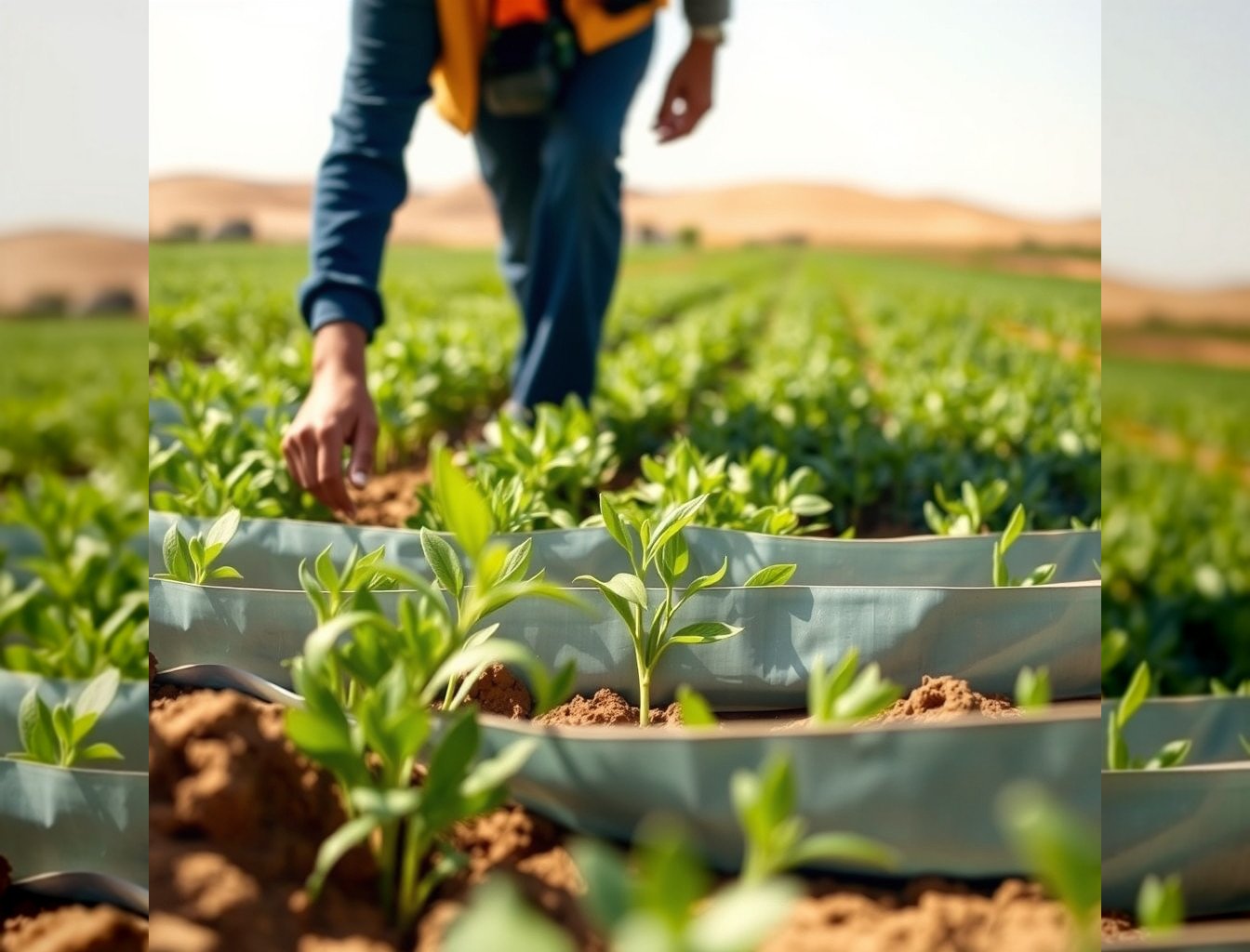
Algeria is reviving its regional clout by staking out large irrigation projects in arid African nations, a policy shift that gives Algerian firms fresh export channels and the diaspora a new engagement platform.
According to The Arab Weekly, Algiers has stepped up financing and technical offers to build or expand irrigation systems in Chad, Niger and Mali since mid-2022. These deals bundle soft loans, turnkey construction contracts and Algerian-made drip-irrigation equipment, creating near-term revenue for Algerian pump manufacturers such as ETTP and irrigation-systems specialist Hydra.
The projects—detailed in proposals seen by The Arab Weekly—range from rehabilitating the 240-kilometre “Canal du Sahel” in Chad to installing solar-powered wells in Niger’s Diffa region. A $120 million package for Mali, approved in August 2022, includes 3,000 hectares of drip-irrigated market gardens around Gao and Timbuktu.
For Algerian start-ups founded in the last decade, the orders represent a way to scale production. ETTP, a state-owned pump maker, told local press it plans to double its drip-system output to 1,500 units per month by mid-2024 to meet demand from Chad and Mali. Hydra, a private Algerian company with a factory near Oran, has already shipped 450 drip lines to Diffa since October 2022, shipping invoices show.
The financing mechanism matters: loans from Algeria’s TSAVEX Bank (Banque du Service de l’Armement et des Grands Travaux) carry a 2.5 percent interest rate and a 12-year grace period, far cheaper than commercial alternatives from Chinese or Gulf lenders. “This opens a clear price corridor for Algerian SMEs,” says economist Amine Taleb, who follows North–South infrastructure finance.
Yet the strategy carries execution risks. In Mali, contractor delays have pushed back Gao’s irrigation deadline from February 2023 to December 2023. Security advisories from the Algerian foreign ministry still classify Timbuktu as “high-risk,” complicating site mobilisation.
For the Algerian diaspora, the push creates consultancy and supply-chain opportunities. Engineers and agronomists based in Paris, Montreal and Dubai can bid for feasibility studies and after-sales service contracts under the same TSAVEX-backed packages. The Algerian Investment Fund (FAIE) runs a dedicated “Diaspora Desk” that processed 18 irrigation-related proposals in Q4-2022, according to FAIE statistics.
Regional watchers note Algeria is leveraging its desert-engineering brand—built on the $4 billion “Barrages Vert” project—to win political capital as well as export deals. In Niger, President Mohamed Bazoum highlighted Algeria’s role during a joint press conference with Algerian President Abdelmadjid Tebboune in Niamey, November 2022. “Our countries are betting on irrigation as the fastest route to food self-sufficiency,” Bazoum said.
Business founders in Algeria’s green-tech sector see the trend as a window that may close if global interest rates rise and European banks outbid TSAVEX on soft loans. Hydra’s CEO Kamel Boudjema told a November 2022 forum in Annaba that his company is already pacing production to avoid idle capacity once Chinese contractors secure new Sahelian irrigation tenders in 2024.
Key takeaway for entrepreneurs
Algerian pump and irrigation-system exporters have secured confirmed orders worth over $150 million in Chad, Niger and Mali as of February 2023, with low-interest financing from TSAVEX Bank covering up to 80 percent of contract value. Diaspora engineers can access Algerian-funded feasibility and maintenance contracts through the FAIE Diaspora Desk. Delivery deadlines in Mali have slipped to December 2023, so firms should front-load logistics to meet revised schedules.
Sources
- The Arab Weekly
💡 Starting a business in Algeria? GlobalStart guides you step by step: procedures, real costs, company forms (SARL, EURL, SPA) and CNRC registration.