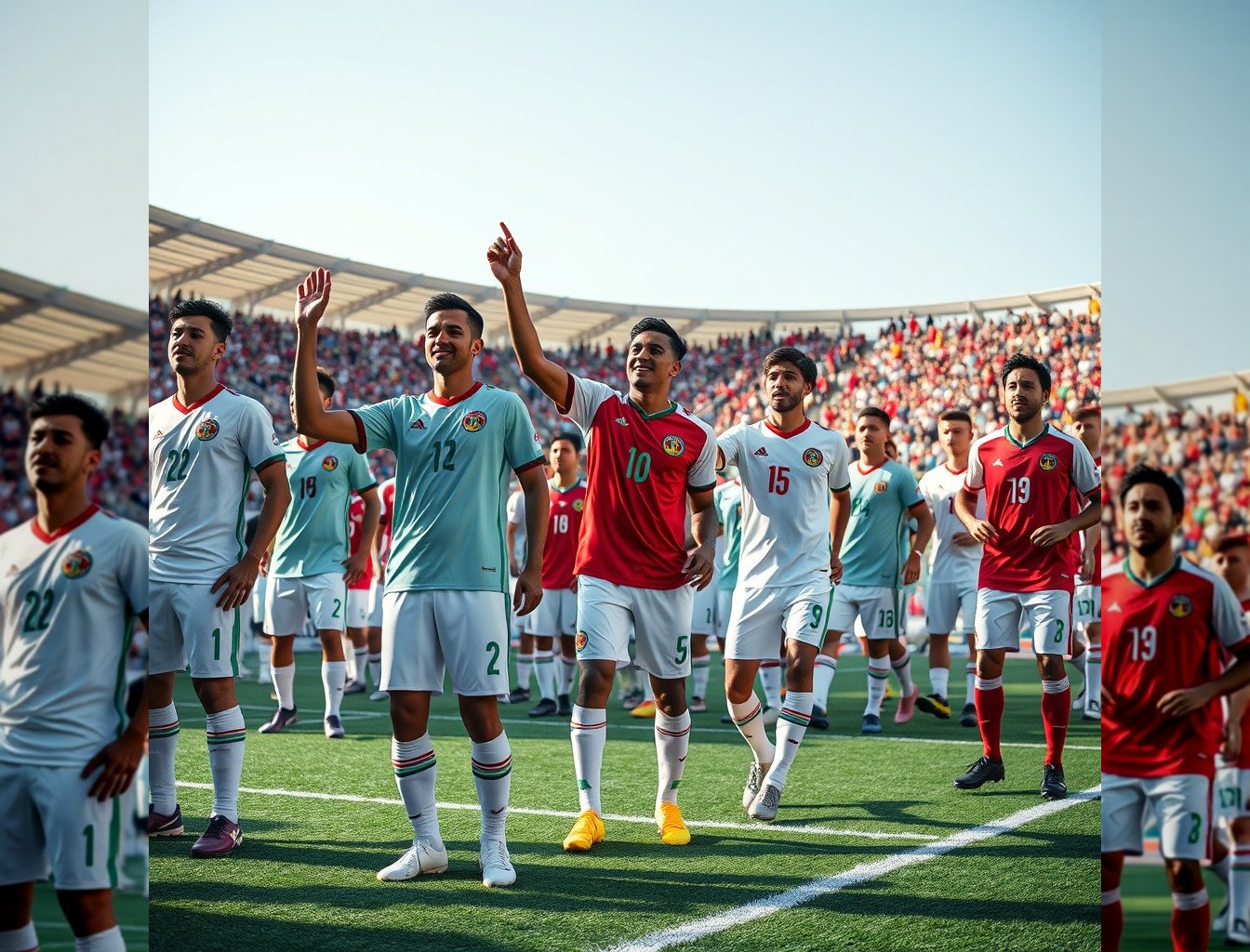
Algeria’s national soccer team secured its place at the 2026 FIFA World Cup with a recent win, sending waves of pride through the domestic economy and the global Algerian diaspora. The qualification, confirmed by FIFA in October 2025, comes at a pivotal moment for investors and entrepreneurs on both sides of the Mediterranean.
The Algerian Football Federation (FAF) announced the historic milestone after a strong run in African Cup of Nations qualifying, culminating in a decisive match against Jordan in June 2026. The confirmation from FIFA followed months of strategic investment in youth academies and infrastructure development across Algeria, particularly in Algiers, Oran, and Constantine. According to FAF president Kheïreddine Zetchi, “This achievement reflects years of work in grassroots football and reflects Algeria’s growing profile on the global stage.”
For entrepreneurs, the World Cup qualification is more than a sporting triumph—it is a commercial catalyst. The Algerian government, through the Ministry of Youth and Sports, has allocated an additional 12 billion Algerian dinars (approximately $90 million) to football development in 2025. Projects include the renovation of stadiums in Algiers and Batna, the construction of new training centers, and upgrades to public sports facilities.
Among the beneficiaries is Entreprise Nationale de Construction et de Réhabilitation des Stades (ENCRS), a state-owned construction firm that won contracts worth over 8 billion dinars to upgrade stadiums in Algiers and Blida. A senior executive at ENCRS, speaking on condition of anonymity, said the World Cup qualification has accelerated project approvals and unlocked additional funding from the Ministry of Finance.
But the ripple effects extend beyond construction. The Algerian diaspora—estimated at 2 to 3 million people across France, Canada, and Germany—has long been a crucial source of remittances and investment. In 2025, remittances to Algeria reached $17 billion, according to the World Bank, with a significant portion flowing from football enthusiasts and entrepreneurs eager to support Algeria’s global standing.
The diaspora’s engagement is now shifting from sentiment to strategy. In Paris, a growing number of business networks are being formed by Algerian professionals in tech, real estate, and sports marketing. One such network, Algerian Professionals in Europe (APE), recently launched a mentorship program pairing diaspora entrepreneurs with Algerian startups in sectors like digital sports content, youth coaching apps, and football analytics.
Karim Benali, a tech entrepreneur based in Lyon, said the World Cup qualification has energized his recently launched startup, FanTrak Algeria, which uses AI to analyze local football talent and connect young players with European scouts. “We’ve seen a 40 percent increase in user sign-ups since the qualification news,” he said. “Diaspora interest in Algerian football has never been higher, and that translates into demand for tools, services, and investments.”
In Algiers, the qualification has also prompted the government to fast-track reforms to attract foreign direct investment into sports infrastructure. The National Investment Council (CNI) recently approved a new public-private partnership framework, allowing international firms to co-manage stadiums and training centers for up to 30 years. The move is aimed at improving operational efficiency while generating revenue streams for public coffers.
SONATRACH, Algeria’s state energy giant, has also entered the conversation by sponsoring the national team’s training camps and youth academies. A SONATRACH spokesperson confirmed a 5-year sponsorship deal worth 3 billion dinars, citing the company’s commitment to “supporting national pride and sustainable development in sports.”
Yet challenges remain. Despite the World Cup qualification, youth unemployment in Algeria hovers around 29 percent, according to the National Office of Statistics. Many young Algerians see sports—not just football—as a viable path to social mobility. The government has responded by expanding vocational training in sports management, sports medicine, and event planning.
In Oran, the Mohamed Boudiaf Sports Complex is being transformed into a regional hub for football development. The project, funded by the Ministry of Youth and Sports and the European Union’s Neighborhood Investment Facility, will create 200 jobs during construction and 150 permanent positions once operational.
For diaspora entrepreneurs, the timing is ripe. The World Cup qualification has elevated Algeria’s global visibility, making it easier to attract capital and talent. Investment platforms like Algeria Venture, a Paris-based fund supporting Algerian startups, report a 60 percent increase in inquiries from diaspora investors since the qualification announcement.
The government, meanwhile, is leveraging the momentum to promote Algeria as a destination for sports tourism. Plans are underway to host regional tournaments and fan zones during the World Cup, with hospitality and transport sectors expected to see a boost.
Key takeaway for entrepreneurs:
Algeria’s 2026 World Cup qualification is driving new investment in sports infrastructure, youth development, and digital innovation. Diaspora networks are increasingly channeling capital into Algerian startups in sports tech and services, with remittances and sponsorship deals rising. Government reforms in public-private partnerships and vocational training create opportunities for scalable business models across the sports ecosystem.
Sources
- Middle East Research and Information Project
- Ghana Sports Online
- UN Africa Renewal
💡 Starting a business in Algeria? GlobalStart guides you step by step: procedures, real costs, company forms (SARL, EURL, SPA) and CNRC registration.