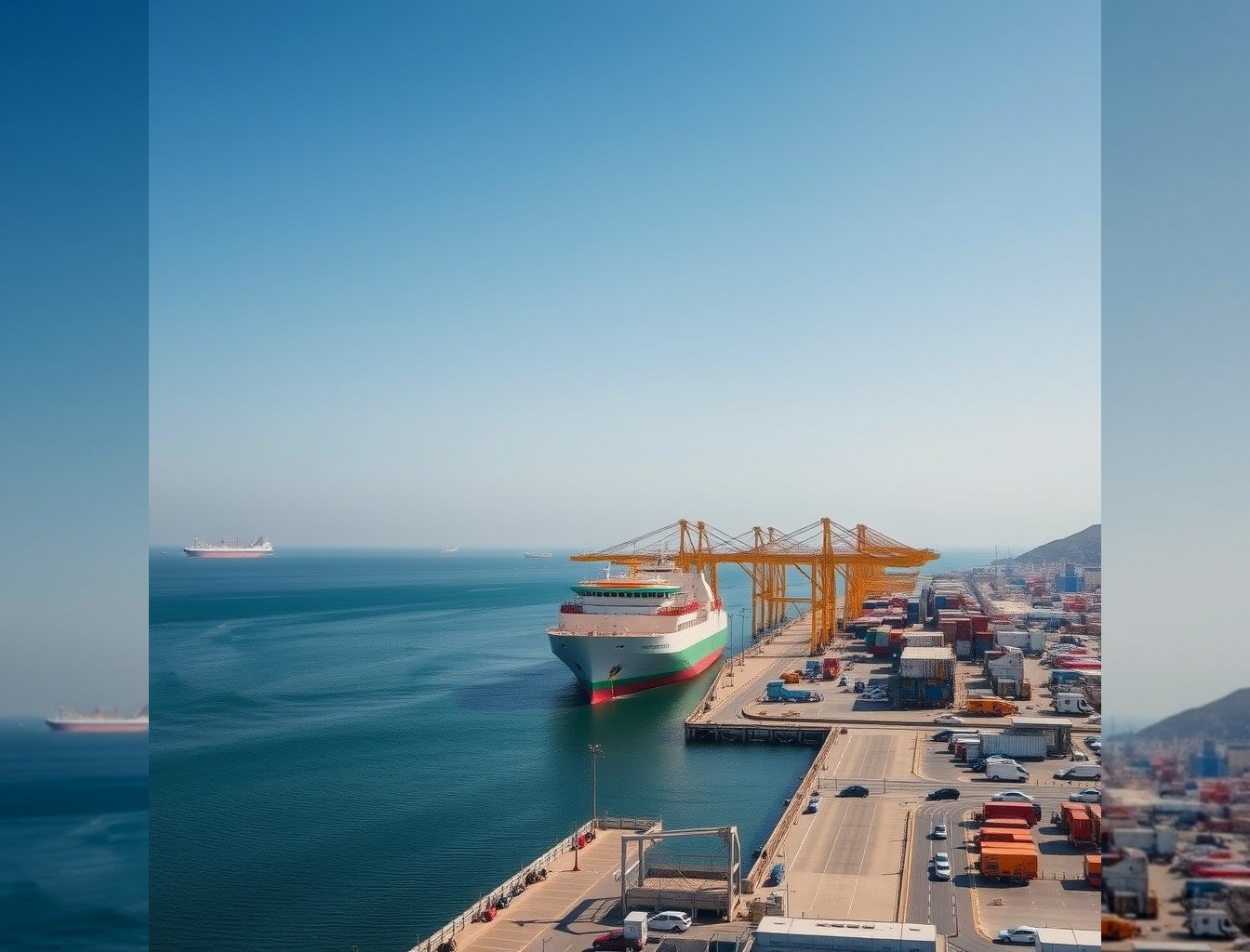
Minister Djellaoui inspects Annaba port expansion during 2025
Annaba’s phosphate port expansion is moving forward this year, with Minister of Public Works and Basic Infrastructure Abdelkader Djellaoui making a site visit on a recent Wednesday evening. The project, part of Algeria’s integrated phosphate initiative, aims to increase mineral export capacity through a newly built quay at the port. The inspection covered progress on the mineral quay, the critical link connecting Annaba’s hinterland phosphate reserves to global markets.
The Annaba phosphate complex is operated by the state-owned mining company Entreprise Nationale du Phosphate (ENP) and managed through Algeria’s national ports authority (Port Autonome d’Annaba). Officials say the expansion will allow larger vessels to dock and handle higher volumes, potentially increasing phosphate exports by up to 50% within three years. Such capacity gains are expected to strengthen Algeria’s position as a key North African phosphate supplier to Europe and sub-Saharan Africa.
Phosphate is Algeria’s second-largest mining export after hydrocarbons, with shipment volumes fluctuating between 1.5 million and 2 million tons annually in recent years. The port upgrade aligns with Algeria’s 2025–2030 mining strategy, which seeks to double non-hydrocarbon exports by developing rail links, storage silos, and port infrastructure in Annaba, Tébessa, and Skikda. The government estimates that each 1% increase in port capacity could add $15 million to national export revenues, benefiting public finances and private logistics operators.
For local entrepreneurs, the expansion opens opportunities along the Annaba–El Hadjar phosphate corridor. Small and medium-sized logistics firms are already securing contracts for haulage, customs brokerage, and warehouse services near the port zone. A Tébessa-based transport cooperative reported a 30% rise in phosphate-related contracts in early 2025 after winning a tender to move 80,000 tons of concentrate to Annaba port for export markets.
Regional chambers of commerce in Annaba report growing demand from European fertilizer importers for Algerian phosphate, currently priced around $120 per ton FOB. Entrepreneurs in Annaba’s industrial free zone are responding by launching new packaging and blending units to cater to European buyers seeking granulated or coated phosphate products. The Annaba Chamber of Commerce and Industry confirmed that six local firms have secured permits to upgrade storage facilities ahead of the expanded port’s full operation.
The port’s expansion also benefits non-phosphate exporters. Agricultural cooperatives in the Constantinois region are negotiating reduced freight rates with Annaba port authorities, aiming to ship citrus and olive oil to West Africa via the same upgraded terminals used for mineral exports. A recent agreement between Port Autonome d’Annaba and a consortium of citrus growers from Guelma province promises a 25% cut in handling fees for produce containers, contingent on meeting new volume commitments.
For Algerian entrepreneurs in the diaspora, the Annaba phosphate corridor offers investment tracks beyond traditional sectors. Diaspora-owned firms specializing in IT logistics, customs automation, or cold-chain solutions are exploring partnerships with Annaba’s port authority to digitalize documentation and reduce clearance times. A Paris-based Algerian tech founder confirmed discussions with Annaba port officials to pilot a blockchain-based tracking system for phosphate shipments, targeting a 40% reduction in transit delays.
The project’s timeline remains ambitious. Port officials state that the mineral quay will be operational by late 2025, followed by dredging works to accommodate Capesize vessels by mid-2026. Entrepreneurs are advised to secure permits and partnerships early, given projected demand surges and tighter environmental compliance standards for phosphate handling.
Key takeaway for entrepreneurs: The Annaba phosphate port expansion offers direct logistics and trade advantages for local firms and diaspora investors. Capacity gains in handling and storage, combined with reduced freight costs for agricultural exports, create near-term opportunities for logistics, packaging, and digital services firms. Early engagement with port authorities and ENP can secure contracts and partnerships ahead of full operations in 2026.
Sources
💡 Starting a business in Algeria? GlobalStart guides you step by step: procedures, real costs, company forms (SARL, EURL, SPA) and CNRC registration.