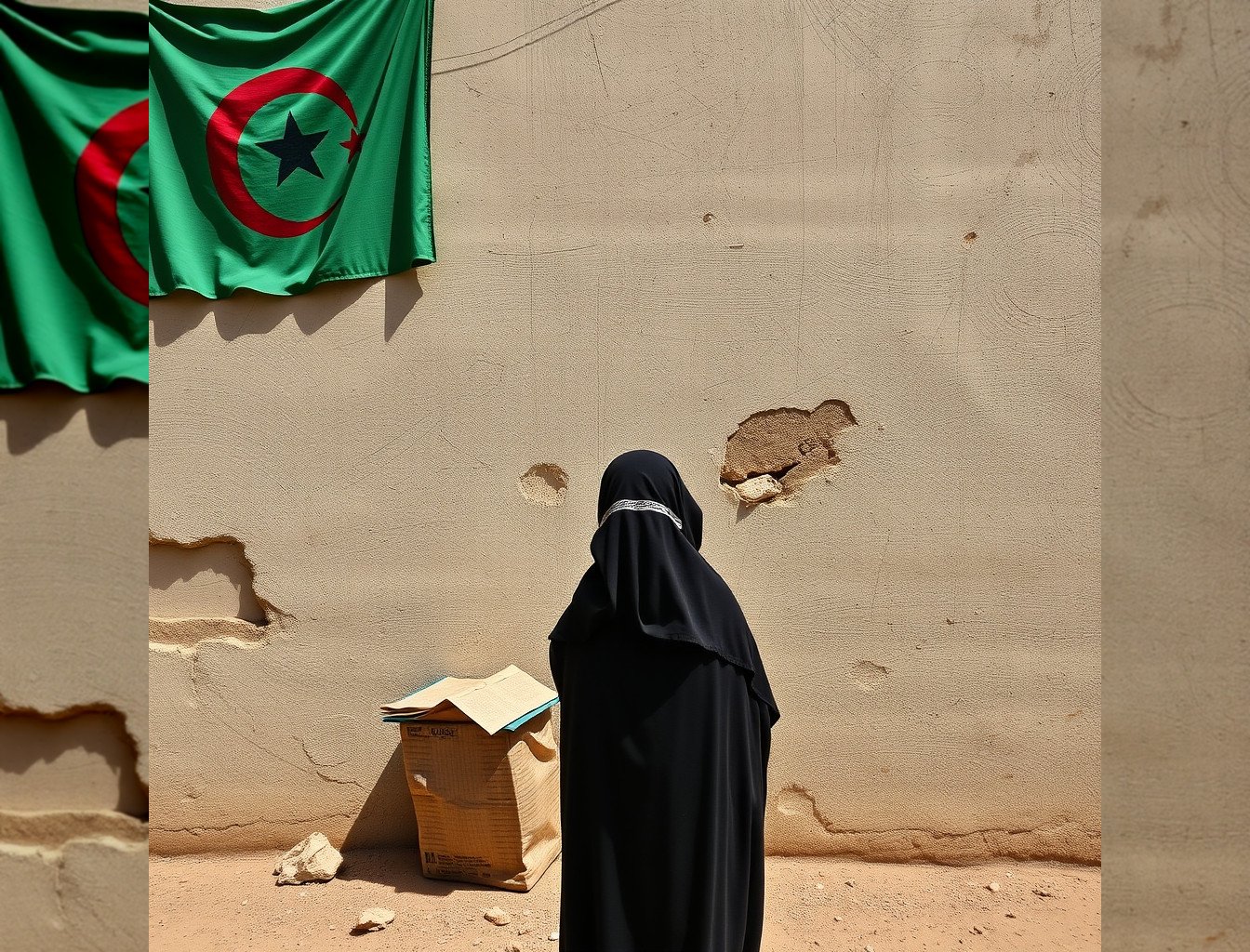
State-led reforms accelerate across sectors
Hydrocarbons: legal reforms target foreign capital
Sonatrach, the national oil company, plans to invest $40 billion in hydrocarbons by 2027. $10 billion is earmarked for shale gas. The Ahnet basin, southwest of In Salah, holds 19.8 trillion cubic metres of technically recoverable shale gas. Drilling resumed in May after a five-year pause. Three wells are operational; two more are scheduled for Q3 2024.
Foreign partners include Italy’s Eni, France’s TotalEnergies, and China’s Sinopec. Eni signed a $4 billion deal in April for offshore exploration in the Illizi basin. TotalEnergies holds a 25% stake in the Timimoun gas field, producing 3.5 billion cubic metres annually.
The government projects 130 billion cubic metres of annual gas exports by 2026, up from 56 billion in 2023. Algeria is the EU’s third-largest gas supplier after Norway and Russia. The EU imported 34 billion cubic metres from Algeria in 2023, 12% of its total consumption.
Education: French curriculum phased out, medical training standardised
The reform affects 280,000 students. Parents’ associations in Algiers and Oran filed appeals. The government offered subsidies to schools converting to Arabic. Subsidies cover 60% of textbook costs and 40% of teacher training.
Medical schools began the final phase of curriculum reform. The Ministry of Higher Education mandated a unified programme for all 15 public medical faculties. The new curriculum, effective September 2024, reduces pre-clinical years from three to two and increases clinical rotations from two to three. Residency programmes expand from four to five years. The ministry projects 12,000 new doctors annually by 2028, up from 8,500 in 2023.
Regional energy: pipeline and solar projects reshape markets
Algeria also launched a tender for 3 GW of solar capacity. The tender, issued on 11 June, covers 15 sites in the Sahara. Minimum bid: 50 MW per site. The government targets 15 GW of solar by 2035. Current capacity: 500 MW. The tender includes tax exemptions on imported equipment and a 20-year power purchase agreement at $0.03 per kWh.
The African Energy Commission reported Algeria as one of four African countries with near-100% electricity and gas coverage. National grid access: 99.8%. Gas network coverage: 98.5%. Algeria exports 2.5 GW of electricity to Morocco, Tunisia, and Libya annually.
Diaspora: legal barriers and historical disputes persist
Algeria launched a crackdown on lawyers representing Hirak activists. The Ministry of Justice suspended 12 lawyers on 10 June for “undermining state security.” The lawyers represented 47 Hirak detainees in ongoing trials. The ministry also revoked the licences of two law firms in Algiers.
Algerian exiles in France called for “concrete guarantees” before returning. A petition signed by 8,700 individuals demanded a general amnesty, property restitution, and dual citizenship rights. The Algerian government has not responded.
Youth employment: digital sectors expand, policies unchanged
Digital sectors showed growth. E-commerce transactions reached $1.8 billion in 2023, up 42% year-on-year. The Ministry of Post and Telecommunications reported 45 million internet users, 60% of the population. Mobile penetration: 120%. The government issued 12 new fintech licences in 2024, bringing the total to 34.
Women’s labour force participation rose to 19.8% in 2023, up from 17.2% in 2020. 65% of women in the workforce are under 35. Remote work accounted for 12% of new jobs in 2023, up from 5% in 2020. The government does not regulate remote work.
Middle East: Algeria positions as neutral mediator
Algeria’s defence budget increased to $10.5 billion in 2024, 6.2% of GDP. The military operates 1,400 tanks, 280 combat aircraft, and 5 submarines. Algeria is the largest arms importer in Africa, accounting for 43% of the continent’s defence imports in 2023. Suppliers: Russia (70%), China (15%), Germany (10%).
Desertification: solar farms and land disputes
Moroccan farmers protested against Algeria’s eviction orders. The farmers, from the Figuig region, claim 12,000 hectares of land along the Algerian border. Algeria’s Ministry of Defence issued eviction notices in May, citing security concerns. The land is part of a 1972 border agreement. Morocco’s Ministry of Agriculture estimates the disputed area holds 3,000 date palms and 500 olive trees.
Tourism: historical sites gain international visibility
The Herald newspaper listed Algeria as a “true treasure” for cultural tourism. The article highlighted Roman ruins, Ottoman palaces, and the M’Zab Valley. Algeria has seven UNESCO World Heritage sites. The government plans to invest $300 million in tourism infrastructure by 2026.
Week’s balance
Key takeaway for entrepreneurs
Algeria’s hydrocarbons law now offers lower taxes and faster licensing for foreign investors. The $25 billion Trans-Saharan pipeline and 3 GW solar tender create long-term supply contracts. Education reforms reduce French-language training, requiring Arabic proficiency for local partnerships. Digital sectors show growth, with e-commerce and fintech expanding.
Sources
- Selling Travel
- U.S. Energy Information Administration (EIA) (.gov)
- Carnegie Endowment for International Peace
- DW.com
- RFI
- Ynetnews
💡 Starting a business in Algeria? GlobalStart guides you step by step: procedures, real costs, company forms (SARL, EURL, SPA) and CNRC registration.