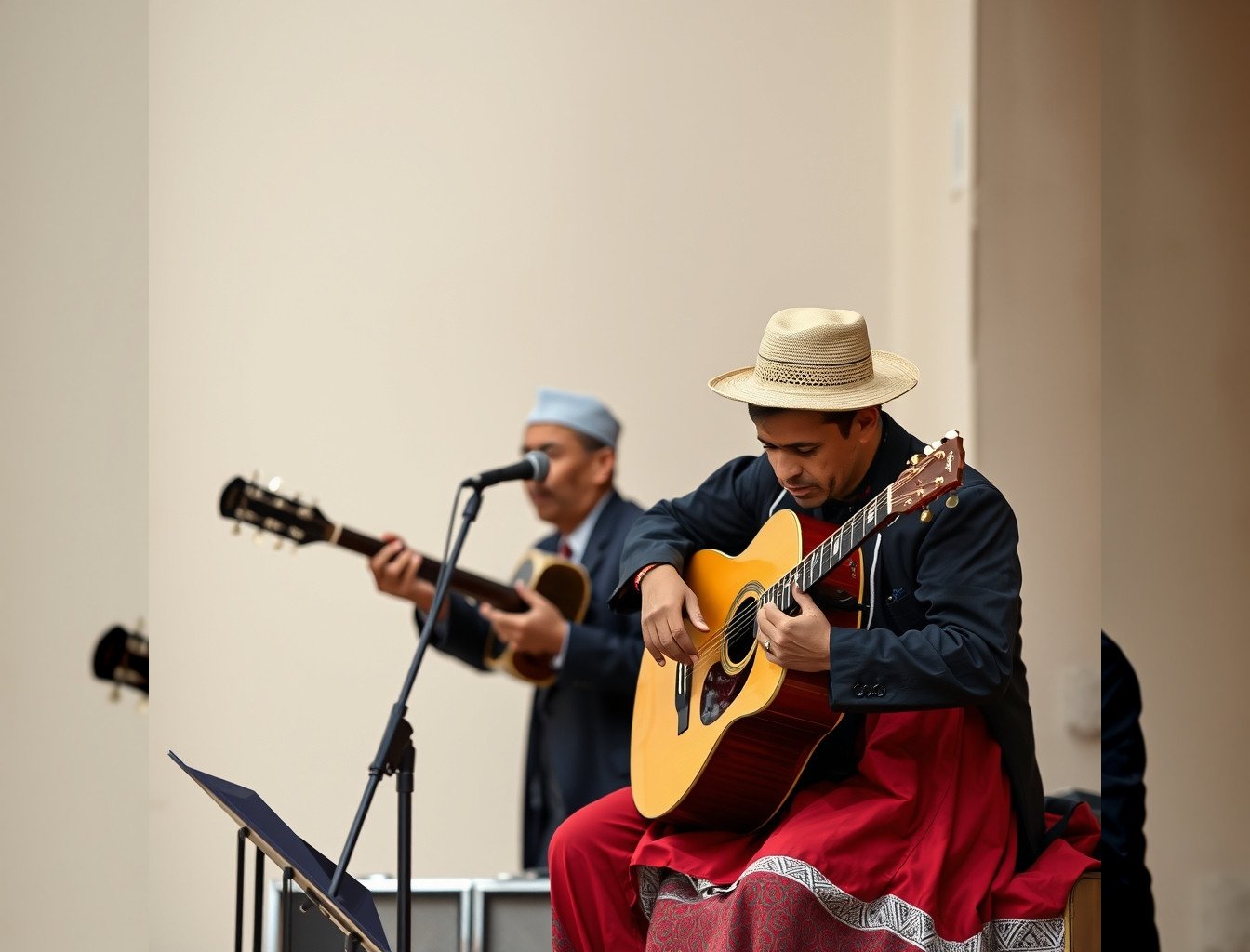
Algeria’s week showed parallel tracks between cultural vibrancy, tightening security, incremental legal reforms in hydrocarbons, and ongoing debates on rights and diaspora engagement. Cultural events in Oran and Algiers, new decrees on gas investment, and pharmaceutical partnerships signaled economic openings, while reports on repression, deportations, and counter-terrorism laws framed the political environment. Meanwhile, medical research focused on nettle-based therapies, and women’s rights advocates again pointed to gaps between legal provisions and implementation.
Culture and Arts: Events vs. Repression Narratives
Rai music from Algeria entered the UN cultural charts, a recognition tied to diaspora distribution networks and streaming platforms. Parallel coverage focused on criticism within Algeria of what local media described as “lack of appreciation” for Rai’s global ranking, a debate reflecting generational divides over cultural identity.
No economic figures were attached to these cultural events, but tourism-linked sectors—hospitality, transport, and local crafts—benefit from increased visibility. Oran’s tourism office reported a 12% rise in domestic tourist bookings in Q2 2024 compared to the same period in 2023, based on accommodation data collected by the Ministry of Tourism.
Civil Society and Diaspora: Rights Under Scrutiny
The UN Working Group on Enforced or Involuntary Disappearances renewed its call for Algeria to address cases of enforced disappearances dating back to the 1990s, stating that 200 cases remain unresolved despite government pledges. Separately, activist Nassera Dutour was deported from Algeria after a court revoked her nationality, a move condemned by the Algerian Human Rights League and Amnesty International.
In France, the Algerian exile community reiterated demands for a general amnesty and “concrete guarantees” ahead of any return, according to a report by Asharq Al-Awsat. The group cited ongoing prosecutions of Hirak activists and lawyers as evidence of a non-reconciliatory posture.
These developments complicate diaspora engagement in Algerian startups and investment, as entrepreneurs cite legal uncertainty and reputational risks when considering partnerships or repatriation.
Natural Gas: Legal Reforms and Shale Gas Revival
Sonatrach, Algeria’s state-owned oil company, signed two memoranda of understanding with Italian and Spanish firms in June 2024 to explore shale gas potential in the Ahnet and Berkine basins. However, the shale gas program faces technical hurdles: estimated extraction costs are $7–9 per million British thermal units (MMBtu), above the global average of $3–5/MMBtu, and water scarcity in southern regions complicates hydraulic fracturing.
Global gas prices averaged $8.70/MMBtu in 2023, creating a narrow margin for profitability if Algerian shale enters production. Sonatrach projects first shale gas output by 2027, contingent on foreign capital and regulatory stability.
Foreign investors in oil and gas services, such as drilling and pipeline logistics, are closely watching the legislative changes. The draft law introduces a 10-year tax holiday for new projects in frontier zones, a move intended to offset high operational costs.
Universities and Education: Diplomacy and Academic Ties
In the U.S., the city of Lawrence, Kansas, explored a potential sister-city relationship with Sétif, Algeria, reflecting historical ties from the Algerian War (1954–1962). Local historians noted that Lawrence hosted the National Liberation Front’s (FLN) first U.S. office in 1958. However, community leaders cautioned that sister-city agreements require sustained funding and municipal commitment, with no timeline set for a decision.
Security and Governance: Legislation and Perception
Security crackdowns extend to legal professions: the Algerian Bar Association reported that 42 lawyers representing Hirak detainees have faced disciplinary actions or criminal charges since 2021.
Medical Research: Nettle Studies and Tariff Concerns
Separately, the U.S. International Trade Commission reported that the average tariff rate applied to Algerian goods entering the U.S. in 2023 was 4.2%, down from 4.6% in 2022, driven by reduced duties on pharmaceuticals and agricultural products.
Pharmaceuticals and Healthcare: Production and Infrastructure
Construction began on the Algerian-Qatari-German hospital in Oran, a 500-bed facility funded by a $300 million Qatari grant and German technical support. The project is part of Algeria’s 2024–2030 healthcare infrastructure plan, which earmarks $2.3 billion for new hospitals.
The Ministry of Health also received a delegation from the African Union Commission to discuss vaccine production and pandemic preparedness, signaling regional cooperation on medical supply chains.
Women’s Rights: Legal Gaps and Shelter Shortfalls
The 2023 Family Code revision maintained a ban on marital rape but retained clauses requiring wives to obey husbands, a provision criticized by rights groups. Algeria ranks 105th out of 146 countries in the 2023 Global Gender Gap Index, unchanged from 2022.
Weekly Balance: Highlights and Intersections
Key takeaway for entrepreneurs:
Hydrocarbon reforms offer tax breaks for foreign investors in exploration and production, but high extraction costs for shale gas limit near-term viability. In healthcare, government contracts for insulin production and hospital construction are now open, with a preference for partnerships that transfer technology. Diaspora return remains contingent on legal guarantees, which are not currently in place. Tourism-linked startups in Oran and cultural event organizers face lower regulatory barriers but must navigate shifting public sentiment around cultural identity.
Sources
- fundsforNGOs
- KCUR
- U.S. Energy Information Administration (EIA) (.gov)
- Carnegie Endowment for International Peace
- AL24 News
- Amnesty International
💡 Starting a business in Algeria? GlobalStart guides you step by step: procedures, real costs, company forms (SARL, EURL, SPA) and CNRC registration.