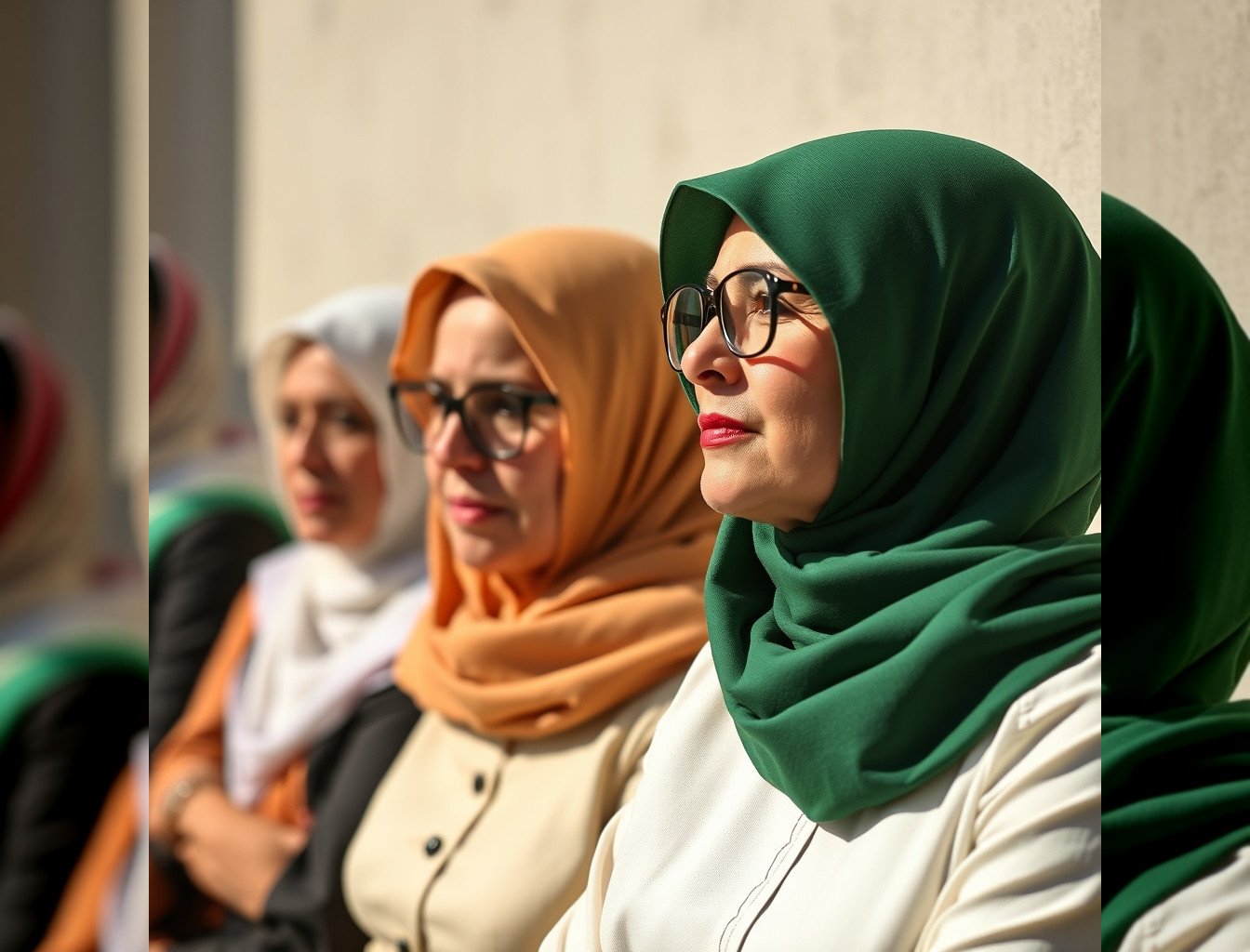
A record 154 women won seats in Algeria’s May 2021 legislative elections, doubling the previous number and lifting female representation in the 462-seat People’s National Assembly to 32 percent according to The Washington Institute. The gains followed President Abdelmadjid Tebboune’s 2020 promise to revise the 2016 electoral law and raise women’s quota from 27 to 35 percent. Yet, women’s political progress has not translated into economic influence, leaving entrepreneurs—especially those in the diaspora—with limited new pathways to market.
The 2020 law set quotas for 159 women’s lists in the 48 multimember districts and reserved extra seats for women among the 23 national lists. In practice, women candidates were clustered on the National Liberation Front and Future Front tickets, both aligned with the presidential camp. Women won 154 seats, a jump from 72 in 2017, but only eight women secured positions on the 33-member Council of the Nation, Algeria’s upper house. Salima Ghezali, a veteran rights activist and editor of La Nation, was one of the few independents to win, yet her voice remains a minority in a chamber where men hold 30 of 33 seats.
For business founders in Algeria, the political milestone carries symbolic weight but limited economic leverage. The 2020 quota reform did not include parallel measures for corporate boards or public-sector procurement, two areas where women-led firms could expand. Algeria’s private sector remains dominated by state-linked conglomerates such as Sonatrach, Sonelgaz and Algérie Poste, which collectively control an estimated 50–60 percent of annual contracts. These firms’ procurement policies typically favor large incumbents with established ties, making it difficult for new women-led startups to access high-value tenders.
The diaspora faces additional hurdles. Although remittances from Algerian abroad reached $3.3 billion in 2020—equivalent to roughly 3 percent of GDP—bureaucratic barriers and capital controls limit diaspora investment in high-growth sectors. A 2021 World Bank report noted that 70 percent of diaspora entrepreneurs cite regulations as a primary obstacle, often tied to the need for foreign-currency approvals and opaque licensing processes. Women in the diaspora who wish to launch ventures in Algeria must navigate the same hurdles, with few exceptions.
Despite the quota gains, Algeria’s political economy continues to reward connections over competition. Women who secured seats in the Assembly come largely from established parties and elite networks, not grassroots business circles. The absence of female voices in economic policymaking circles such as the influential Conseil National Économique et Social—where women hold fewer than 10 percent of positions—means that policy proposals rarely prioritize female-led innovation, export diversification or digital entrepreneurship.
Key takeaway for entrepreneurs
The 2021 electoral gains for women in Algeria have not yet opened direct funding or procurement channels for female founders. Diaspora investors, particularly women, still face administrative hurdles in transferring capital and securing licenses. Without targeted reforms in corporate governance and public-procurement rules, political representation will remain largely symbolic for the business community.
Sources
- The Washington Institute
💡 Starting a business in Algeria? GlobalStart guides you step by step: procedures, real costs, company forms (SARL, EURL, SPA) and CNRC registration.