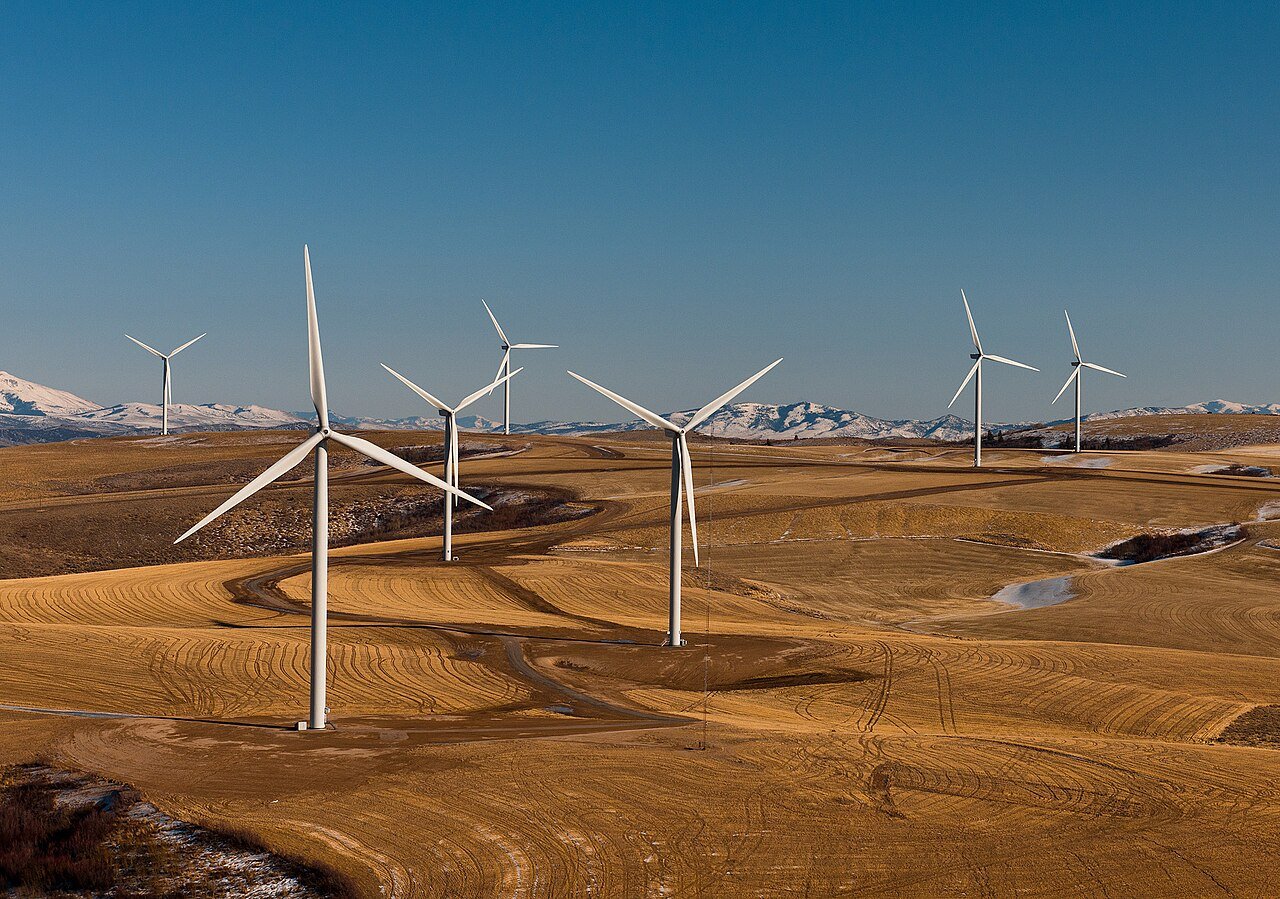
Renewable energy: Solar targets remain on paper despite policy push
Algeria’s solar sector recorded no new large-scale projects this week, despite the government’s stated goal of reaching 15 GW by 2030. The Ministry of Energy and Mines renewed its call for private-sector participation in two solar tenders—600 MW in Ouargla and 500 MW in Adrar—launched in 2023 and still under evaluation. Independent analysts note that only 430 MW of utility-scale solar capacity is currently operational nationwide, representing 1.3% of the 33 GW total power mix. State-owned Sonelgaz retains a monopoly on grid interconnection, and no foreign developer has secured financing for projects above 100 MW since 2021.
Industrial consumers, including cement and steel plants, continue to face power rationing during peak hours, according to the Algerian Electricity and Gas Regulation Commission. Shortages have prompted 14 industrial operators to install captive solar plants totalling 87 MW in 2024, primarily in Tlemcen and Sidi Bel Abbès. These installations operate under self-consumption licenses issued by the regulator, which caps project size at 10 MW per site.
South-South energy trade: AC exports surge while gas pipeline stalls
Europe imported 250,000 air conditioners from Algeria’s Oued Tlelat factory this quarter, the largest single order since the 1.2 million-unit facility began operations in 2022. Algeria’s exports of room air conditioners to the EU rose 27% year-on-year in Q2 2024, reaching €128 million, according to Algerian Customs. The facility, operated by state-owned Entreprise Nationale des Industries de l’Electroménager, employs 1,850 workers and sources 60% of components locally.
In contrast, progress on the Trans-Saharan Gas Pipeline (TSGP) remains suspended. Algeria’s Sonatrach and Nigerian National Petroleum Corporation held a technical meeting in Algiers on July 15 to review a feasibility study commissioned from Italian contractor Saipem. The 4,128 km pipeline, designed to carry 30 billion cubic meters of gas annually, faces funding gaps estimated at $13 billion and unresolved transit agreements with Niger and Nigeria.
Sub-Saharan Africa: Trade corridors and energy diplomacy
Algeria’s trade with Sub-Saharan Africa reached $2.1 billion in 2023, up 11% from the previous year, driven by exports of refined fuels, fertilizers and construction materials. Algeria’s state-owned refinery complex in Skikda exported 1.8 million tons of diesel to Mali, Burkina Faso and Senegal in the first half of 2024, according to Sonatrach. The company also finalized a $450 million urea supply deal with Côte d’Ivoire for 2025-2026.
The $25 billion West African Gas Pipeline (WAGP) extension project, announced by Algeria’s energy minister on July 16, refers to the existing 6,780 km pipeline from Nigeria to Ghana via Benin and Togo. Algerian officials did not specify Algeria’s role in the extension, which is being developed by a separate consortium led by the Nigerian National Petroleum Corporation.
Algeria achieved 99.8% electricity coverage and 98.7% gas penetration in 2023, according to the African Energy Commission (AFREC). The report highlighted Algeria’s universal access as the highest in North Africa, ahead of Morocco (92% electricity, 78% gas) and Tunisia (97% electricity, 95% gas).
Domestic policy: Housing shortages persist amid graft allegations
The Ministry of Housing reported that 1.2 million housing units were delivered between 2020 and 2024, falling short of the annual target of 250,000 units. A parliamentary audit released on July 14 found that 38% of completed projects in eight wilayas exceeded approved budgets by an average of 18%, citing delays in land acquisition and inflated material costs. The audit named three state-owned contractors—EPE Entreprise Nationale de Travaux Publics, ETRHB Haddad and Cosider—among the top beneficiaries of opaque procurement processes.
Homelessness data from the National Office of Statistics shows 24,000 households living in informal shelters in Algiers, Oran and Constantine in 2023, up from 19,000 in 2020. The government’s 2024 budget allocates $1.1 billion to social housing, a 7% increase from 2023, but only 12,000 units have been tendered so far.
Justice and civil liberties: Crackdown intensifies ahead of elections
Last week, the Algerian League for the Defense of Human Rights (LADDH) documented 47 arbitrary detentions of journalists, activists and protesters across eight wilayas. Two local correspondents for international outlets were held without charge for more than 72 hours before being released on bail. The Ministry of Interior did not respond to requests for comment.
On July 15, the Council of Ministers approved amendments to the Penal Code that raise penalties for unauthorized gatherings to up to three years imprisonment and fines of 500,000 Algerian dinars ($3,700). The changes follow a 62% increase in protest events during the first half of 2024 compared to the same period in 2023, according to the Algerian Observatory of Social Movements.
Diaspora dynamics: Canadian visas and stranded students
The Canadian High Commission in Algiers processed 8,200 student visas in the first six months of 2024, an 11% increase from 2023, driven by demand for engineering and health sciences programs. A British national, scheduled to begin a trans-Africa run in August, postponed his attempt after Algeria’s Ministry of Foreign Affairs denied a visa extension request.
Algeria repatriated 112 students stranded in Morocco on July 14 via a special flight from Casablanca. The students, enrolled in Moroccan universities under Algerian government scholarships, were caught in a dispute over tuition reimbursement policies following Morocco’s diplomatic break with Algeria in 2021.
Counterterrorism: Sahel tensions and Algeria’s regional posture
Algeria hosted a tripartite meeting with Mali and Niger on July 12 to discuss joint border patrols along the 1,300 km frontier. The talks followed a 23% rise in cross-border incidents involving armed groups in the first half of 2024, according to the Algerian General Directorate of National Security. Algeria reiterated its opposition to foreign military intervention in Niger, a stance aligned with the Economic Community of West African States (ECOWAS).
On July 17, Algeria summoned the Tunisian ambassador to protest Tunisian media coverage of Algeria’s alleged support for opposition figures in Tunisia. Algeria’s foreign ministry dismissed the reports as “baseless,” citing a 42% increase in bilateral trade to $1.8 billion in 2024.
Regional diplomacy: Morocco rivalry and Europe’s energy pivot
Algeria’s export of liquefied natural gas (LNG) to Spain fell 14% in Q2 2024 compared to Q1, as Spain increased imports from the United States (+22%) and Qatar (+17%). Algeria’s state-owned Sonatrach attributed the decline to scheduled maintenance at the Bethioua LNG terminal and “logistical constraints.”
France’s President Emmanuel Macron made a two-day official visit to Algiers on July 15-16, the first since diplomatic relations were restored in August 2022. The visit focused on energy cooperation, migration management and cultural exchanges. A joint statement announced the creation of a €300 million French-Algerian investment fund targeting renewable energy and digital infrastructure.
The Arab Maghreb Union (AMU) held a ministerial meeting in Algiers on July 18 to review trade facilitation measures. Algeria and Tunisia signed five agreements on customs cooperation, vocational training and border crossings, aiming to reduce transit times by 25% for goods moving between the two countries.
Key takeaway for entrepreneurs
Algeria’s renewable energy market remains accessible only to large domestic players due to regulatory and financing constraints. Industrial firms can reduce power costs by installing captive solar plants under 10 MW. Sub-Saharan export routes for gas and electricity are politically contingent; entrepreneurs should monitor Sonatrach’s tender schedule for regional energy projects. Housing and construction remain high-risk sectors due to procurement irregularities; foreign investors should restrict participation to joint ventures with Algerian partners holding state contracts.
Sources
- Carnegie Endowment for International Peace
- news.cgtn.com
- Amnesty International
- Reuters
- Middle East Eye
- Middle East Council on Global Affairs
💡 Starting a business in Algeria? GlobalStart guides you step by step: procedures, real costs, company forms (SARL, EURL, SPA) and CNRC registration.