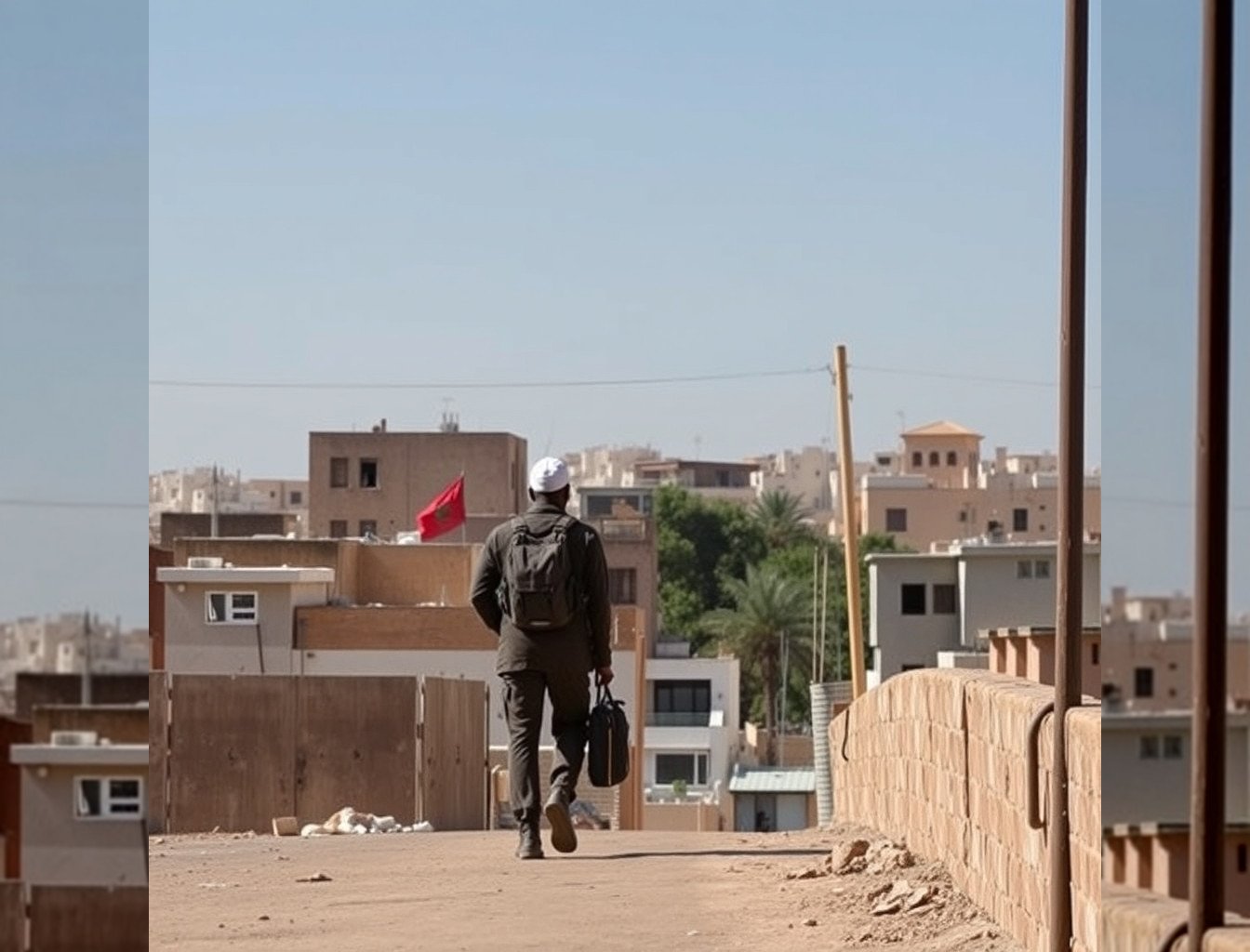
Tunisia’s Italian exodus sparks alarm—and opportunity for Algeria
The numbers tell a story of quiet betrayal. Over the first half of 2026, Italian investors poured 190.38 million Tunisian dinars (MDT)—about €57 million—into Tunisia, yet 80% of that money went into expanding existing factories rather than new projects. Only 13 greenfield investments launched, creating just 512 jobs. The rest? 143 extensions of plants already standing. This isn’t a rush of new arrivals. It’s a retreat of the committed.
For Algeria, watching this unfold from across the Mediterranean is both a warning and a business blueprint. Tunisia’s instability—from political turbulence to currency crises—has forced Italian firms to double down on what works and abandon what doesn’t. The lesson for Algerian entrepreneurs? Foreign investors don’t just chase cheap labor or tax breaks. They seek stability, infrastructure, and a government that doesn’t play games.
Why Tunisia’s Italian firms are voting with their factories
The Foreign Investment Promotion Agency (FIPA) in Tunisia calls it an “ancrage”—a rooting. But the reality is simpler: Italian companies are no longer betting on Tunisia’s future. They’re securing their past.
Take Industria Macchine Automatiche (IMA), the Italian food-packaging giant that expanded its Tunisian plant this year. Instead of setting up in a new country, it injected €12 million into its existing facility, adding 300 jobs. Why? Because Tunisia’s dinar has lost 30% of its value since 2020, supply chains are clogged with red tape, and protests near industrial zones disrupt production.
Then there’s Piaggio, which recently halted a €50 million electric scooter plant—citing “unforeseen economic conditions.” The message is clear: Tunisia’s risks now outweigh its rewards. For Algerian business leaders, this is a masterclass in what not to do. If Tunisia’s Italian partners are fleeing, it’s not because Algeria is perfect. But if Algeria can fix what Tunisia broke, it could inherit their investments—and their expertise.
Algiers’ chance: How to steal Tunisia’s Italian industrial crown
Algeria has one advantage Tunisia lacks: a government that still believes in industrial policy. President Abdelmadjid Tebboune’s push to attract €20 billion in foreign direct investment (FDI) by 2027 isn’t empty rhetoric. But words won’t cut it. Italian firms won’t relocate to Algiers unless they see three things:
1. A currency that doesn’t collapse. Tunisia’s dinar has hemorrhaged value. Algeria’s dinar has held steady—but only because the central bank clamps down on imports. If that changes, investors will notice.
2. Ports and roads that actually work. Italian manufacturers in Tunisia complain of 45-day delays at Tunis Port. Algeria’s Port of Algiers is faster, but customs clearance takes twice as long as Morocco’s. Fix that, and firms will follow.
3. A tax system that doesn’t strangle growth. Tunisia offers 10-year tax holidays for exporters. Algeria’s SONATRACH-linked subsidies are a mess. Streamline taxes, and Italian CEOs will start asking, “Why not Algeria?”
The proof is already here. Fiat’s industrial arm has quietly scouted Algeria for a potential €1 billion auto parts plant—but only after Tebboune slashed bureaucratic hurdles for foreign firms. Whirlpool’s North African HQ moved from Tunisia to Algiers in 2025, citing “better logistics.” These aren’t small wins. They’re Italian firms testing the waters.
The diaspora’s role: Algeria’s secret weapon in luring Italian capital
Algeria’s 3 million Italians—descendants of colonial-era settlers—are a hidden leverage point. Unlike Tunisia, where Italian communities are small and fragmented, Algeria’s Italo-Algerian business networks are deep. Milan’s Chamber of Commerce has an Algerian desk. Turin’s industrial lobbies actively scout for Algerian partners.
This is how it works: An Italian textile firm in Tunisia sees its supply chain falter. It calls its cousin in Algiers—a local importer with land near the port. Suddenly, the move isn’t just about factories. It’s about family, trust, and a community that speaks the same language.
Algeria’s government should weaponize this. Instead of vague “investment summits,” it should host targeted roadshows in Milan, Turin, and Bologna, where Italian-Algerian entrepreneurs can directly pitch deals to Italian CEOs. Tunisia did this in the 2010s—and lost. Algeria can do it better.
Sources
Source name
💡 Starting a business in Algeria? GlobalStart guides you step by step: procedures, real costs, company forms (SARL, EURL, SPA) and CNRC registration.