A French industrial giant bets on Tunisia’s manufacturing edge
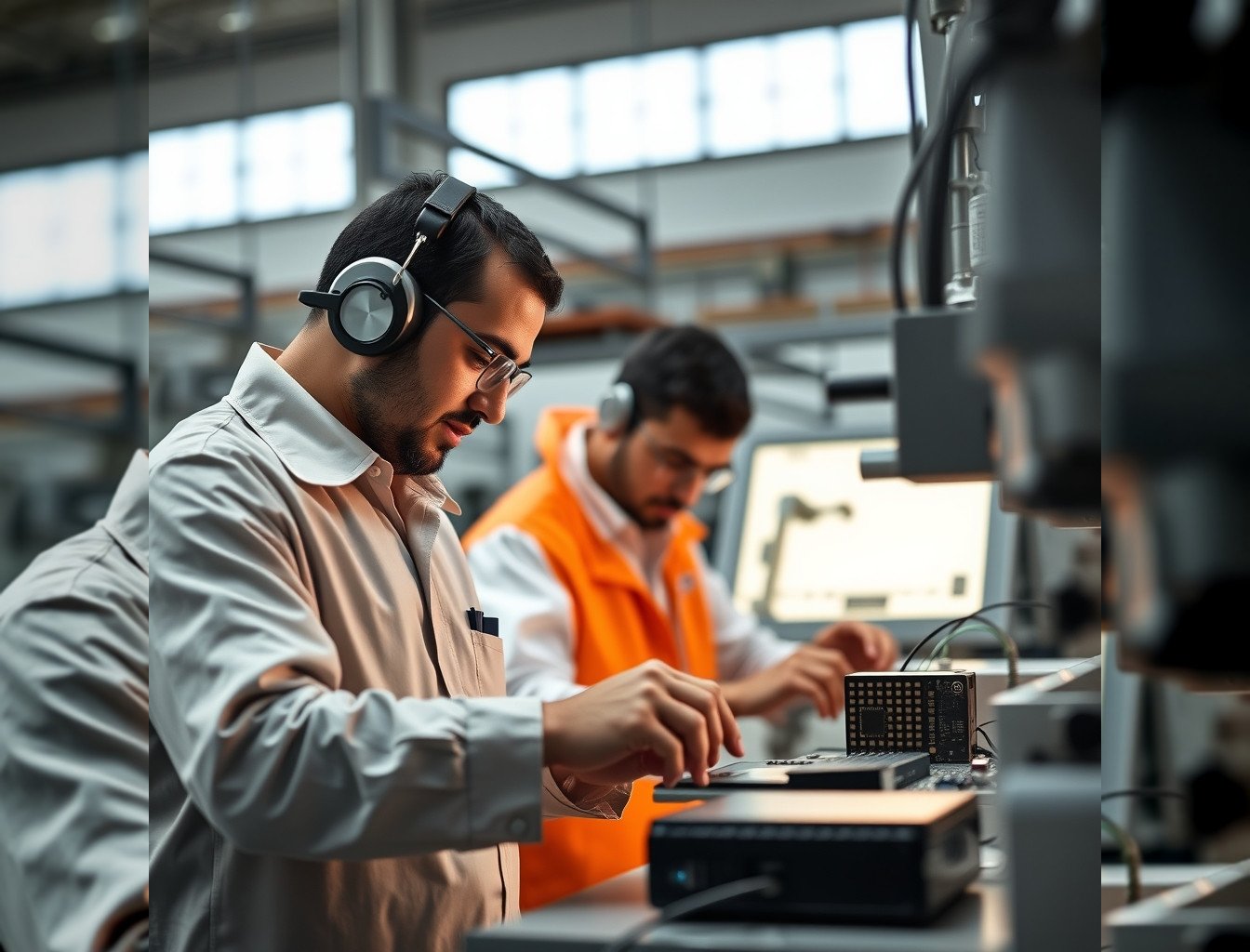
Eurostat Group, a French leader in electrostatic discharge (ESD) protection equipment for electronics, has just opened a 1,500 m² production facility in Tunis. The plant marks a strategic expansion for the company, which specializes in thermoforming, mold machining, and assembly of ESD solutions. These products are critical for the electronics industry, where static electricity can damage sensitive components.
The Tunis plant is not just another factory. It is designed as a commercial hub for the Middle East and Africa. Eurostat Group aims to generate 20% of its global revenue from this region. Currently, the facility employs 28 workers, but this number will grow as demand rises. The site joins over 1,700 French-invested companies already operating in Tunisia, which together employ more than 170,000 people.
Tunisia’s appeal lies in its competitive manufacturing costs, skilled workforce, and proximity to key markets. For Eurostat, this location reduces production risks compared to distant Asian or European suppliers. The plant’s focus on ESD equipment—used in semiconductor manufacturing, aerospace, and medical devices—positions Tunisia as a growing player in high-tech industrial supply chains.
Why Tunisia’s rise matters for Algerian entrepreneurs
For Algerian startups in electronics or industrial automation, this development signals a shift in regional supply chains. Companies that previously sourced ESD equipment from Europe or Asia may now consider Tunisian production as a more cost-effective option. The proximity also cuts lead times and logistical costs, which is particularly relevant for firms in Algeria’s expanding tech and renewable energy sectors.
Algeria’s industrial ecosystem remains underdeveloped compared to Tunisia’s. While Algeria has strengths in oil, gas, and basic manufacturing, it lacks a mature electronics manufacturing sector. Tunisian factories like Eurostat’s could undercut local suppliers, forcing Algerian businesses to either adapt or risk losing market share.
Yet, the competition is not all bad. Algerian firms with export ambitions could leverage Tunisia’s improved connectivity to reach broader African and Middle Eastern markets. If Algerian manufacturers can align with Tunisia’s growing industrial ecosystem, they may find new opportunities for collaboration or joint ventures.
A test case for Algeria’s own industrial ambitions
Tunisia’s success with foreign direct investment (FDI) serves as a benchmark for Algeria. The country’s ability to attract high-tech manufacturing—like Eurostat’s ESD equipment—demonstrates how a stable business environment and skilled labor can draw global players. Algeria, despite its resources, has struggled to replicate this model in electronics and industrial automation.
For Algerian entrepreneurs, Tunisia’s rise is both a warning and an opportunity. Firms in packaging, medical devices, or automotive components may face tougher competition from Tunisian suppliers. At the same time, Algerian businesses with export potential could use Tunisia as a gateway to new markets.
The challenge for Algeria is to improve its own industrial policies. Simplifying business regulations, reducing bureaucracy, and investing in vocational training could help local manufacturers compete. Without such reforms, Algerian firms risk being left behind as Tunisia solidifies its position as North Africa’s manufacturing hub.
Key takeaway for entrepreneurs
Tunisia’s growing industrial ecosystem is reshaping regional supply chains, particularly in electronics and automation. Algerian entrepreneurs must assess whether they can compete—or collaborate—with Tunisian producers. Those who adapt by improving efficiency, quality, or market access may find new opportunities in a region where manufacturing is increasingly concentrated in Tunisia. The time to act is now, before the gap widens further.
Sources
💡 Starting a business in Algeria? GlobalStart guides you step by step: procedures, real costs, company forms (SARL, EURL, SPA) and CNRC registration.