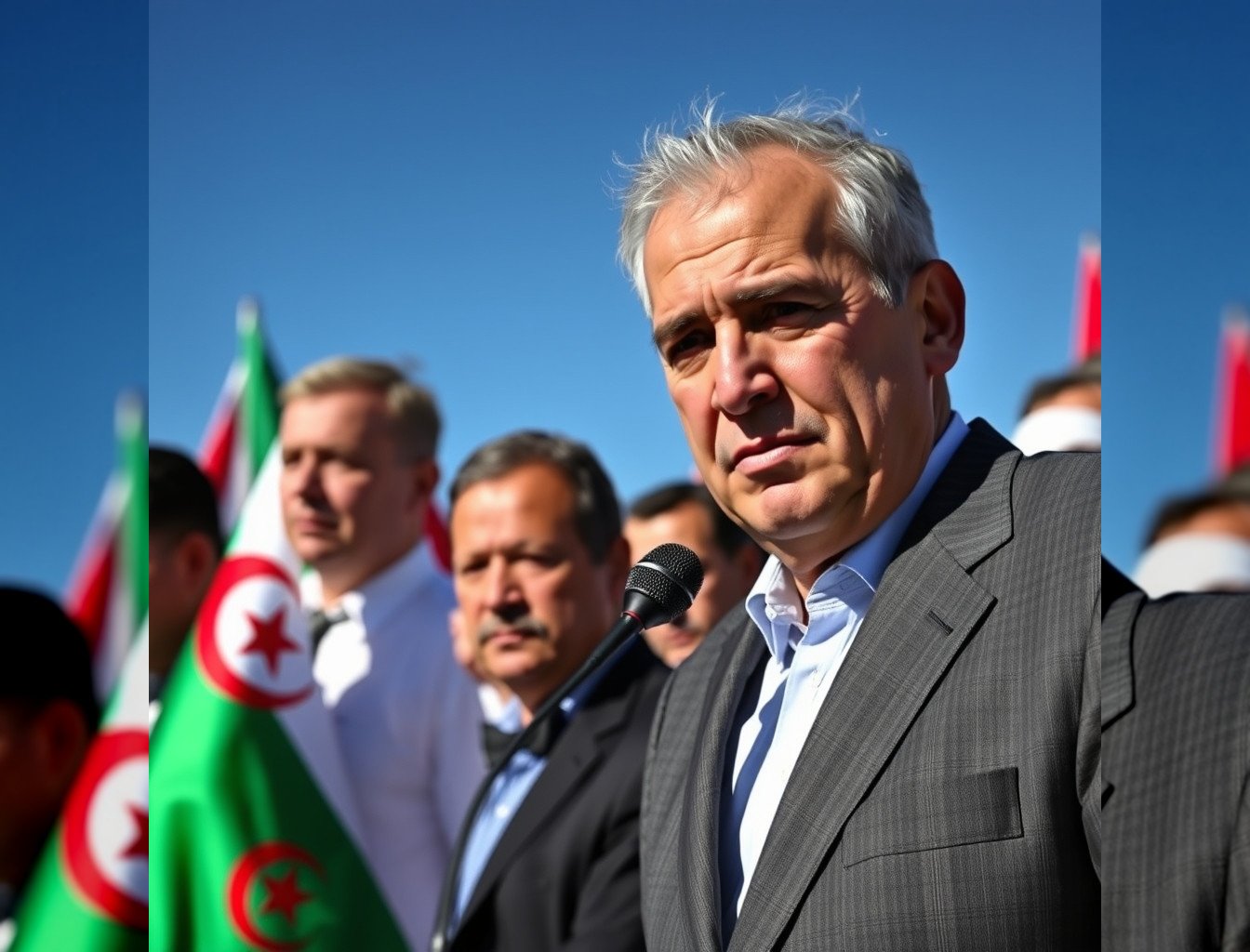
Algeria’s political turmoil has sent shockwaves through the business community, freezing hundreds of millions in projects and pushing entrepreneurs to the edge. The latest crisis—President Abdelmadjid Tebboune’s push for a fourth term—has reignited protests, spooked foreign investors, and left the Algerian diaspora scrambling to protect assets. With SONATRACH’s $40 billion energy deals stalled and startups facing liquidity crises, the stakes could not be higher.
A Fourth Term Sparks Unrest, Halts Billions in Deals
The fallout extends beyond politics. The Central Bank of Algeria (BEA) reported a 15% drop in foreign direct investment (FDI) in the first half of 2026, with energy and tech sectors hardest hit. A leaked internal memo from the Ministry of Industry reveals that 377 business licenses—worth an estimated $100 billion—have been frozen pending political clarity. “Investors are waiting for a signal that Algeria is open for business,” warns Karim L., CEO of a renewable energy startup that lost $8 million in European grants after Brussels paused funding.
SONATRACH’s $40B Energy Gambit Now at Risk
The ripple effect hits smaller players too. Local service providers like Algiers-based Naftal, which supplies SONATRACH with drilling equipment, saw its stock plummet 22% on the Algiers bourse this week. “Our clients are pulling back on orders,” says Naftal’s COO. Meanwhile, independent oil traders in Skikda report that Chinese buyers—key clients for Algerian crude—are demanding discounts of up to $5 per barrel, citing “political risk premiums.”
The Diaspora’s $12B Remittance Lifeline Under Pressure
Entrepreneurs in the diaspora are also hit. Paris-based tech founder Yacine K., who runs a fintech serving Algerian expats, saw his app’s user growth stall after French regulators flagged “political exposure risks.” “We’re not just losing customers—we’re losing trust,” he says. Meanwhile, Algerian restaurateurs in London and Brussels report empty tables as diners cut back on spending, fearing economic instability at home.
Startups Choke on Cash Crunch, Banks Tighten Grip
The banking sector’s reaction is brutal. Attijariwafa Bank and Banque Nationale d’Algérie (BNA) have raised collateral requirements for business loans by 40%, according to a survey by the Algerian Federation of Entrepreneurs (FEP). “It’s a credit crunch disguised as caution,” says FEP president Mohamed A. “Small businesses are the first to suffer.”
What Happens Next? Three Scenarios for Business
2. Mass Resignations Trigger a Power Grab
If Tebboune’s allies fracture, the military—already controlling key economic levers—could tighten its grip. SONATRACH’s CEO, Toufik Hakkar, a former army officer, has been quietly consolidating control over energy deals. “The private sector will have even less say,” predicts a source in the oil ministry. State-linked firms like Sonelgaz and Sonatrach could dominate contracts, squeezing independent players.
3. New Elections—But No Real Change
A third scenario sees delayed elections and a caretaker government, prolonging the freeze. The Algerian stock exchange (Bourse d’Alger) has lost 18% of its value since protests began, wiping out $8 billion in market cap. “Liquidity is drying up,” says a trader at the exchange. Without clarity, even state-backed projects like the $7 billion East-West Highway remain stalled.
Key Takeaway for Entrepreneurs
💡 Starting a business in Algeria? GlobalStart guides you step by step: procedures, real costs, company forms (SARL, EURL, SPA) and CNRC registration.