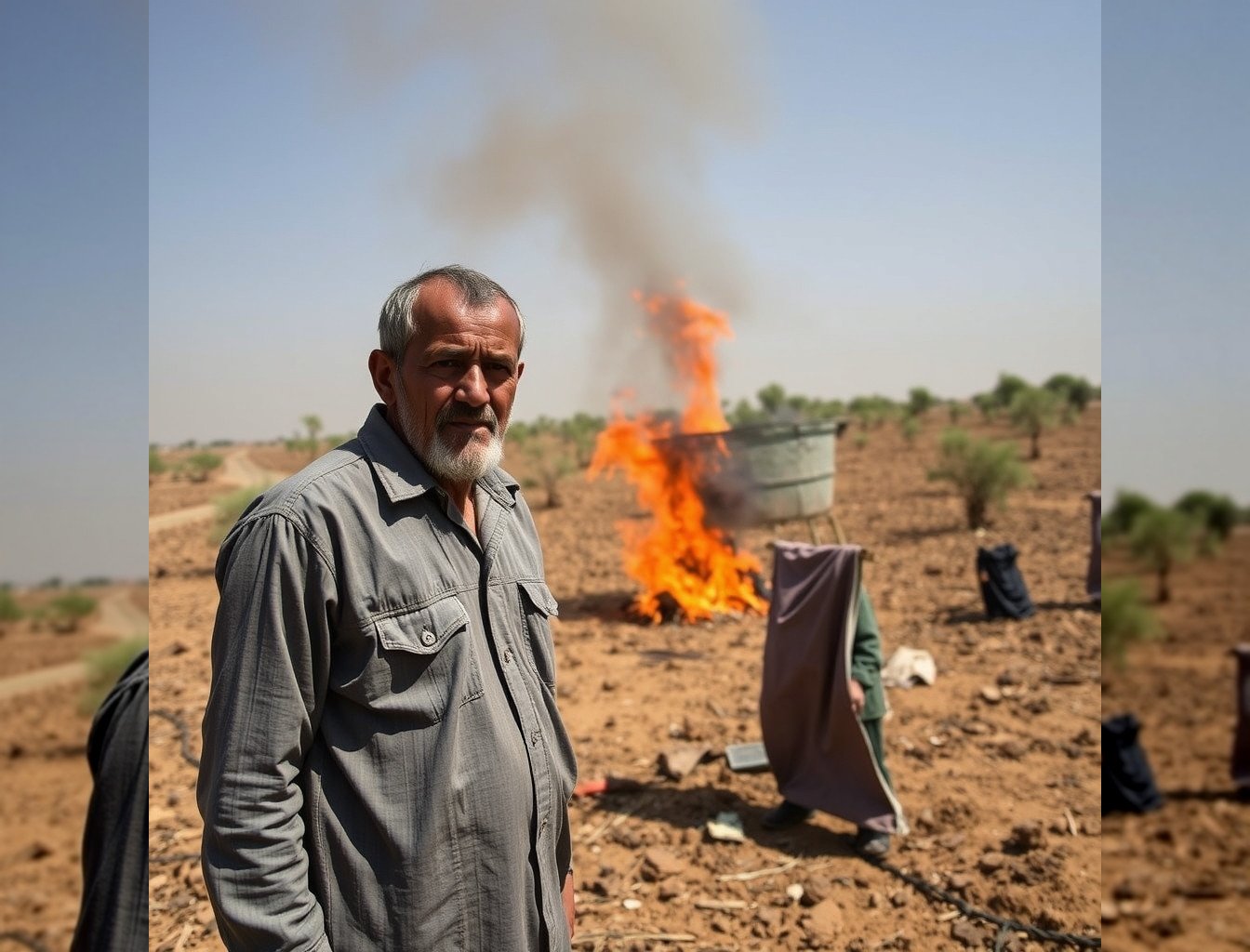
Algeria’s wildfires have left Skikda’s farmers reeling, but the fallout extends far beyond charred fields. For entrepreneurs, agribusiness founders, and the Algerian diaspora eyeing rural investments, this disaster exposes deep vulnerabilities—and untapped opportunities. With crops destroyed and aid slow to reach those who need it most, the crisis forces a reckoning: Can Algeria’s private sector step in where state support falls short?
Agricultural losses hit hard—Skikda’s farmers face a $10M+ blow
The wildfires that tore through Skikda Province this summer have left an economic scar. Provincial authorities report that thousands of hectares of arable land—including olive groves, cereal fields, and market gardens—were incinerated. Early estimates from local agricultural cooperatives suggest losses exceeding 10 million dinars ($75,000) in lost harvests alone, with some smallholders facing total wipeouts.
For entrepreneurs in Algeria’s food sector, this is a stark reminder of the fragility of supply chains. Skikda is a key producer of dates, citrus, and vegetables, supplying markets in Algiers, Constantine, and even Europe. The disruption could push up prices for fresh produce in the coming months, squeezing margins for food processors and exporters.
State aid arrives—but will it be enough?
This week, provincial officials announced the distribution of in-kind aid—seeds, fertilizers, and basic tools—to affected farmers. The support, however, is piecemeal. According to Algérie Presse Service (APS), the process is still underway, meaning many farmers are left without immediate relief.
For business founders looking to invest in rural Algeria, this highlights a critical gap: state-backed disaster response is reactive, not preventive. Entrepreneurs with capital could fill this void by partnering with cooperatives to create insurance pools or emergency storage facilities for crops. The diaspora, with deeper financial networks, could also play a role—whether through remittance-driven microloans or crowdfunded recovery programs.
Diaspora entrepreneurs see both risk and opportunity
Algerian expats in France, Canada, and the Gulf are watching closely. Some see the wildfires as a warning: climate risks are rising, and traditional farming models in Algeria are ill-equipped to handle them. Others, however, view the crisis as a chance to modernize agriculture—by introducing drought-resistant crops, precision irrigation, or even vertical farming in urban centers.
Take Karim B., a 32-year-old entrepreneur who runs an agro-tech startup in Paris. He tells Algeria Business Review that his company is in talks with Skikda-based farmers to pilot solar-powered irrigation systems. “The state can’t be everywhere,” he says. “But if we can show that tech can cut water use by 30% while increasing yields, investors will follow.”
The hidden cost: Trust in rural investments
For years, Algerian entrepreneurs have struggled to secure financing for agricultural projects. Banks often see farming as high-risk, and bureaucratic hurdles slow down even the most promising ventures. The wildfires have eroded confidence further: if the government can’t protect crops from fire, why should investors bet on long-term agribusiness?
Yet, the data tells a different story. Algeria’s agricultural sector accounts for 14% of GDP and employs nearly 20% of the workforce, according to the World Bank. The problem isn’t demand—it’s resilience. Entrepreneurs who can demonstrate climate-adaptive solutions will stand out.
What’s next? Three moves for smart investors
1. Partner with cooperatives, not just individual farmers
Skikda’s agricultural unions are already organizing affected growers. Investors who work through these networks—rather than going solo—will gain credibility and access to land faster. The Union des Agriculteurs de Skikda has 5,000 members; that’s a built-in customer base.
2. Focus on high-value, low-risk crops
Staples like wheat are vulnerable to wildfires. But medicinal herbs, organic olives, and high-end dates—markets with premium pricing—can weather storms better. Exporters in the UAE and Europe are already scouting for Algerian niche producers.
3. Leverage diaspora capital for quick wins
Algerian communities abroad have $20 billion in remittances annually, per the World Bank. A portion of that could be redirected into agri-finance—if structured right. Platforms linking expat investors to Algerian farms could emerge as the next big opportunity.
Key takeaway for entrepreneurs
The Skikda wildfires are a stress test for Algeria’s agricultural sector—and a wake-up call for entrepreneurs. The state’s slow response reveals where private players can step in: insurance, tech-enabled farming, and diaspora-led financing. For those willing to take calculated risks, the crisis isn’t just a setback—it’s a blueprint for building a more resilient, profitable agribusiness ecosystem. The question isn’t if the sector will recover, but who will lead the charge.
💡 Starting a business in Algeria? GlobalStart guides you step by step: procedures, real costs, company forms (SARL, EURL, SPA) and CNRC registration.