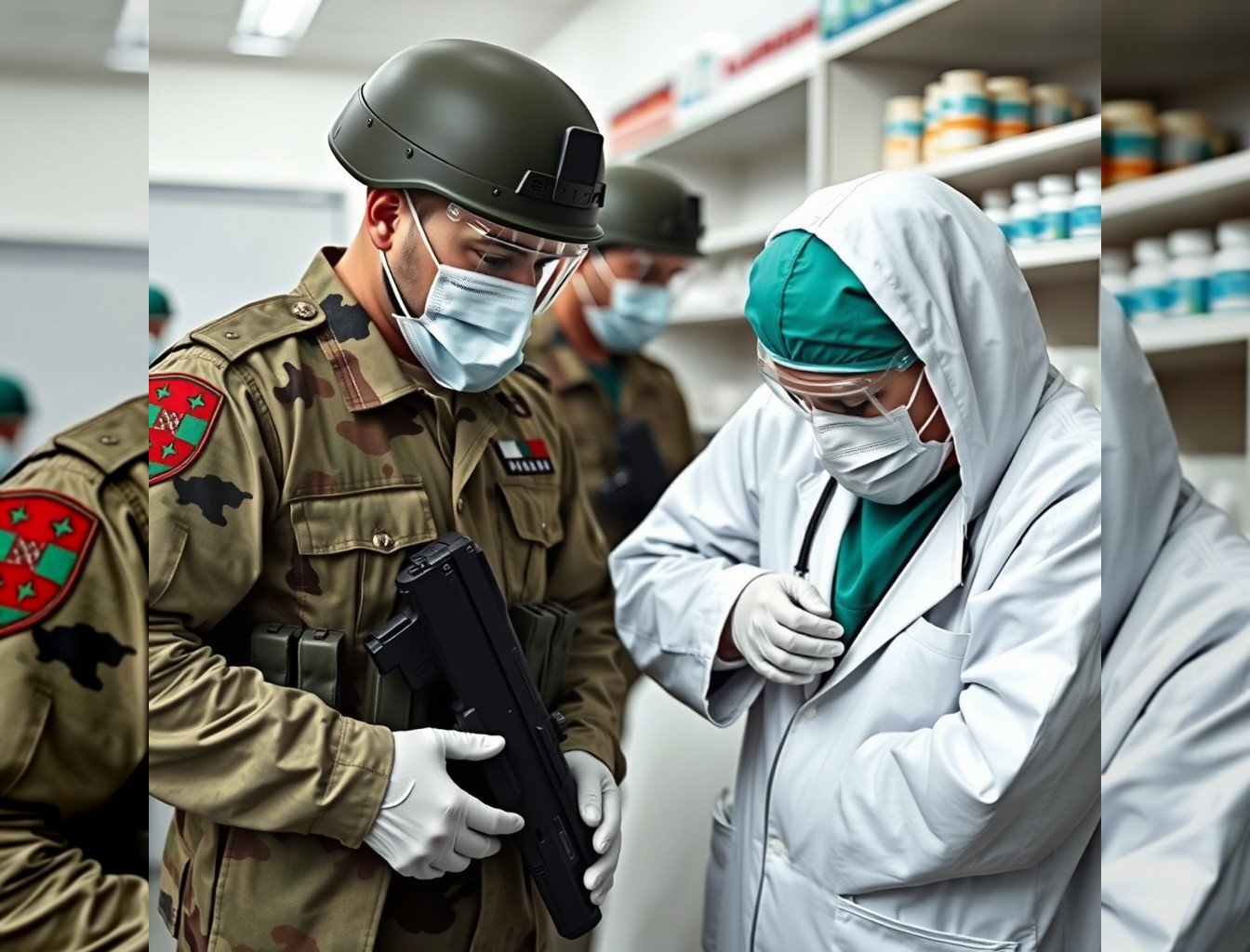
Pharma Push: WHO Prequalification as Export Leverage
Why it matters for entrepreneurs:
– WHO prequalification opens direct access to public procurement in 45 low-income countries, bypassing middlemen.
– Kouidri Pharma and Sotepharma are the front-runners, with 30% of their production already earmarked for export.
– Barriers remain: Logistics costs add 15-20% to export prices, and currency controls limit access to hard currency for imports of active pharmaceutical ingredients (APIs).
Red thread: This aligns with Algeria’s 2024-2028 industrial strategy, which allocates $8 billion to pharmaceuticals, but bureaucratic delays in certification could slow progress.
Security Tech: Local Firms Compete in a $300M Market
Key figures:
– Algeria’s cybersecurity market grew 18% in 2023, reaching $120 million.
– Foreign firms (e.g., Thales, Palo Alto) hold 60% of the market, but local players like Alsec and CyberSec DZ are pushing for 30% market share by 2026.
– Challenge: Data localization laws require foreign firms to partner with local entities, creating joint-venture opportunities.
Red thread: The military’s new Su-34 acquisitions (see below) will drive demand for secure communications systems, a $50 million segment where local firms can bid.
Military Spending: Su-34s Overshadow Civil Protection
Implications for business:
– Defense contracts generate $2.5 billion annually in local subcontracting, from spare parts to logistics.
– Opportunity: The Algerian Aerospace Industry Agency (ASAL) is seeking local suppliers for drones and radar systems, with $100 million in tenders open until Q3 2024.
– Risk: Wildfire response delays (see below) highlight underfunded civil protection, a $400 million annual gap where private sector involvement could fill needs.
Red thread: The military’s dominance in budget allocation (40% of state spending) crowds out social infrastructure, a trend that affects SMEs in tourism and agriculture, which rely on road and water access.
Wildfires Expose Budget Priorities
Business impact:
– Insurance claims for wildfire damage reached $80 million, but only 30% of SMEs in affected regions (e.g., Tizi-Ouzou) had coverage.
– Private fire-fighting firms (e.g., Securiforest) saw demand surge 40% but face licensing hurdles.
– Opportunity: The Ministry of Interior is testing public-private partnerships (PPPs) for early warning systems, with $50 million in pilot projects.
Red thread: The geopolitical focus on Africa-Europe-Mediterranean ties (see below) could unlock EU funding for civil protection, but bureaucracy slows access.
Diplomacy: Africa-Europe Corridor as Business Gateway
Key moves:
– Foreign Minister Ahmed Attaf attended the Arab League meeting in Cairo, where trade deals with Libya and Tunisia were discussed.
– Parliamentary youth delegates pushed for easier visas for African entrepreneurs, a $2 billion annual remittance market from the diaspora.
Business angles:
– Export windows: Algeria’s free trade agreement (FTA) with Turkey (effective 2023) boosted textile and pharmaceutical exports by 25%.
– Diaspora leverage: 3 million Algerians abroad send $10 billion yearly, but bureaucratic hurdles limit investment. The new Council of State may streamline foreign investment laws.
– Risk: Political instability in Mali and Libya could disrupt supply chains for agricultural and energy imports.
Red thread: The pharma and IT security sectors benefit most from African trade ties, but logistics bottlenecks add 10-15% to costs.
Culture & Recovery: Tizi-Ouzou Rebuilds, Slowly
Entrepreneurial opportunities:
– Tourism SMEs in Chrea and Azazga saw bookings drop 30%, but ecotourism projects (e.g., reforestation tours) are emerging.
– Local artisans report 20% higher demand for handmade goods, as diaspora donors channel funds through community groups.
– Challenge: Bank loans for reconstruction require collateral, which many SMEs lack.
Red thread: The slow recovery contrasts with military modernization, showing mismatched priorities that affect private-sector confidence.
Political Moves: Council of State and Arab League Ties
Business implications:
– Tenders for smart cities (e.g., Oran, Constantine) will require local IT and construction firms to partner with foreign investors.
– Arab League engagement could open Gulf investment, but Algeria’s 2024 budget deficit (12% of GDP) limits state guarantees.
Red thread: Political stability remains a wild card—protests in Kabylie (e.g., Tizi-Ouzou unrest) could disrupt foreign investor sentiment.
Weekly Balance: Military Dominance vs. Private-Sector Gaps
Key takeaway for entrepreneurs:
Algeria’s military-focused budget creates stable demand in defense and pharma, but civil sector neglect leaves tourism, agriculture, and SME financing underfunded. Joint ventures with SOEs remain the safest path to contracts, while diaspora networks offer untapped capital—if bureaucratic hurdles are reduced. Speed to market matters most: WHO prequalification, IT security certifications, and wildfire recovery tenders will go to firms that act now.
💡 Starting a business in Algeria? GlobalStart guides you step by step: procedures, real costs, company forms (SARL, EURL, SPA) and CNRC registration.