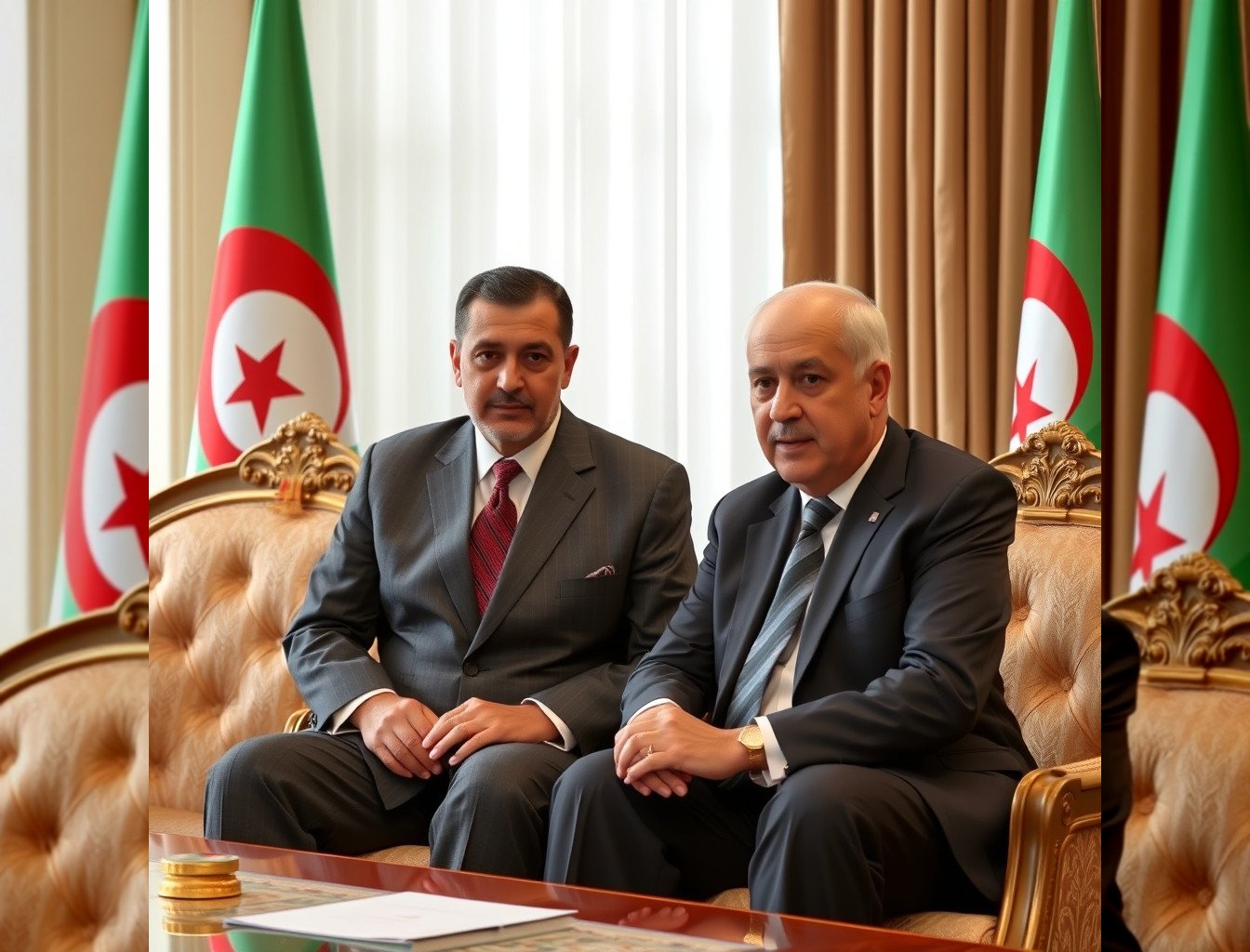
President Abdelmadjid Tebboune’s decision to send Foreign Minister Ahmed Attaf to Cairo for this week’s Arab League meeting is more than a diplomatic routine. It’s a calculated move to unlock Algeria’s economic isolation, court Arab investors, and strengthen ties with the 12 million Algerians living abroad—many of whom control billions in remittances and business networks. For entrepreneurs and the diaspora, the stakes are high: access to new markets, reduced bureaucracy, and a potential influx of Arab capital that could finally diversify Algeria’s oil-dependent economy.
A rare diplomatic opening for Algerian businesses
The Arab League’s 22 member states represent a $2.3 trillion economy, with the UAE, Saudi Arabia, and Egypt leading in foreign direct investment (FDI). For Algerian startups and SMEs, this could mean easier access to funding. Recently, the Algerian government eased visa rules for Arab business travelers, a small but significant step. If Tebboune’s push succeeds, Algerian tech firms, agribusinesses, and renewable energy projects could see direct Arab investment—something rare in the past decade.
The diaspora’s untapped financial power
In 2025, the Algerian government launched a “diaspora investment fund” with a $500 million initial target. If Arab League support materializes, that figure could double. For Algerian entrepreneurs, this means more capital for scaling businesses—but also competition. Gulf-based Algerian investors, many of whom have avoided repatriating funds due to bureaucracy, may now see incentives to return.
Oil dependence vs. Arab trade diversification
SONATRACH, the state oil giant, has been negotiating gas deals with Egypt and Jordan. A broader Arab League trade pact could extend these agreements to private energy firms, reducing Algeria’s monopoly on exports. For entrepreneurs in renewable energy, this is a game-changer: Arab demand for solar and wind projects is surging, and Algerian firms could position themselves as suppliers.
The diaspora’s role in political influence
For Algerian entrepreneurs abroad, this means new opportunities to mediate between Algeria and Arab markets. Many diaspora-run firms already operate in logistics, construction, and tech. With Arab League support, they could become official bridges for Algerian exports, cutting red tape and boosting profits.
Risks: bureaucracy and trust gaps remain
For entrepreneurs, the key question is whether this diplomatic push translates into action. Recently, the Algerian government streamlined some business registrations, but more needs to be done. If the Arab League meeting leads to concrete trade agreements, Algerian startups could see a influx of capital—but only if red tape is truly cut.
Key takeaway for entrepreneurs
Sources
💡 Starting a business in Algeria? GlobalStart guides you step by step: procedures, real costs, company forms (SARL, EURL, SPA) and CNRC registration.