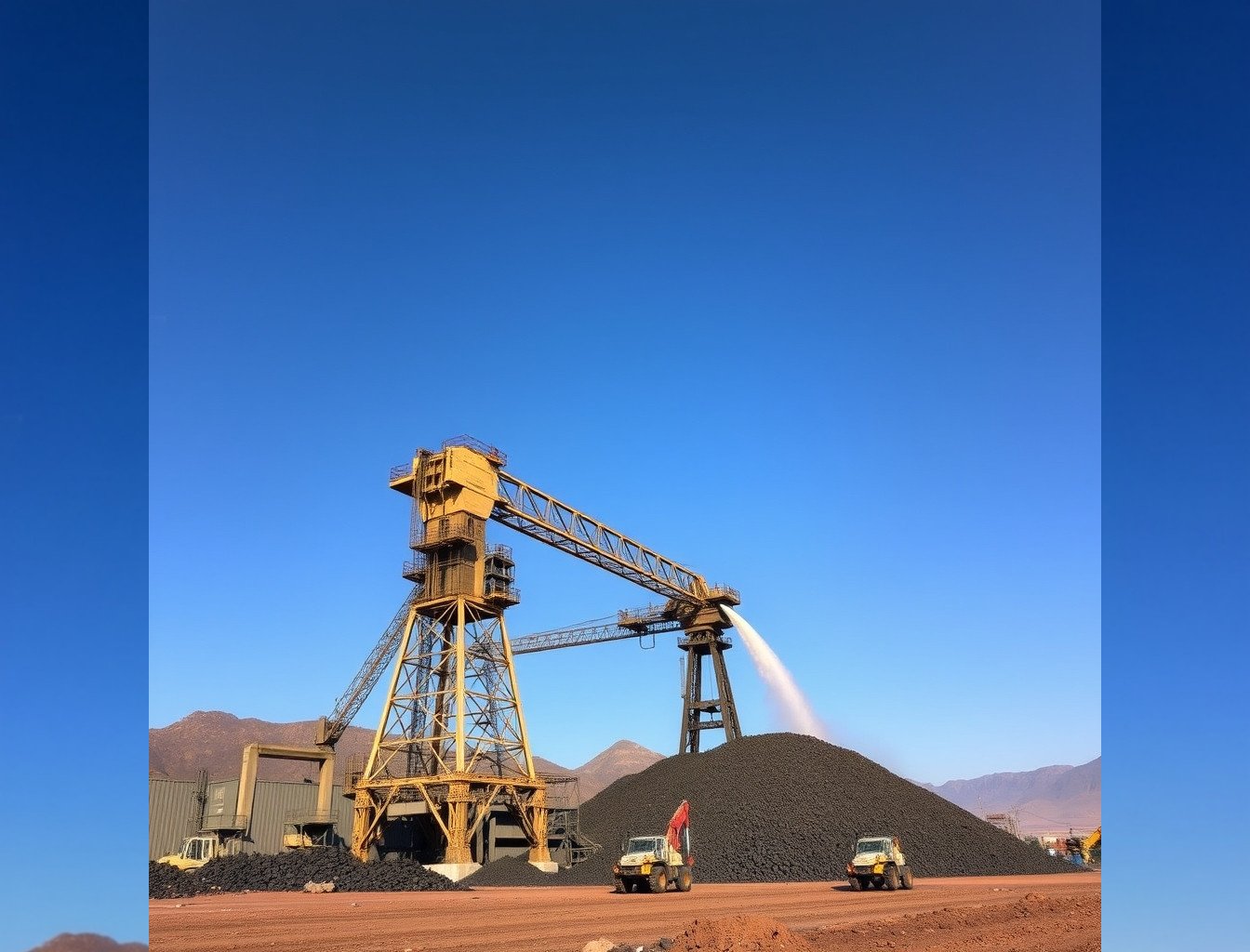
The long-awaited marriage of Algeria’s largest iron-ore deposit and domestic steel production is about to be consummated at Gara Djebilet. After decades of geological promise and industrial hesitation, Sonatrach and Algerian Steel Group recently launched an integrated pilot plant that converts raw iron ore into finished billets on site, according to Capmad. The project replaces costly imports of both ore and coal by valorising 4.5 million tonnes of medium-grade iron ore already in the ground at Gara Djebilet, 160 km south of Tindouf.
For entrepreneurs who have waited for raw-material security, the pilot line at Gara Djebilet now offers a verifiable production chain. Last month, the 100 000-tonne demonstration furnace produced its first billets and is now feeding downstream mini-mills in Annaba and Bethioua. The plant uses a 100 % hydrogen-based reduction route developed with German partner ThyssenKrupp, cutting CO₂ emissions by 85 % compared with the traditional blast-furnace route. Sonatrach’s CEO, Toufik Hakkar, told Capmad the pilot will scale to 2 million tonnes of steel by 2028, matching Algeria’s forecast domestic demand.
Industrial users in construction, automotive components and white-goods manufacturing will see delivered prices for billets drop by an estimated 15–20 % once the 2-million-tonne phase is complete. Local foundries that have relied on imported billets from Turkey and China now have a verifiable Algerian alternative with delivery lead times cut from six weeks to two weeks. Metal fabricators in Oran and Constantine report early interest from appliance-makers such as Condor and multinational auto-parts suppliers setting up new lines in Relizane.
The Algerian Steel Group’s general manager, Kamel Rezig, says the hydrogen route eliminates the need for coking coal, a commodity Algeria does not produce. “We are importing around 1.8 million tonnes of coking coal annually at an FOB cost close to $180 per tonne,” Rezig told Capmad. “By substituting hydrogen produced from Algerian natural gas, we shave $300 million off the annual import bill for steel inputs.” The government has earmarked $350 million in low-interest loans for downstream SMEs that switch to the new billets, with the first tranche opening in October.
Diaspora investors are already circling the new supply chain. A group of Algerian-American and Algerian-French engineers based in Lyon has formed a joint venture with the Algerian National Investment Fund to build a cold-rolling mill near Djelfa that will take Gara Djebilet billets and produce galvanised sheet for the automotive industry. “We have 20 letters of intent from Tier-2 suppliers in France and Spain,” says project leader Yacine Belkacem. The Lyon consortium secured €12 million in seed capital from private Algerian-French family offices and expects to reach financial close by December.
Algeria’s steel deficit—currently 3.2 million tonnes a year—has narrowed each quarter since the Gara Djebilet pilot began. National consumption is forecast to reach 5 million tonnes by 2028, creating a potential new domestic market for billets. Entrepreneurs who move quickly can lock in long-term supply agreements with the Algerian Steel Group before export quotas are imposed.
The pilot also opens a safer route for the Algerian diaspora to repatriate capital. Under a new investment law, overseas Algerians can import duty-free machinery for metalworking if they locate in industrial zones adjacent to steel parks. In Tlemcen’s free zone, a diaspora-led tube manufacturer has already commissioned a €4 million plant to convert Gara Djebilet billets into seamless pipes for the oil and gas sector.
Key takeaway for entrepreneurs
Gara Djebilet iron ore is now being turned into steel billets at a pilot plant near Tindouf, offering local businesses a 15-20 % price discount and two-week delivery times. The hydrogen-based process cuts import dependence on both iron ore and coking coal. Diaspora investors can access duty-free machinery imports and long-term supply contracts under new investment incentives.
Sources
- Capmad
💡 Starting a business in Algeria? GlobalStart guides you step by step: procedures, real costs, company forms (SARL, EURL, SPA) and CNRC registration.