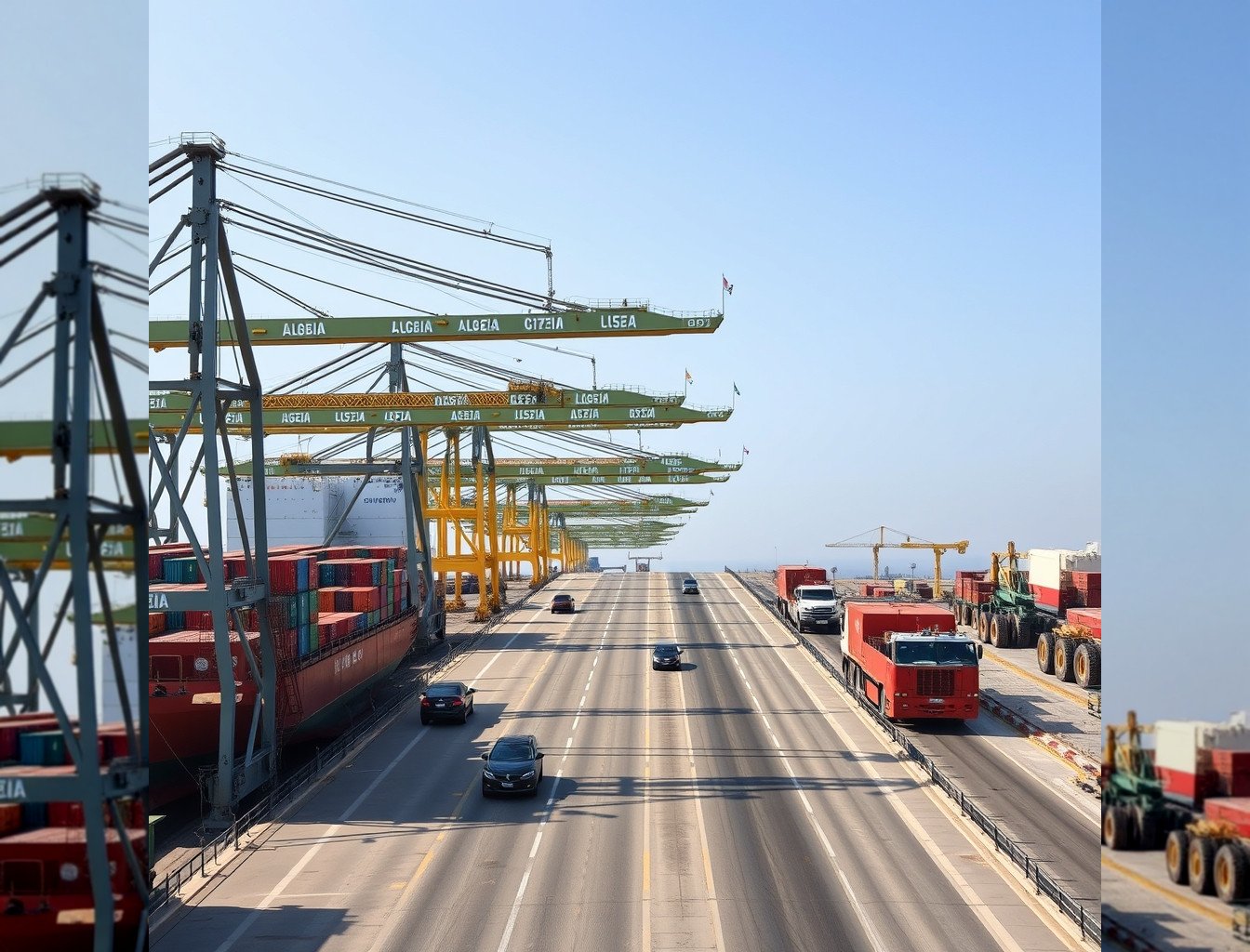
Algeria’s economy is entering a new phase of industrial and logistical transformation through a series of strategic investments with China, according to Eurasia Review. The agreements, focused on modernising port infrastructure and expanding industrial zones, are set to alter trade flows, reduce costs for local manufacturers, and create fresh opportunities for entrepreneurs and the Algerian diaspora.
The centrepiece of the initiative is the modernisation of the Port of Algiers and the deep-water Port of El Hamdania near Cherchell. China State Construction Engineering Corporation (CSCEC) and China Harbour Engineering Company (CHEC) are leading the projects, which include expanding container terminals, constructing new breakwaters, and installing automated cargo-handling systems. The Port of Algiers will see its annual capacity increase from 1.2 million to 3.5 million TEUs (twenty-foot equivalent units) by 2028, while El Hamdania is projected to handle 6.3 million TEUs, positioning it as a regional trans-shipment hub.
For entrepreneurs, the upgrades translate into faster turnaround times and lower shipping costs. Current delays at Algerian ports average 4-5 days for imports and 3-4 days for exports, according to the Algerian Customs Authority. The new infrastructure aims to cut these delays by 60%, reducing demurrage fees that currently cost local businesses an estimated $120 million annually. The Port of El Hamdania will also feature a dedicated free trade zone with tax exemptions on raw materials and machinery, targeting light manufacturing, automotive assembly, and pharmaceutical production.
Beyond ports, the agreements include the development of industrial parks in Oran, Annaba, and Sétif. The Oran Industrial Zone, a joint venture between Algeria’s Ministry of Industry and Chinese firm Sinomach, will span 1,200 hectares and focus on renewable energy equipment, electronics, and agri-food processing. The zone offers 10-year tax holidays for qualifying businesses and streamlined customs procedures for imports of production inputs. Sinomach has committed to training 5,000 Algerian workers in advanced manufacturing techniques by 2027, with a focus on automation and digital production.
The automotive sector is another key beneficiary. Algeria’s National Automotive Industry Development Plan (PNDA) has attracted Chinese automakers such as Chery and BYD, which are setting up assembly plants in the new industrial zones. Chery’s $300 million facility in Sétif, scheduled to begin production in early 2026, will manufacture 50,000 vehicles annually, with 60% local content requirements. This aligns with Algeria’s goal of producing 300,000 vehicles domestically by 2030, up from 50,000 in 2023. For local suppliers, the shift means opportunities to integrate into global supply chains, particularly for components like wiring harnesses, batteries, and interior plastics.
The Algerian diaspora, particularly in Europe and North America, stands to gain from these developments. The modernised ports will facilitate easier repatriation of goods and equipment for diaspora entrepreneurs looking to invest in Algeria. The free trade zones, with their simplified regulatory frameworks, lower the barrier to entry for returning professionals who wish to launch businesses without navigating the country’s often complex administrative procedures. The Algerian government has also introduced a “Diaspora Investment Window” at the Port of Algiers, offering expedited customs clearance and tax advisory services for returnees.
Financing for the projects comes from a mix of Chinese loans and Algerian public funds. The Export-Import Bank of China (China Exim Bank) has extended a $2.8 billion credit line for port infrastructure, repayable over 20 years at 2.5% interest. Algeria’s National Investment Fund (FNI) is contributing $1.2 billion for industrial zone development, with an additional $500 million allocated for workforce training. The funding structure ensures that Algeria retains ownership of the assets while leveraging Chinese expertise in large-scale construction and industrial management.
Critics, however, highlight potential risks. The reliance on Chinese loans raises concerns about debt sustainability, particularly as Algeria’s foreign exchange reserves have declined from $200 billion in 2014 to $60 billion in 2025. The Algerian government has countered that the projects are designed to generate revenue through port fees, industrial park leases, and increased exports, which are projected to add $4.5 billion annually to the economy by 2030.
For local entrepreneurs, the immediate priority is to prepare for the influx of new industrial activity. The Algerian Ministry of Industry has launched a “Supplier Development Programme” to help small and medium-sized enterprises (SMEs) meet the quality and volume requirements of Chinese and international firms. The programme includes grants of up to 5 million dinars ($36,000) for SMEs to upgrade equipment and obtain ISO certifications. Additionally, the Algerian Chamber of Commerce and Industry (CACI) is organising matchmaking events between local suppliers and Chinese investors, with the first round scheduled for February 2026 in Algiers.
The shift in trade dynamics also presents opportunities for logistics and warehousing businesses. The expansion of port capacities will require additional storage facilities, cold chains for perishable goods, and last-mile delivery services. Entrepreneurs in these sectors can expect increased demand, particularly in the regions surrounding Oran, Algiers, and Annaba. The Algerian government has earmarked 200 hectares near the Port of El Hamdania for private logistics parks, with land leases available at subsidised rates for the first five years.
Key takeaway for entrepreneurs
The modernisation of Algeria’s ports and industrial zones will reduce shipping costs by up to 60% and create tax-advantaged manufacturing hubs in Oran, Annaba, and Sétif. Entrepreneurs can access grants for ISO certifications and supplier matchmaking events with Chinese firms, while the diaspora benefits from streamlined customs procedures and dedicated investment support at the Port of Algiers.
Sources
- Eurasia Review
💡 Starting a business in Algeria? GlobalStart guides you step by step: procedures, real costs, company forms (SARL, EURL, SPA) and CNRC registration.