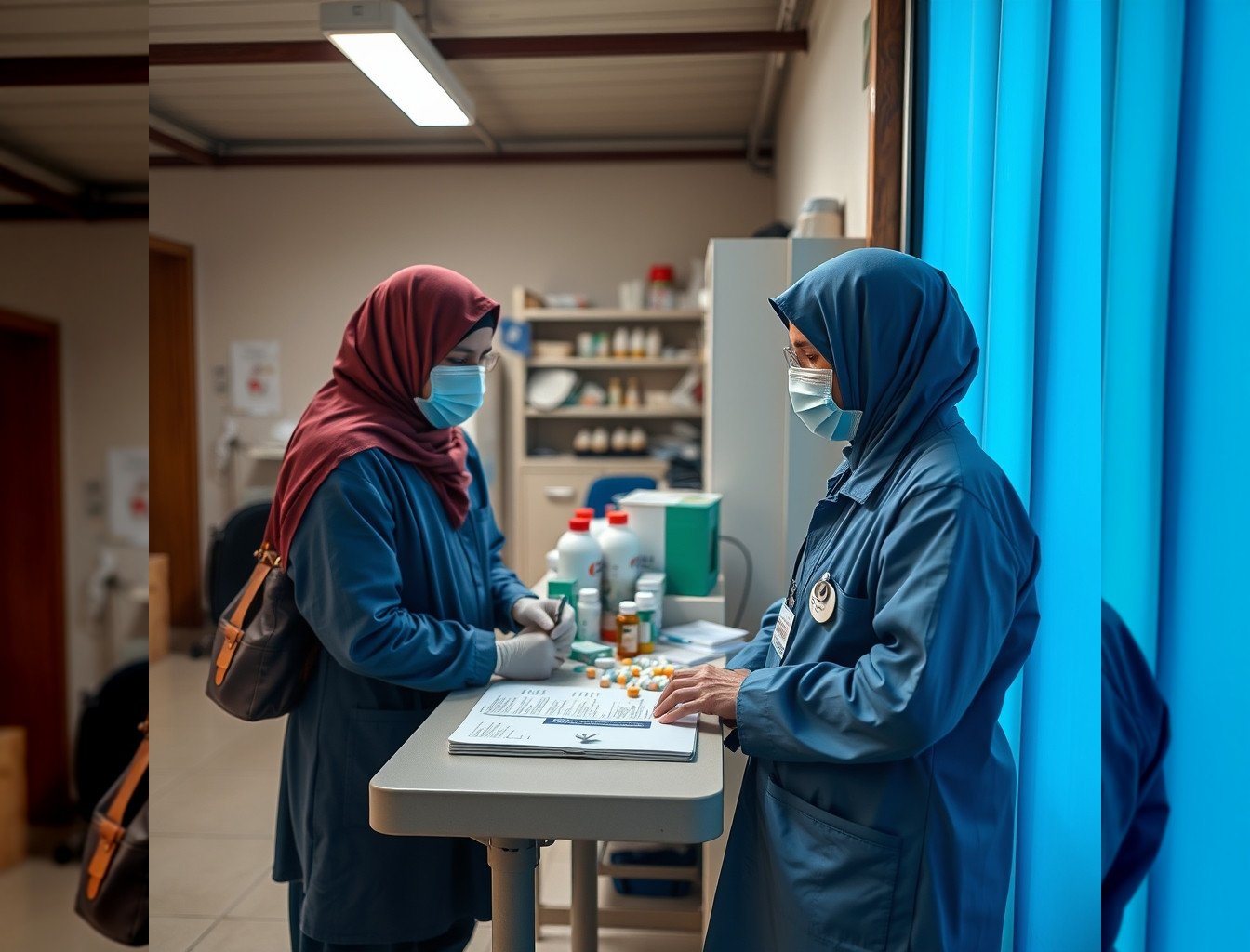
Algeria has reduced the prevalence of common diseases in rural areas by nearly 30% since 2015, according to BORGEN Magazine. The improvement stems from a government-led expansion of primary healthcare centres and a parallel boost in domestic pharmaceutical production. For entrepreneurs and business founders, the shift opens new opportunities in logistics, digital health, and local manufacturing.
The Ministry of Health reported that 1,200 new rural health posts were opened between 2015 and 2017, bringing basic care within 5 km of 95% of the rural population. These posts are supplied by a network of 28 state-owned and private pharmaceutical plants, which now cover 70% of the country’s medicine needs. The state-owned Saidal Group alone increased its output by 42% over the same period, producing 1.8 billion units of essential drugs in 2016. Private firms such as Biopharm and Pharmed have followed, investing in generic production lines that target diabetes, hypertension, and respiratory infections—three conditions that previously accounted for 60% of rural hospital admissions.
For entrepreneurs, the logistics gap is the most immediate opportunity. Rural health posts still face stock-outs of up to 15% for critical medicines, according to the Ministry’s 2017 inventory report. Start-ups that can design last-mile delivery solutions—using drones, motorbike couriers, or mobile inventory apps—could secure contracts with Saidal and private distributors. Cold-chain logistics is another bottleneck; Algeria’s rural areas have only 3.2 refrigerated trucks per 100,000 people, compared to 12 in urban centres. Entrepreneurs who can deploy solar-powered cold boxes or IoT temperature monitors could tap into a market worth an estimated DZD 1.5 billion annually.
Digital health is a second frontier. The Ministry of Health’s 2017 digital strategy calls for electronic health records in all rural posts by 2022. Start-ups that can build low-bandwidth EHR platforms or telemedicine apps for nurses and community health workers stand to benefit. Algerian diaspora entrepreneurs with experience in European health-tech could partner with local developers to adapt solutions to Algeria’s 3G coverage, which reaches 85% of rural areas but often suffers from latency. Pilot projects in Tizi Ouzou and Béjaïa have already shown that SMS-based appointment reminders can reduce missed visits by 22%, suggesting a scalable model for chronic disease management.
Local manufacturing offers a third entry point. While Saidal and Biopharm dominate the market, the government’s 2017 investment code reserves 30% of public procurement for SMEs. Entrepreneurs can set up small-scale plants producing oral rehydration salts, antiseptics, or wound-care kits—products with low regulatory hurdles and high demand in rural clinics. The Ministry of Industry has also launched a DZD 500 million fund to support start-ups that can substitute imported active pharmaceutical ingredients (APIs). Algeria currently imports 90% of its APIs from Europe and India; local production could cut costs by 18-25%, according to a 2017 study by the Algerian Pharmaceutical Association.
The diaspora’s role is critical. Algerian expatriates in France, Canada, and the Gulf have already invested in three of the five new private pharma plants opened since 2015. Diaspora networks can provide not only capital but also technical expertise in GMP (Good Manufacturing Practice) compliance, which remains a barrier for local SMEs. The Algerian government’s 2017 diaspora investment law offers tax breaks and fast-track visas for returnees who invest in healthcare, making it easier for expatriates to launch joint ventures with local partners.
Risks remain. Algeria’s regulatory environment is slow; the average time to register a new generic drug is 18 months, compared to 6 months in Morocco. Entrepreneurs must also navigate a complex web of public procurement rules, where contracts are often awarded through opaque tenders. However, the Ministry of Health’s recent decision to publish all tender documents online—starting in 2017—has improved transparency, reducing bid preparation time by 30% for SMEs.
Rural demand drives new business models
Another emerging model is the “pharmacy in a box” concept. Start-ups like PharmaBox supply rural health posts with pre-packaged kits containing 50 essential medicines, along with a digital inventory system that alerts distributors when stocks run low. The kits cost DZD 120,000 each and are financed through a mix of public subsidies and private sponsorships from local businesses. Since 2015, PharmaBox has deployed 300 kits across 12 wilayas, with a 92% satisfaction rate among nurses.
Diaspora as bridge-builders
Key takeaway for entrepreneurs
Algeria’s rural healthcare expansion has created a DZD 3.2 billion market for logistics, digital health, and local manufacturing. Entrepreneurs can target last-mile delivery gaps, build low-bandwidth health-tech solutions, or set up small-scale pharma plants with government incentives. Diaspora networks offer capital and expertise, while the 2017 investment law provides tax breaks for returnees. The regulatory environment remains slow, but recent transparency reforms have made it easier for SMEs to compete.
Sources
- BORGEN Magazine
💡 Starting a business in Algeria? GlobalStart guides you step by step: procedures, real costs, company forms (SARL, EURL, SPA) and CNRC registration.