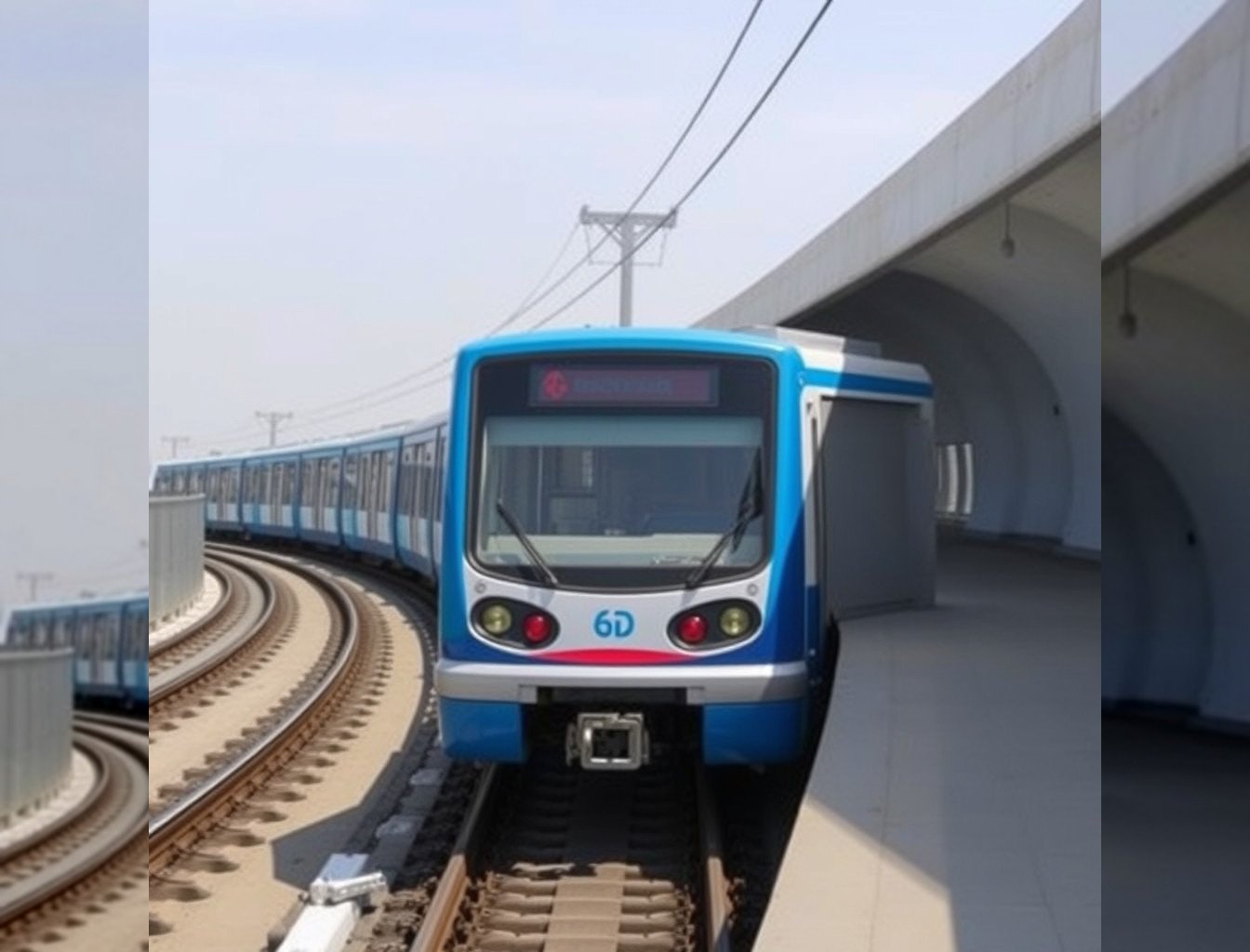
The Algiers Metro expansion faces fresh setbacks as budgetary constraints stall progress, stoking concerns among entrepreneurs and engineers alike. While President Abdelmadjid Tebboune inaugurated the heavy-haul Western Mining Railway in February 2026, signaling renewed focus on national infrastructure, the metro project’s financing remains a sticking point. Recent reports from the International Railway Journal confirm that budgetary issues continue to slow the planned expansion phases this year. This delay is significant for local founders and the Algerian diaspora who have long awaited improved public transport to facilitate business operations and daily commutes.
The metro project’s financial woes are not new. Back in 2015, the same publication highlighted similar budgetary challenges that slowed the metro’s growth. Now, nearly a decade later, the pattern persists despite Algeria’s broader push to modernize its rail network. The government recently approved €747 million for the first phase of a 495-kilometer railway line, as reported by Construction Briefing in December 2025. Yet, the Algiers Metro, a critical urban artery, seems to be losing out in the competition for limited state funds. The contrast between large-scale projects like the Western Mining Railway and the metro’s stagnation raises questions about national priorities and resource allocation.
Entrepreneurs in Algiers are particularly affected because the metro expansion was expected to alleviate chronic traffic congestion, reduce transport costs for small businesses, and improve worker mobility. The metro currently serves only two lines—Line 1 (4.5 km) and Line 2 (6.7 km)—with extensions to the suburbs repeatedly postponed. The recent grant of $2 million from the MCDF to Algerian transport projects, announced in July 2026, offers hope but is insufficient to bridge the funding gap. According to industry insiders, the metro requires hundreds of millions more to complete even the next phase, which would extend Line 1 to El Harrach.
Public-private partnerships (PPPs) have been floated as a solution, but bureaucratic hurdles remain. A senior transport official, speaking to APS on condition of anonymity, confirmed that negotiations with international investors stalled due to regulatory ambiguity and risk aversion. The government’s preference for state-led financing appears to be the main obstacle, despite Algeria’s growing external debt and the need for diversified funding sources. Meanwhile, Morocco, Egypt, UAE, and Saudi Arabia are aggressively expanding their rail networks, as Construction Week Online reported in July 2024, potentially positioning them as more attractive hubs for logistics and transit-oriented businesses.
For the Algerian diaspora, especially those in France and Canada investing in local ventures, the metro delay translates into missed opportunities. Tech startups and e-commerce firms, which rely on efficient last-mile delivery and employee commutes, are particularly vulnerable. The absence of a robust metro system forces reliance on expensive ride-hailing services and informal transport, increasing operational costs. Some diaspora entrepreneurs have already shifted focus to smaller cities like Oran or Constantine, where infrastructure is perceived as more reliable.
The government’s push for heavy-haul railways, such as the Western Mining Railway linking Béchar to the port of Djen Djen, suggests a strategic tilt toward extractive industries and long-distance freight. While this aligns with Algeria’s hydrocarbon-driven economy, it leaves urban transport underfunded. Critics argue that without a functional metro, Algeria risks losing young talent to cities with better public transport, such as Casablanca or Tunis. The metro’s sluggish progress also dampens real estate development along planned routes, delaying commercial projects that could boost SMEs.
Key takeaway for entrepreneurs: The Algiers Metro delays highlight the need to diversify funding models and fast-track PPPs to avoid urban congestion crippling business growth. Diaspora investors should prioritize cities outside the capital where infrastructure is more stable. The government’s focus on freight railways suggests limited short-term relief for urban transport bottlenecks.
Sources
- Railway Gazette International
- International Railway Journal
- Construction Briefing
- Construction Week Online
💡 Starting a business in Algeria? GlobalStart guides you step by step: procedures, real costs, company forms (SARL, EURL, SPA) and CNRC registration.