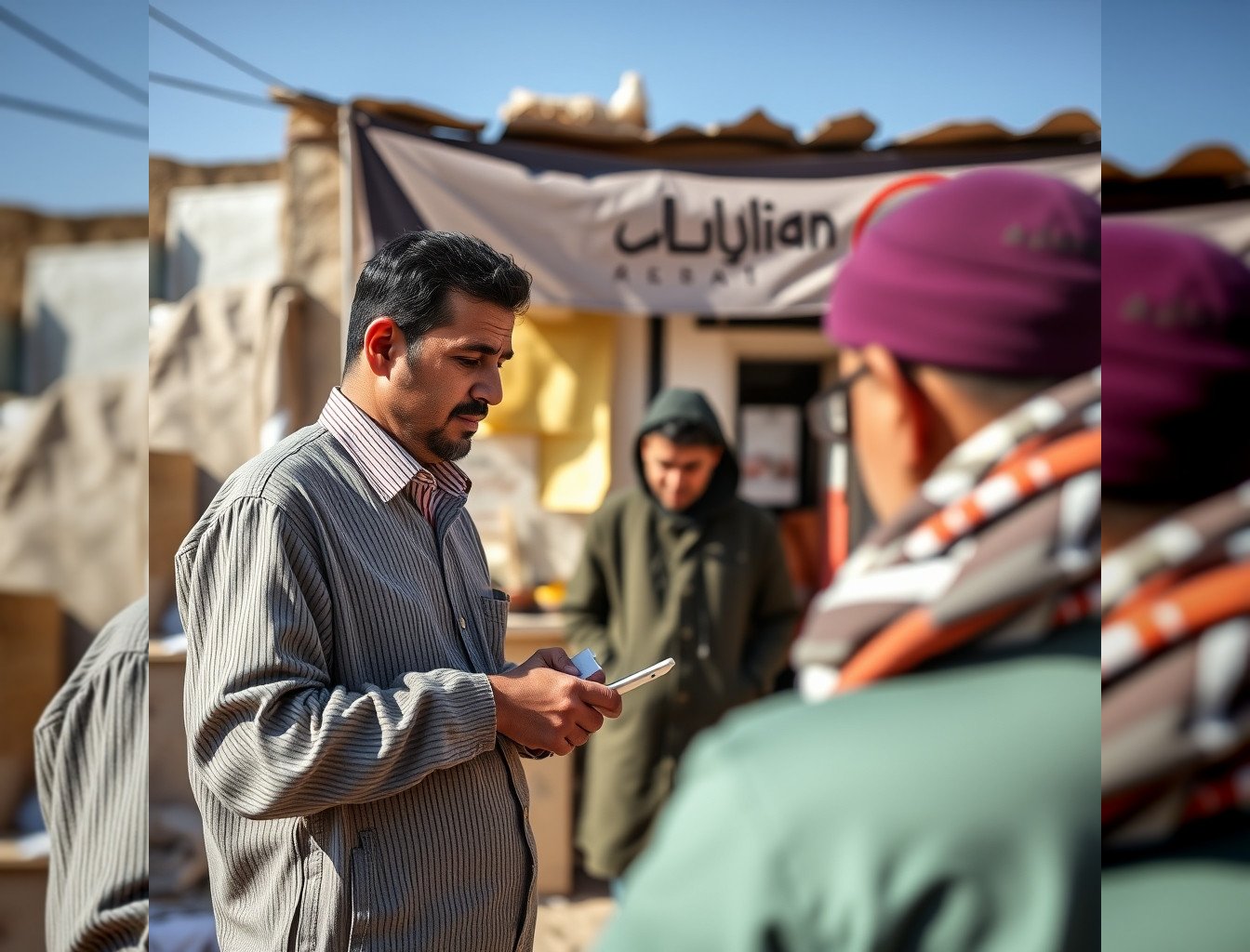
The Formality Trap: How Algeria’s Informal Economy Chokes Micro Firms
Algeria’s micro and small enterprises (MSEs) dominate the private sector, yet their growth is stifled by a parallel economy that thrives outside state oversight. Nearly 90% of all private firms fall into this category, but 70% of their transactions remain untraceable, flowing through informal channels. The Centre de Recherche en Économie Appliquée pour le Développement (CREAD) estimates this shadow sector accounts for 30% of gross domestic product—a figure that distorts competition, undermines state revenue, and locks formal businesses out of critical resources.
The problem is not just the size of the informal economy. It is its systemic stranglehold on formal micro firms. Those operating within the law face higher costs but gain access to government contracts, bank loans, and legal employment. Yet unregistered competitors undercut prices, evade taxes, and exploit loopholes in labour laws. The result is a vicious cycle: formal businesses struggle to scale, while informal ones expand unchecked, further squeezing the formal sector.
Official data reveals the depth of the imbalance. The Micro-Credit Guarantee Fund (CMGF) reports that only 12% of MSEs have secured formal financing, largely because their accounts are not audited. Meanwhile, the Banque d’Algérie’s 2018 financial stability report shows that micro firms generate 40% of non-hydrocarbon exports but receive just 5% of banking sector loans. The disconnect is stark: economic activity exists, but capital does not follow it.
The Cost of Staying Invisible: A Case Study in Oran
The gap between formal and informal enterprises is most visible in daily commerce. In Oran, a 2017 survey by the University of Oran’s Entrepreneurship Lab found 350 informal food kiosks in eastern districts generating an estimated 3 billion Algerian dinars (€20 million) annually. None paid taxes or social-security contributions. In contrast, registered micro bakeries under the 2016 micro-enterprise law paid a flat 7% turnover tax—but were barred from supplying school canteens due to “lack of transparency” in their operations.
This dichotomy highlights the core dilemma for micro entrepreneurs. Formal registration offers stability and growth opportunities, but the informal economy’s lower costs make compliance seem like a financial suicide. The 2016 micro-enterprise law, which allows one-person firms to register online in under 48 hours with zero capital, was meant to simplify the process. Yet only 180,000 micro firms have registered since its enactment, against an estimated 1.2 million operating informally.
Diaspora Skills vs. Bureaucratic Barriers
One potential solution lies in Algeria’s diaspora, whose returnees often arrive with digital skills and niche market knowledge. The Ministry of Knowledge Economy’s Fikra programme has facilitated 420 return projects since 2018, but most avoid the informal economy by default—not because they choose it, but because the system forces them into it. “They arrive with clear market niches,” writes CREAD economist Mohamed Saïb Musette, “but the absence of a single window for permits discourages formalisation.”
The issue extends beyond registration. Informal labour markets further distort the economy. A 2017 National Statistics Office (ONS) survey found that informal workers earn 30% less than their formal counterparts in similar trades, yet they make up 22% of urban employment. For micro entrepreneurs, this wage arbitrage makes hiring legally qualified staff nearly impossible. The result is a brain drain of skilled labour into the informal sector, where wages are lower but compliance is nonexistent.
Half-Measures and Missed Opportunities
Algeria has taken incremental steps to address the problem. In 2018, the Ministry of Commerce launched the Riyadat platform, allowing traders to declare imports and pay duties online. Usage grew from 3,000 to 18,000 declarations in twelve months—but the system still does not cover domestic sales or services. Meanwhile, the National Social Security Fund (CNAS) has extended voluntary coverage to micro entrepreneurs, but take-up remains at just 8%.
Musette argues that these measures are insufficient. The real obstacle is not just bureaucracy, but the lack of immediate incentives for formalisation. His proposals focus on three pillars: simplified registration, fiscal incentives, and skills upgrading. He suggests a six-month tax holiday for newly registered micro firms, conditional on opening a bank account and declaring turnover. Recognising digital receipts from point-of-sale terminals as valid accounting documents would also help micro retailers build credit histories—a critical step toward accessing formal financing.
Pilot projects in Tlemcen’s textile cluster show promise. Last year, 14 informal tailors registered under the micro-enterprise law and pooled orders for fabric imports through a cooperative. Within six months, their average monthly revenue rose from 80,000 dinars to 150,000 dinars, and two secured contracts with the Tlemcen municipality for school uniforms. Yet trust remains the biggest hurdle. A 2019 survey by the Algerian Association of Young Entrepreneurs (AAJE) found that 62% of micro entrepreneurs fear formalisation will trigger inspections and fines rather than unlock opportunities.
A Path Forward: Trust, Transparency, and Targeted Reforms
Musette’s solution is twofold. First, the Ministry of Finance must bundle registration with tangible benefits. Second, the Ministry of Interior should publish an annual list of “safe” sectors where tax compliance is rewarded with lighter oversight. This transparency could ease fears and encourage more entrepreneurs to step into the formal economy.
For the Algerian diaspora, Musette sees an opening in sectors like e-commerce and renewable energy, where informality is less entrenched. The Fikra portal now lists 127 “diaspora-ready” micro projects, but red tape still slows approvals. Creating a dedicated desk at the National Investment Development Agency (ANDI) for returnees could streamline the process.
The informal economy will not vanish overnight. Algeria’s macro challenges—low oil prices, high youth unemployment, and a banking system dominated by state lenders—limit the state’s fiscal room. But targeted reforms can convert the shadow economy into engines of formal growth, provided entrepreneurs receive clear rewards for compliance.
Key takeaway for entrepreneurs
Registering under Algeria’s 2016 micro-enterprise law costs nothing and unlocks eligibility for government tenders and subsidised loans. Micro retailers that digitise sales can build credit histories with banks. Diaspora founders should target sectors like e-commerce and renewables, where informal competition is weaker—but only if bureaucratic hurdles are reduced. The state must prove that formalisation brings real advantages, not just penalties.
💡 Starting a business in Algeria? GlobalStart guides you step by step: procedures, real costs, company forms (SARL, EURL, SPA) and CNRC registration.