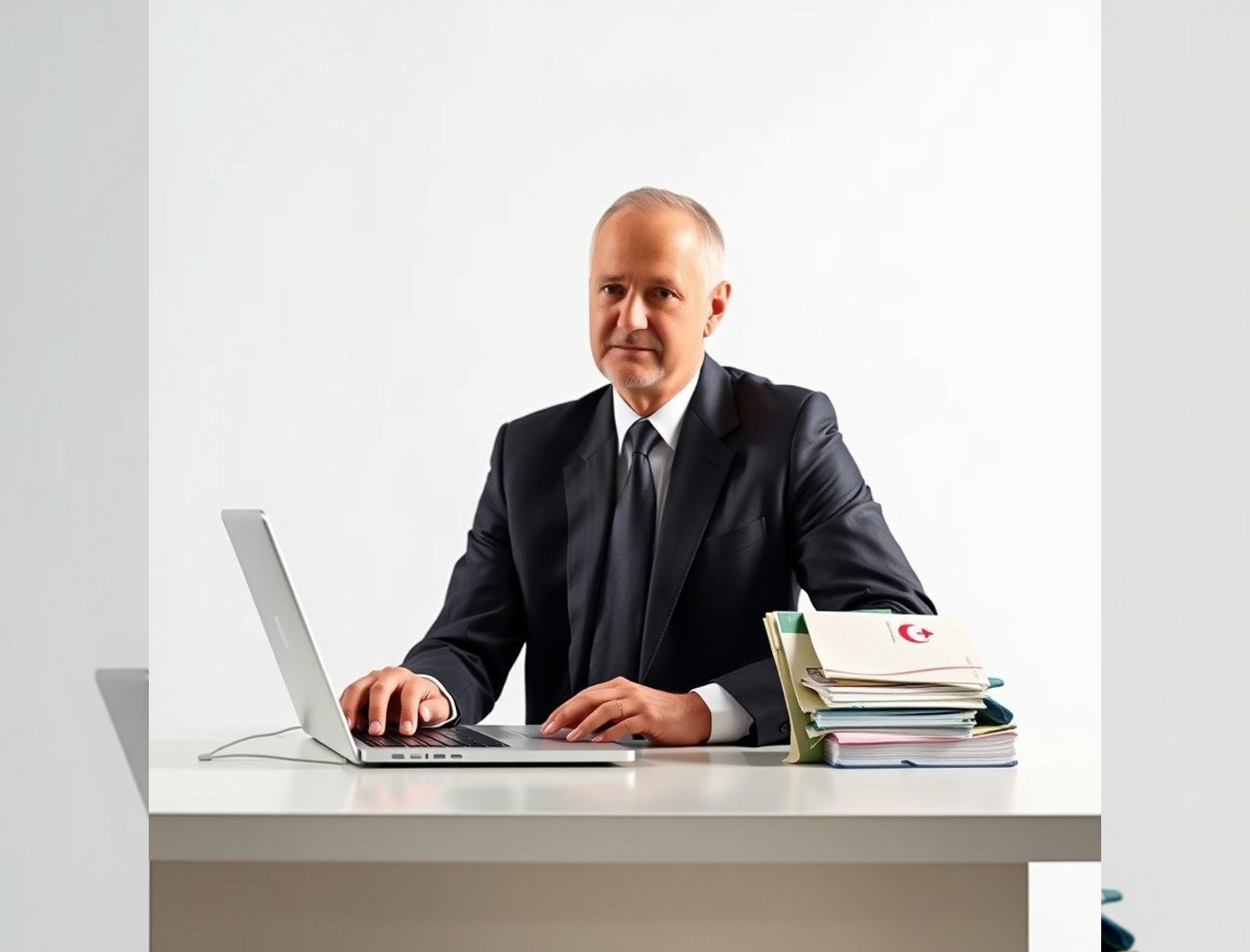
Tax and Structural Pressures: The Weight of Bureaucracy on Algerian Business
Algeria’s economic landscape remains trapped between ambitious reforms and entrenched structural rigidities. At the heart of the issue lies a tax system that, while theoretically designed to support growth, often stifles entrepreneurship through complexity and inefficiency. The recent launch of a digital stamp duty payment service for commercial registration marks a step toward simplification—but its success hinges on broader regulatory overhaul.
For small and medium enterprises (SMEs), the burden of compliance is acute. Procedures for business creation, though streamlined in theory, still demand excessive paperwork and administrative hurdles. The Centre National de la Régie des Contrats (CNRC) has introduced digital reforms to accelerate licensing, yet foreign investors—particularly those involved in industrial consortia—remain wary. The El-Sewedy-led Algeria-Egypt-Cameroon consortium, for instance, is contingent on regulatory predictability. Delays in approvals or sudden policy shifts could derail such projects before they materialize.
Meanwhile, the African Continental Free Trade Area (AfCFTA) has yet to deliver tangible benefits to Algerian SMEs. Trade facilitation measures remain fragmented, and local businesses struggle to compete in regional markets. Without deeper integration—beyond digital tools and energy initiatives—the AfCFTA’s potential as a catalyst for SME growth will stay untapped.
Geopolitical and Energy Dynamics: Sonatrach’s Gambit in a Shifting Global Market
Algeria’s hydrocarbon sector stands at a crossroads. The 2026 oil and gas licensing round, announced by Sonatrach, offers 19 blocks for bidding, with nine explicitly open to foreign participation—four in the Ahnet Basin and five in the Berkine Basin. This move reflects Algeria’s push to attract international capital amid declining domestic investment in exploration.
The tender process, closing in Q4 2025, will be evaluated by a joint Sonatrach-ANP (Algerian Petroleum Agency) committee. Yet, the success of this round depends on more than just geological potential. Geopolitical tensions—particularly those linked to Gulf crises—could disrupt energy flows and investor confidence. Algeria’s strategic position as a transit hub for European gas imports adds another layer of vulnerability.
For Sonatrach, the stakes are high. The company must balance short-term revenue needs with long-term diversification, especially as global energy transitions accelerate. The licensing round is a test: Can Algeria position itself as a reliable partner for foreign firms, or will bureaucratic delays and policy inconsistencies scare off bidders?
Digital Transformation: A Double-Edged Sword for Algerian Entrepreneurs
Algeria’s digital infrastructure is expanding, but its impact on entrepreneurship remains uneven. The 5G rollout, now covering key urban and economic zones, promises faster connectivity—but rural and peripheral regions lag behind. Algeria Telecom’s recent expansion into Tsala El Marja signals progress, yet small businesses outside major cities still face connectivity gaps that limit e-commerce and remote work opportunities.
On the financial front, the Algiers Stock Exchange’s PME Board has made strides in SME financing. Since its 2022 launch, it has listed 18 companies, with market capitalization rising from 700 million dinars (≈$8.1 million) in December 2023 to 1.1 billion dinars (≈$8.1 million) by June 2024. While modest, this growth reflects a cautious but real shift toward alternative funding sources beyond traditional banking.
However, digital transformation is not just about technology—it’s about enabling an ecosystem. The AfCFTA’s digital trade protocols could theoretically boost Algerian SMEs, but without streamlined customs, reduced tariffs, and stronger intellectual property protections, the benefits will be limited. Meanwhile, press freedom concerns—highlighted by ARTICLE 19’s warnings—create an uncertain climate for innovation. Entrepreneurs operating in tech or media sectors must navigate both regulatory risks and censorship challenges.
Key Takeaway for Entrepreneurs
Algeria’s economic reforms are moving in the right direction—but implementation lags behind ambition. For entrepreneurs, the message is clear: leverage digital tools where possible, but brace for bureaucratic resistance. Foreign investors should treat Sonatrach’s licensing round as a litmus test for Algeria’s commitment to transparency. Meanwhile, SMEs must push for simpler trade rules and stronger enforcement of digital reforms if they are to thrive in a region where geopolitics and energy markets dictate the pace of change. The window for progress is open—but it will not stay open forever.
Sources
- TechAfrica News
- DataReportal – Global Digital Insights
- Geographical
- Financial Times
- Middle East Institute
- Carnegie Endowment for International Peace
💡 Starting a business in Algeria? GlobalStart guides you step by step: procedures, real costs, company forms (SARL, EURL, SPA) and CNRC registration.