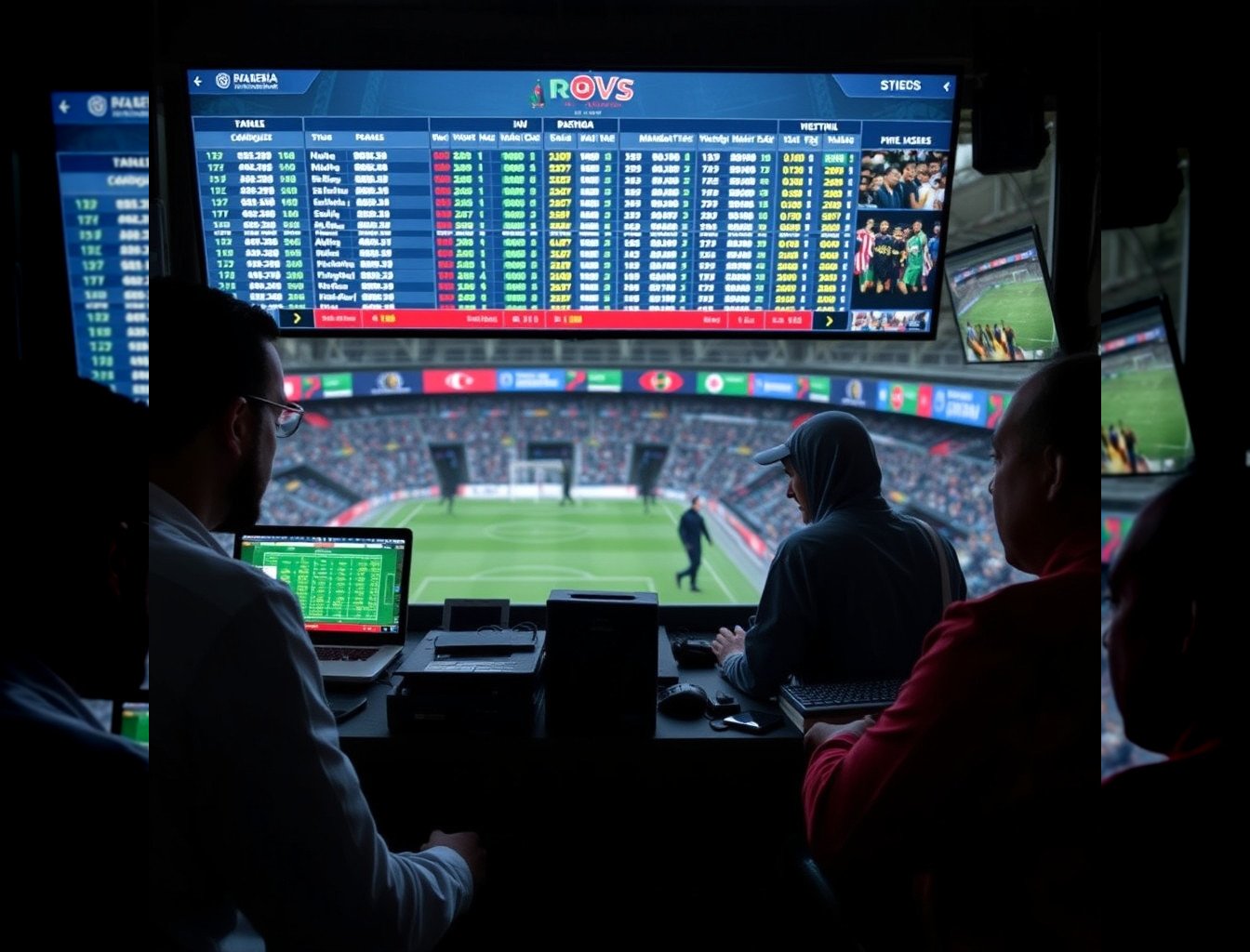
European football has driven a surge in Algeria’s unregulated online betting market, exposing gaps in local enforcement while highlighting untapped demand among Algerian bettors, according to The New Arab.
The boom, fueled by live coverage of major leagues and tournaments, has intensified competition among shadowy platforms that bypass Algerian licensing and tax rules. The shift has accelerated use of prepaid cards and mobile wallets to deposit funds, sectors of Algeria’s e-commerce already expanding by 15% year-on-year, according to the World Bank’s 2024 report on North African payments.
Recent crackdowns in Algeria have closed dozens of betting websites, yet new ones appear within days, revealing the resilience of the black market. Operators target Algerian bettors with adverts in Darija and French, offering live odds on Premier League, La Liga, Champions League and World Cup qualifiers. Customer service hotlines often link to call centers outside Algeria, complicating efforts by regulators to enforce domestic betting decrees.
Payment habits mirror broader trends: 42% of Algerian online shoppers now use mobile money services such as Yassir Pay and Djezzy Money, according to the Algerian Fintech Association’s 2025 snapshot. These wallets allow small, fast deposits that regulators struggle to trace once funds cross borders.
The black market thrives despite a 2019 presidential decree banning online betting and a 2021 circular from the Ministry of Finance tightening oversight of foreign payment gateways. Analysts say the mismatch between demand and regulation creates opportunity for entrepreneurs willing to enter the formal sports-betting space.
Potential entrants face high barriers: a government tender for a single national operator expired last year with no winners, and the finance ministry has yet to approve any licensed domestic platform. Meanwhile, the black market generates estimated monthly revenues of 3.2 billion Algerian dinars, equivalent to 23 million euros, according to risk-intelligence firm Askari Risk Intelligence.
Black-market operators reinvest part of these profits into marketing and technology, often paying influencers and sports commentators to drive traffic. Local fintech startups say this informal cash flow complicates compliance for formal players trying to compete.
Entrepreneurs eyeing the sports-betting sector point to two gaps ripe for innovation. First, regulated platforms could launch mobile apps with Algiers-approved payment rails but foreign licenses—mirroring models used in Morocco and Tunisia, where licensed betting firms operate cross-border under regional compacts. Second, analytics tools tailored for Algerian bettors could differentiate licensed services by offering localized odds and risk controls.
Digital payment providers see parallel upside. Integrating know-your-customer checks within mobile wallets could help licensed operators distinguish legitimate bettors from grey-market users, while still catering to the 60% of Algerian adults who remain unbanked, per central bank data.
The black market’s agility contrasts with Algeria’s slow licensing process. Entrepreneurs warn that without faster approvals, licensed operators will cede ground to unregulated rivals that pay no taxes, offer no consumer protections, and funnel capital offshore.
Key takeaway for entrepreneurs
The betting black market in Algeria is already larger than the formal sector, offering evidence of robust latent demand. Regulatory approvals for licensed platforms are delayed, yet mobile wallets and fintech rails exist to collect payments safely. Time-sensitive innovators can bridge the gap by securing regional licenses and integrating local KYC within existing digital payment flows.
Sources
- The New Arab
💡 Starting a business in Algeria? GlobalStart guides you step by step: procedures, real costs, company forms (SARL, EURL, SPA) and CNRC registration.