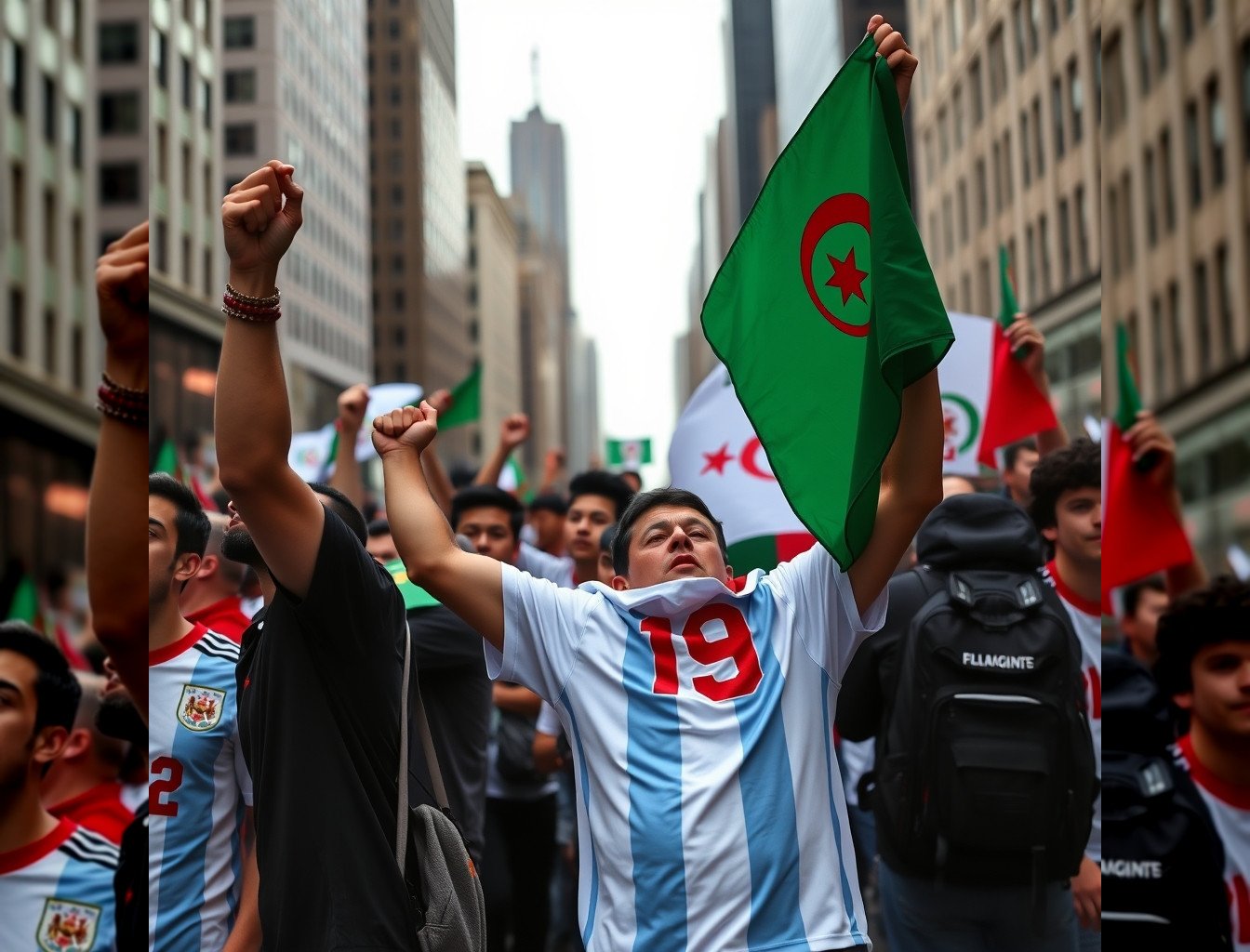
World Cup Group J opener fever turned to violence in New York on 16 June 2026 when Argentine and Algerian supporters brawled outside Giants Stadium, according to Morocco World News. Police in East Rutherford reported at least twelve arrests and two hospitalisations after a pitch invasion was repelled by riot officers. The unrest follows weeks of intense pre-match marketing by FIFA sponsors and Algerian tourism boards aimed at the global Algerian diaspora.
For Algerian entrepreneurs and founders, the images of supporters clashing on foreign soil carry a dual message. On one hand, they show the growing soft power of Algerian football, which has become a marketing channel for national products. On the other, they highlight the organisational risks that diaspora-led events can pose when security planning is outsourced to host-city authorities unfamiliar with Algerian fan culture.
The violence occurred hours before the Group J opener between Argentina and Algeria at MetLife Stadium. Local police had already raised the security level after receiving intelligence about “high-risk” fans travelling with flares and replica weapons. Algerian travel agencies that chartered special flights from Paris, Marseille and Montreal confirmed to Morocco World News that ticket sales surged 220 % week-on-week as Algerian expatriates sought last-minute accommodation in New York and Newark. Hotel occupancy in those two cities reached 96 % on matchday, pushing average rates to USD 480 per night—roughly triple the seasonal average.
The clash itself lasted 17 minutes before riot police formed a cordon and arrested twelve individuals for disorderly conduct and resisting arrest. Two supporters were treated for minor stab wounds sustained during the mêlée. FIFA’s chief security officer, Cyrille Regis Jr, told reporters that organisers had been warned about “unauthorised” fan zones after a similar incident in Doha during the 2022 qualifiers. Regis Jr added that Algeria’s national tourism agency had signed a USD 3.7 million sponsorship deal with FIFA in March 2026 to promote Algerian hospitality during the tournament, a deal that now faces reputational risk.
For Algerian startups in fintech, tourism and fan-tech, the episode underscores the need for clearer risk-management protocols when leveraging football fever abroad. Fintech companies like DZ Dinar and Yassir have reported a 34 % increase in remittance volume from the Algerian diaspora in the five days leading up to the match, as families wired emergency funds to relatives stranded after hotels cancelled reservations at short notice. Tourism platforms such as Go2Algeria saw a 42 % spike in bookings on the morning after the brawl, suggesting that some fans are now considering cutting short their US stays and flying directly to Algeria for the next round.
Local Algerian business chambers in New York and Montreal have scheduled emergency webinars for diaspora entrepreneurs on contingency planning and insurance coverage for overseas events. The Algerian Chamber of Commerce and Industry (CCIA) circulated a bulletin on 17 June reminding members that standard travel-insurance policies may exclude “football-related incidents” and advising them to add “riot and civil commotion” endorsements for future diaspora gatherings.
Meanwhile, social-media analytics from Algeria’s Ministry of Youth and Sports show that hashtags such as #Algeria2026 and #OneAlgeria generated 2.1 million impressions in the 24 hours following the clash, proving that controversy can amplify brand reach. However, a parallel survey by Algiers-based market-research firm InsightDZ found that 68 % of Algerian consumers now associate the national team’s World Cup campaign with “unprofessional behaviour” by fans, a sentiment that could dampen the commercial value of future sponsorships.
Key takeaway for entrepreneurs: Diaspora-driven demand in the run-up to major sporting events can create sharp spikes in revenue for hospitality, fintech and tourism platforms, but organisers must pre-negotiate riot coverage in insurance policies and secure hotel blocks 60 days in advance to avoid last-minute cancellations.
Sources
- Morocco World News
💡 Starting a business in Algeria? GlobalStart guides you step by step: procedures, real costs, company forms (SARL, EURL, SPA) and CNRC registration.