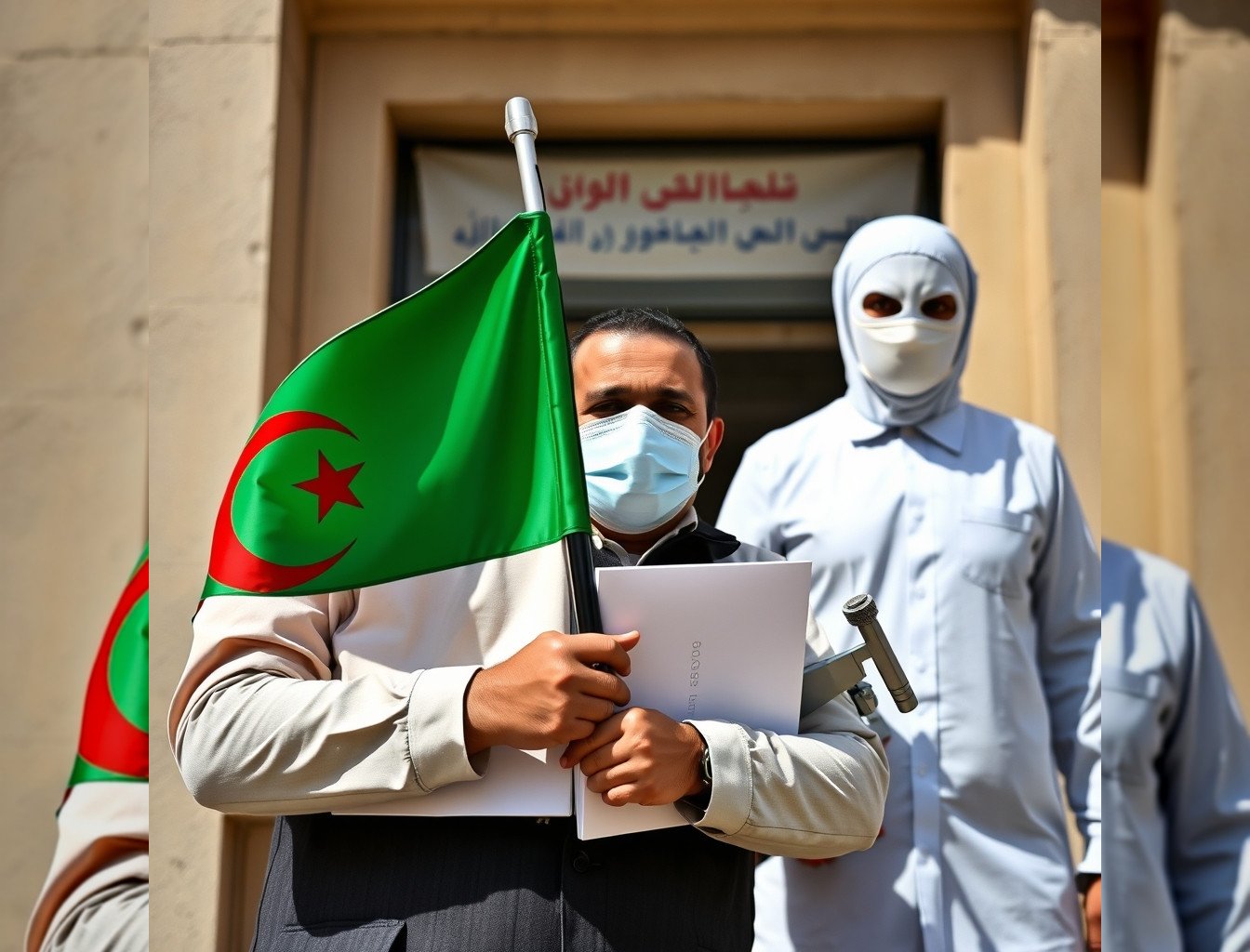
In 2025, Algeria’s justice system has escalated its repression of dissent, targeting artists, journalists and union leaders whose cases carry heavy economic implications. The recent hunger strike by Mohamed Taleb al-Arbi, a poet linked to the 2019 Hirak protests, marks a turning point: the state is now willing to impose capital punishment for speech that once coexisted with economic liberalisation. According to Middle East Eye, al-Arbi’s prosecution under Penal Code 146 bis, which criminalises “undermining national unity,” began after he recited verses critical of President Abdelmadjid Tebboune during a cultural festival in Algiers. His trial, scheduled for recently, could conclude with a death sentence despite international condemnation from Amnesty International and the UN Human Rights Office.
The crackdown extends beyond poetry. In February 2025, independent trade union leader Kamel Belarbi was detained without charge for organising a strike at the state-owned steel complex in El Hadjar, near Annaba. Reuters reports that Belarbi’s arrest followed a dispute over unpaid bonuses that escalated into a sit-in of 400 workers. His case, documented by openDemocracy, sets a precedent: any organised labour action not sanctioned by the state-run unions risks immediate prosecution. This aligns with a broader pattern observed by Freedom House, which documents 18 such arrests since 2020, including journalist Khaled Drareni, whose 2021 conviction for “inciting unarmed gathering” remains a cautionary tale for media professionals.
Entrepreneurs must weigh Algeria’s legal risks against its economic potential. The country’s hydrocarbon sector, anchored by SONATRACH, continues to generate 90% of export earnings, yet its growth is stifled by bureaucratic opacity and capital controls. According to APS, foreign direct investment in non-oil sectors fell 12% in 2024, partly due to investor perceptions of judicial unpredictability. The detention of union leaders like Belarbi signals that labour disputes can escalate into criminal cases, complicating due diligence for partnerships with Algerian firms. SMEs in construction and renewable energy, which rely on long-term contracts, now face higher compliance costs to avoid entanglement in politically charged legal battles.
The Amazigh cultural movement, long suppressed but recently granted symbolic recognition, also intersects with business. The Washington Institute notes that Tamazight’s official status in education and public administration has created new market niches, from bilingual software localisation to Amazigh-language tourism in Kabylia. However, the crackdown on dissent threatens this progress: in October 2025, authorities banned a Tamazight poetry festival in Tizi Ouzou after organisers invited al-Arbi to perform, illustrating how cultural policy can be weaponised against economic experimentation.
For the Algerian diaspora, the legal climate complicates return strategies. Many overseas professionals, who once considered investing in local startups or heritage projects, now hesitate due to the risk of asset seizure under vaguely worded laws. In 2024, the government froze bank accounts of 37 civil society figures, including several in France and Canada, under anti-terrorism legislation. This extraterritorial reach, reported by Arab News, sends a chilling message to entrepreneurs abroad who might otherwise channel remittances into venture capital or real estate.
The economic stakes are clear: Algeria’s push for diversification through its 2025-2030 investment law, which offers tax breaks to tech and green-energy firms, will struggle to attract partners if the justice system conflates criticism with subversion. The case of al-Arbi, whose poetry once inspired a generation of young Algerians to pursue creative careers, now serves as a warning: dissent is not just a political act, but a liability that can derail business plans.
Key takeaway for entrepreneurs: Algeria’s legal crackdown increases the cost of due diligence and risk assessment for foreign and local investors. Partnerships with state-affiliated entities carry indirect exposure to politically driven prosecutions, while sectors like tech and tourism must navigate shifting cultural policies. Diaspora-led ventures should secure legal safeguards before repatriating capital, as asset freezes now extend beyond national borders.
Sources
- Amnesty International
- VOA – Voice of America English News
- Middle East Eye
- The Washington Institute
- Arab News
- BBC
💡 Starting a business in Algeria? GlobalStart guides you step by step: procedures, real costs, company forms (SARL, EURL, SPA) and CNRC registration.