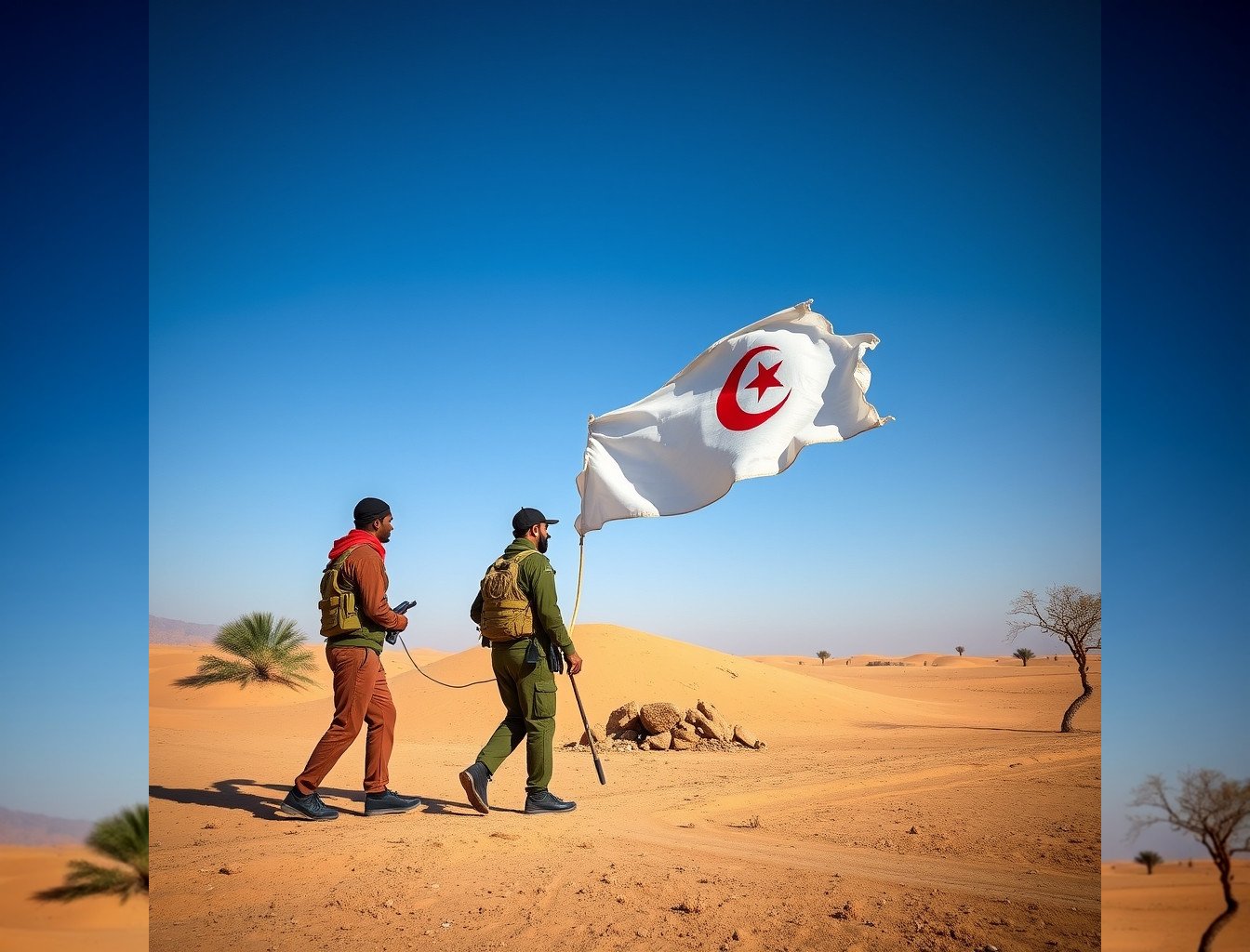
Algeria’s army chief, Lieutenant General Said Chengriha, traveled to Mauritania recently to discuss Sahel security concerns, according to The Arab Weekly. The visit highlights Algeria’s deepening regional coordination as cross-border instability and militant threats intensify across the Sahel belt.
The trip underscores Algeria’s leadership role in collective defense efforts, as weak governance and insurgencies in Mali, Burkina Faso and Niger have created a widening arc of insecurity. Mauritania shares a 2,200-kilometer border with western Algeria and has become a key partner in efforts to contain militant movements linked to Al-Qaeda and the Islamic State. For Algerian entrepreneurs and business founders, this military diplomacy carries direct implications for trade corridors and investment decisions.
Sahel instability has already disrupted supply chains and driven up transport costs. The Trans-Saharan Highway, a 4,500-kilometer route linking Algeria to West African markets, remains vulnerable to banditry and militant checkpoints. The recent closure of the border between Algeria and Mali has further constrained cross-border commerce. Algeria’s strengthened ties with Mauritania could open alternative logistics routes through Nouakchott, potentially easing pressure on land-based trade.
The Mauritanian visit also signals Algeria’s proactive stance in regional security architectures such as the G5 Sahel, despite recent withdrawals by Mali, Burkina Faso and Niger. Algeria’s presence on the G5’s political and military committees reflects its commitment to maintaining stability in the Sahel, which is vital for securing overland trade and energy corridors. Entrepreneurs in Algeria’s logistics and transport sectors should monitor any future agreements that could streamline customs procedures or improve cross-border transit security.
For the Algerian diaspora engaged in trade or remittance flows between Europe and West Africa, the visit may signal improved conditions for money transfers and business travel. Remittances to Algeria reached $2.5 billion in 2023, according to the World Bank, with significant flows originating from France, Spain and Belgium. Enhanced security cooperation could facilitate safer travel routes and lower transaction costs for diaspora entrepreneurs shipping goods or investing in Sahel markets.
Meanwhile, the Algerian government continues to invest in border surveillance and military infrastructure. In 2023, Algeria allocated $500 million to modernize its southern border defenses, including drones, sensors and rapid-response units. Such investments aim to deter militant incursions and protect critical infrastructure, including the Hassi R’Mel gas field, North Africa’s largest natural gas deposit. Entrepreneurs in Algeria’s energy services sector could see growing demand for security consulting, logistics support and maintenance contracts tied to these upgrades.
Regional analysts note that Algeria’s approach combines military containment with diplomatic engagement, avoiding direct intervention while supporting local partners. This strategy is aimed at preventing spillover violence into Algerian territory. For Algerian tech startups and service providers focusing on digital security or remote monitoring, expanding demand from government agencies could create new business opportunities.
The Mauritanian visit also reflects Algeria’s broader pivot toward African partnerships, as the country seeks to reduce its reliance on European markets and diversify trade. Algerian exports to Sub-Saharan Africa grew by 18% in 2023, reaching $720 million, according to Algerian customs data. Entrepreneurs eyeing growth in agro-processing, renewable energy and digital services could benefit from improved access to African markets through safer corridors.
As Algeria deepens its security network in the Sahel, entrepreneurs should prepare for both risks and opportunities. Enhanced border security may reduce smuggling and illegal trade, but it could also increase compliance costs for cross-border businesses. Forward-thinking founders will monitor policy signals from the Ministry of National Defense and the Ministry of Foreign Affairs to anticipate regulatory changes that affect import-export activities.
Key takeaway for entrepreneurs
Security cooperation with Mauritania may stabilize key trade routes, benefiting logistics businesses and cross-border traders. Diaspora entrepreneurs should expect improved safety for supply chains and remittance flows. Energy and tech sectors could see new contracts tied to border security upgrades and digital monitoring.
Sources
- The Arab Weekly
💡 Starting a business in Algeria? GlobalStart guides you step by step: procedures, real costs, company forms (SARL, EURL, SPA) and CNRC registration.