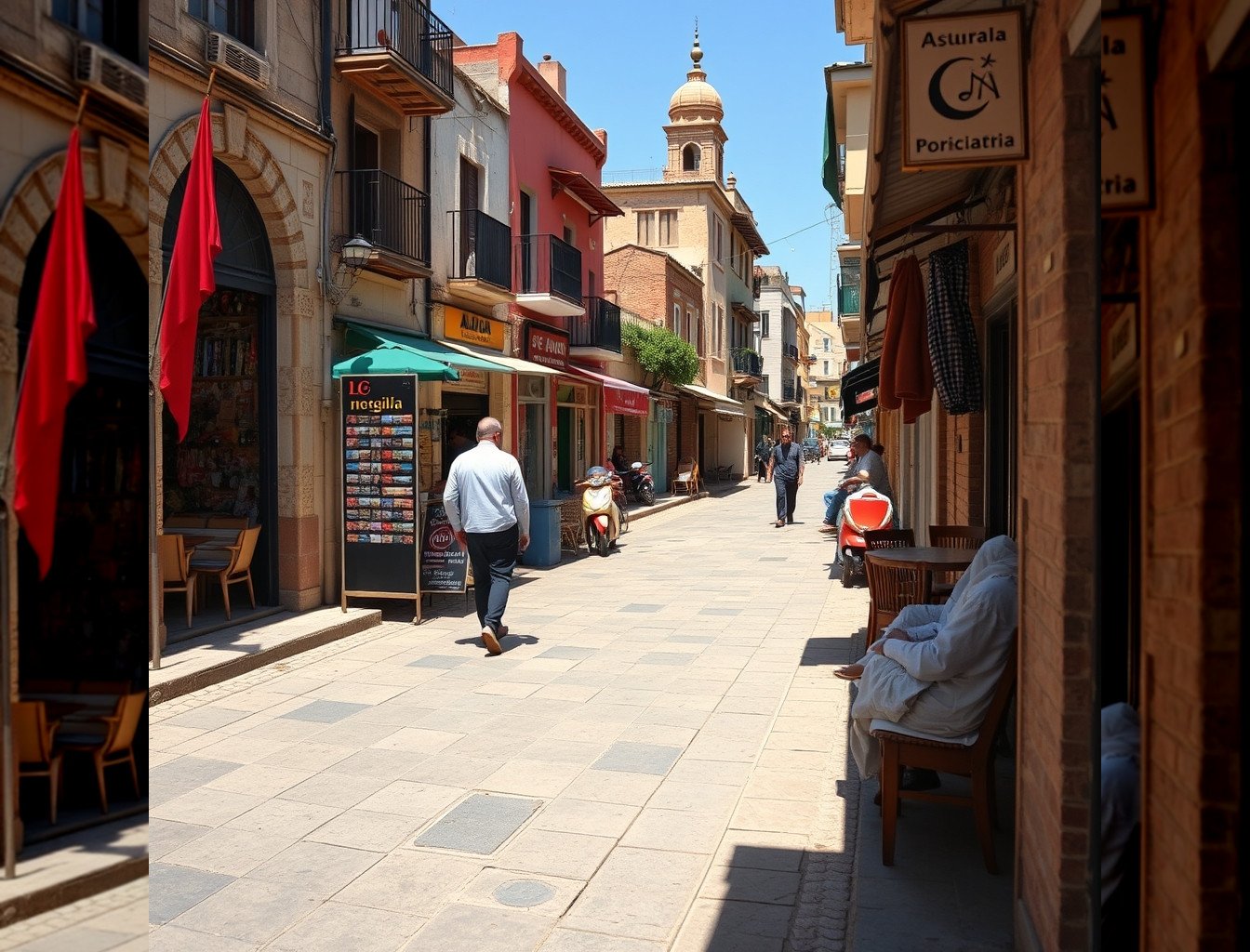
Tourism: Heritage sites draw visitors, but infrastructure lags
Entrepreneurs in hospitality report that 70% of tourist arrivals are independent travelers rather than organized groups, limiting revenue streams for local businesses. The Algerian Hotel Owners Federation (FNAH) states that 80% of registered hotels in Djanet are small-scale operations with fewer than 20 rooms, restricting their ability to invest in marketing or service upgrades. The lack of direct international flights to Djanet—only one weekly connection via Algiers—remains a bottleneck.
Heritage: Southern Algeria’s appeal grows, but funding remains scarce
Local artisans in Ghadames report that 60% of their income now comes from tourism, up from 40% in 2020. Yet, export limitations—current customs regulations allow only 5 kg of handmade goods per traveler—constrain scaling up. The Algerian Chamber of Crafts (CNAP) estimates that 200 small workshops in Ghadames could expand production if export quotas were raised to 20 kg per traveler.
Female Leadership: Elections see record low turnout, but women advance in aviation
In parallel, Algeria’s first female commercial pilot, Captain Samira Bendimerad, ran as an independent candidate in Algiers, receiving 1,247 votes. The Algerian Civil Aviation Authority (ACAA) reports that female pilots account for 5% of the 1,800 licensed pilots in Algeria, up from 2% in 2019. The ACAA’s 2024 training program includes 30 women out of 200 recruits, a 15% increase from 2023.
Healthcare: Medical students protest as sector faces crisis
A 2024 report by the Algerian Medical Association (AMS) found that 35% of medical graduates emigrate within five years, primarily to France, Canada, and Gulf states. The government’s 2024 health budget allocates DA 1.8 trillion (€11.5 billion), a 7% increase from 2023, but 60% of funds are earmarked for infrastructure rather than staff retention.
Politics: Constitutional reforms advance amid regional diplomacy
On the international stage, Foreign Minister Ahmed Attaf met with the incoming OIC Secretary-General in Jeddah on April 26, 2024, to discuss Algeria’s support for Palestinian statehood. In a separate engagement, Algerian President Abdelmadjid Tebboune received Uganda’s Minister of State for Regional Affairs, Bahati Sengendo, on April 24, 2024, to explore trade and energy cooperation.
EURL Companies: Industrial diversification gains traction
In solar energy, Algeria’s Ministry of Energy and Mines announced a 2024 tender for 1 GW of solar capacity, split between 12 projects. The largest, a 300 MW plant in Hassi R’Mel, is expected to reduce grid emissions by 450,000 tons of CO₂ annually. Private sector participation remains limited: only 5 out of 47 bidders in the 2023 solar tender were fully private, with the rest being joint ventures with state energy firms.
Technology: 5G rollout begins, FTTH expansion accelerates
FTTH (fiber-to-the-home) expansion reached 1.8 million households as of March 2024, up from 1.2 million in December 2023. Algerie Telecom leads deployment, covering 80% of the network, while private ISPs Algérie Câble and Djaweb account for the remaining 20%. The ARPT projects FTTH coverage to reach 3.5 million households by 2025, requiring an additional DA 300 billion (€1.9 billion) in investment.
Judicial Reform: Constitutional amendments pass, crackdown continues
However, the reform process faced criticism from the Algerian League for the Defense of Human Rights (LADDH), which documented 120 cases of arbitrary detentions in March 2024 alone. The Ministry of Interior reported 87% of these cases were linked to protests or social media posts critical of government policies. Legal experts note that the new amendments do not address judicial independence in practice, as the president retains the power to appoint the High Council’s chair.
Innovation: Algerian firm expands cashew processing in Tanzania
The project aligns with Tanzania’s 2024–2030 cashew development plan, which aims to process 90% of its 600,000-ton annual harvest domestically, up from 30% in 2023. Algeria’s trade deficit in nuts stood at DA 12 billion (€76 million) in 2023, driven by imports of cashew, almonds, and pistachios.
Desertification: Solar farms’ climate impact probed, land disputes flare
Meanwhile, displaced Moroccan farmers protested in Tindouf on April 25, 2024, over land disputes related to Algeria’s border buffer zone. Algeria’s Ministry of Foreign Affairs denied claims of land seizures, stating that the buffer zone is a military-controlled area for national security.
Balance of the week: Highs and lows
Key takeaway for entrepreneurs:
Algeria’s 2024 budget allocates DA 15 billion for SME support, with priority sectors including tourism infrastructure, renewable energy components, and agribusiness processing. Female-led ventures in
Sources
- APS English
- ookla.com
- TelecomLead
- Ad-hoc-news.de
- ASHARQ AL-AWSAT English
- AGU Publications
💡 Starting a business in Algeria? GlobalStart guides you step by step: procedures, real costs, company forms (SARL, EURL, SPA) and CNRC registration.