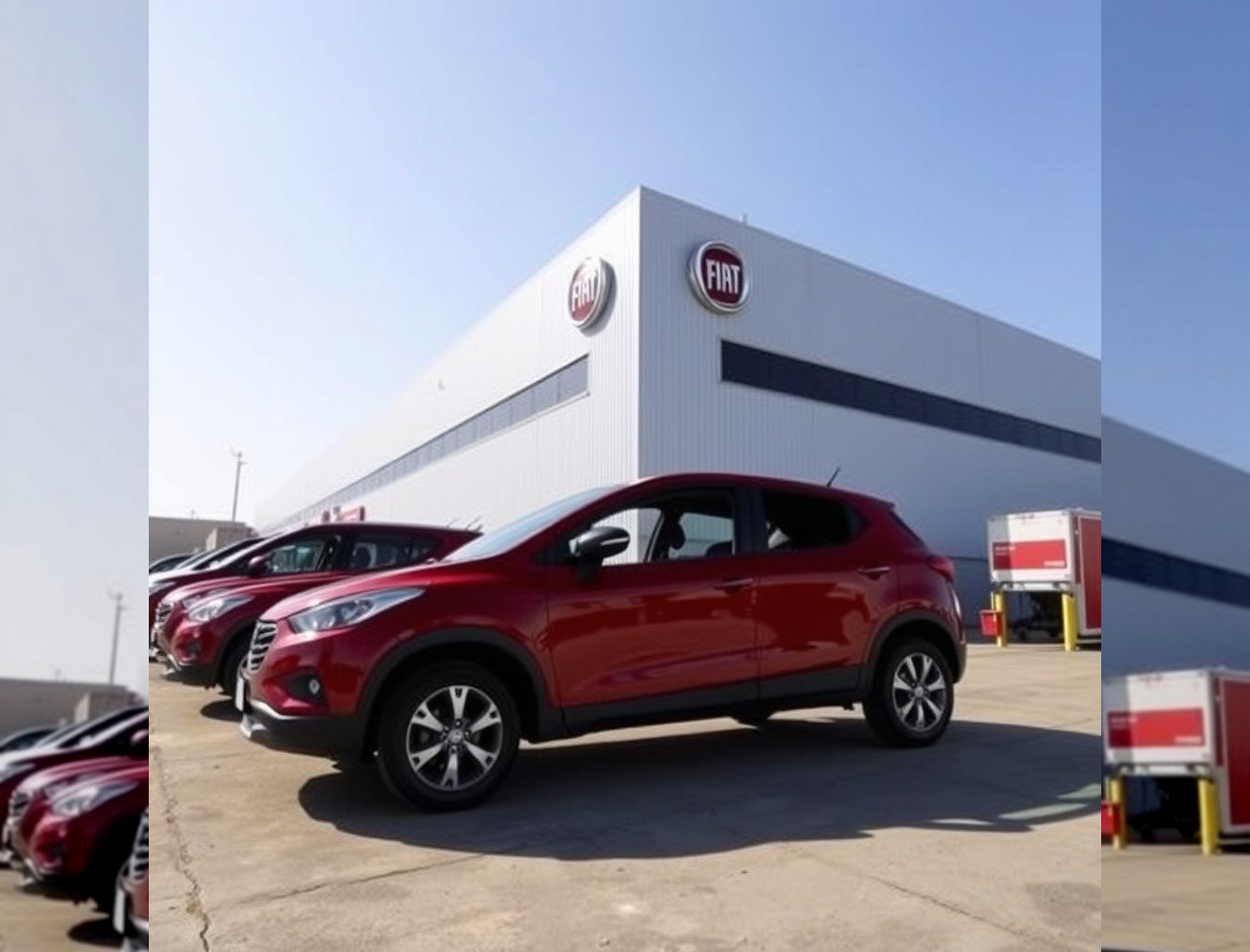
Stellantis’s Fiat brand is expanding its Oran factory, a move that will sharpen Algeria’s role in North Africa’s carmaking sector. The expansion, announced in early April 2026 by Algeria Radio, is the second major foreign direct investment in Algeria’s automotive industry in less than a year. It follows Hyundai’s decision in August 2025 to open its own assembly plant near Algiers, and underscores how foreign groups now see Algeria as a springboard for regional sales rather than a protected local market.
The Oran factory—operated by Fiat Automobiles Algeria, a joint venture between Fiat and Algeria’s state-backed SNVI—will add a second assembly line dedicated to the Jeep Compass and Fiat Tipo models. Local daily El Moudjahid reported in March 2026 that the additional capacity will push annual output from 120,000 to 200,000 units. SNVI’s managing director, Kamel Rezig, told Algeria Radio the expansion will create 1,100 new jobs in Oran Province, where the unemployment rate for 25-34-year-olds already sits at 21 %, the highest in the country.
For investors outside the auto sector, the announcement is a signal that Algeria is finally moving beyond its longstanding 51 % local-content requirement for passenger cars. The 2025 automotive-sector law quietly raised the threshold to 60 %, but gave foreign groups two years to phase in the change. Stellantis’s decision to commit to Oran suggests it has secured assurances that the new rule will be enforced flexibly if local suppliers cannot meet demand.
Suppliers, however, face a tight timeline. The Ministry of Industry and Pharmaceutical Production has published a list of 350 auto-parts categories that must be sourced locally by 2027. The list, circulated to the Algerian Association of Car Part Manufacturers (AACPM) in February 2026, includes catalytic converters, wiring harnesses and seats. AACPM president Yacine Benabdallah estimates that only 40 % of the required parts are currently made in Algeria, leaving a €180 million procurement gap that must be filled within 18 months.
The Oran factory’s second line will also be the first in Algeria to install a robotic body-shop supplied by Comau, the Italian automation group. Stellantis did not disclose the contract value, but Comau’s Algeria director, Hakim Lounis, told local press in March 2026 the line will reduce welding time by 22 % and cut defect rates from 3.1 % to 0.8 %. Comau has already trained 45 Algerian engineers in Turin; a second batch of 60 will start in June 2026.
Energy costs remain a concern. Algeria’s state electricity company, Sonelgaz, raised industrial tariffs by 8 % in January 2026 as part of an IMF-mandated subsidy reform. Yet Stellantis negotiated a special rate of €0.06 per kWh for the Oran plant, half the industrial average, after securing guarantees from the Ministry of Energy that natural-gas allocations for industry will not be rationed during summer peaks. Similar concessions may be needed to lure other foreign groups still evaluating Algeria.
The factory’s sales footprint is widening. Focus2Move, the Italian market-research firm, reported in April 2026 that Fiat’s Algerian market share jumped from 6 % in 2024 to 9 % in 2025, largely on the back of the new local models. Stellantis executives told Reuters in March 2026 they aim to export 30 % of Oran’s output—mainly to Tunisia and Morocco—once the second line is fully ramped up in late 2026. That would make Algeria the region’s third-largest car exporter after Morocco and Egypt, overtaking South Africa in unit terms.
Algeria’s diaspora entrepreneurs are watching closely. Nacer Khelil, a Paris-based Algerian engineer who runs an auto-parts consultancy, told Jeune Afrique in May 2026 he is advising five French suppliers on setting up subsidiaries in Algiers to supply the Oran plant. “The freight cost from Marseille to Oran is 30 % lower than to Casablanca,” he noted, “and Algeria’s 19 % customs duty on finished parts is waived if you establish a local warehouse.” Khelil has already helped two firms obtain industrial-land leases in the new 50-hectare Oued Tlelat free zone, 25 km west of Oran.
Yet regulatory uncertainty persists. The Ministry of Commerce has yet to publish the implementing decrees for the 2025 automotive law, leaving investors unsure whether local-content certificates will be granted before July 2027. “The draft decrees were circulated internally in December 2025,” said an AACPM board member who requested anonymity. “We are still waiting for the Official Journal.”
Key takeaway for entrepreneurs
Algeria’s auto-industry push offers concrete niches for suppliers ready to meet tight local-content rules by 2027. Foreign investors can leverage Algeria’s lower logistics costs and preferential energy tariffs, but must secure land leases in free zones and monitor pending implementing decrees to avoid delays.
Sources
- Focus2Move
- Billionaires.Africa
- KED Global
- caspiannews.com
💡 Starting a business in Algeria? GlobalStart guides you step by step: procedures, real costs, company forms (SARL, EURL, SPA) and CNRC registration.