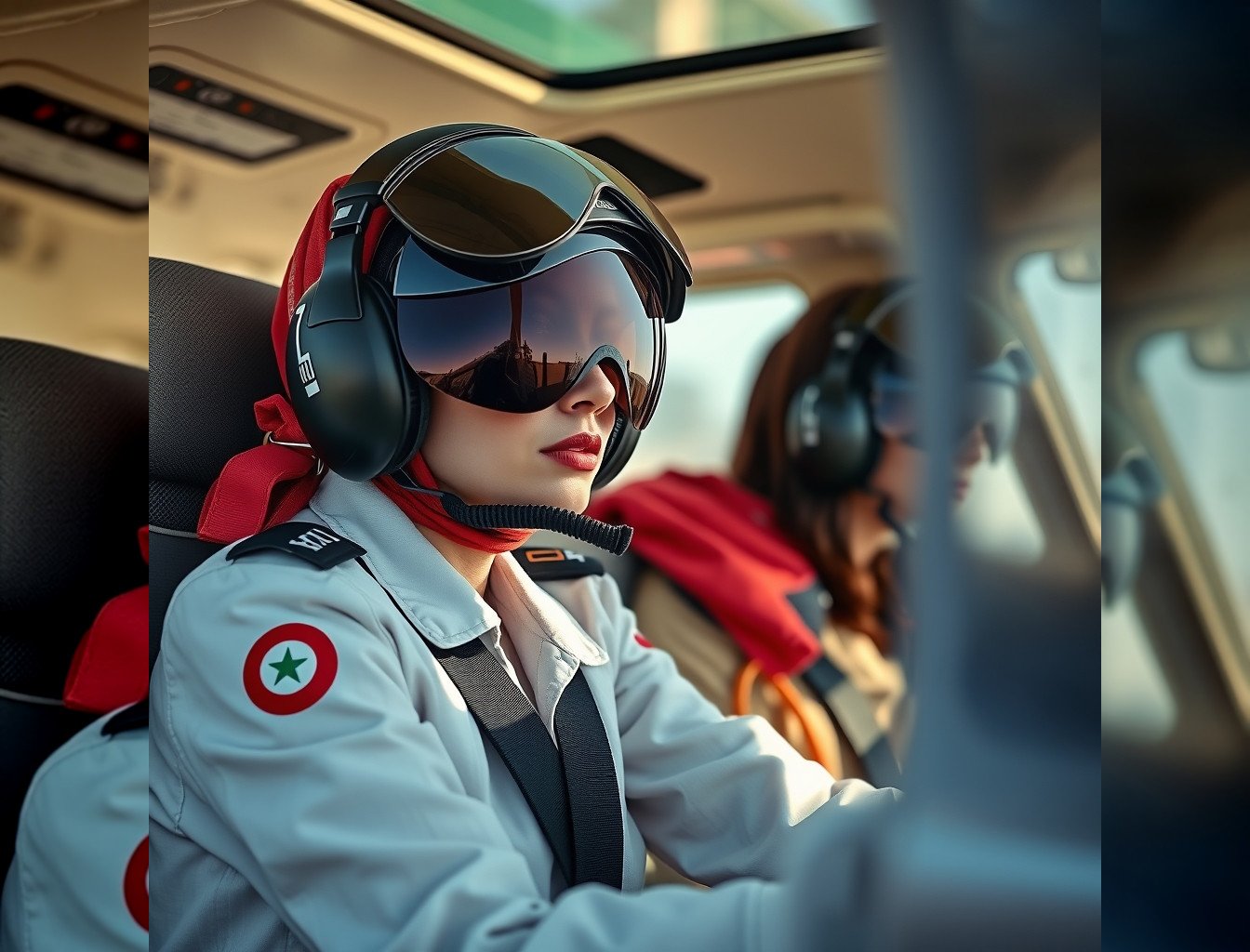
The skies above Algiers have never been busier with ambition. In recent months, Algeria’s aviation sector has quietly become a rare bright spot for female leadership, with women breaking into the cockpit of a male-dominated industry despite broader political headwinds.
Algeria’s national carrier, Air Algérie, now has six female co-pilots flying commercial routes, up from just one in 2020. The airline confirmed the milestone in a statement this week, following the promotion of two new women to the rank of first officer. “We are seeing more women applying than ever before,” said Fatima Zohra Benkhelil, Air Algérie’s director of human resources. “Last year, 15% of our cadet program applicants were women, compared to 5% five years ago.”
This progress is not confined to the skies. Algeria’s flagship oil company, SONATRACH, has also expanded its leadership ranks. In 2024, SONATRACH appointed Amina Haddad as deputy director of exploration, making her the first woman to hold such a senior technical role in the company’s 60-year history. Haddad, a geologist with 20 years at the firm, now oversees a $2 billion annual investment program in upstream projects.
Yet the rise of women in these sectors stands in contrast to the country’s broader political landscape, where female representation has stalled. According to a report published by the Washington Institute in September 2021, women hold just 8% of seats in Algeria’s parliament — the same percentage as in 2017. The report notes that while Algeria was once seen as a regional leader in women’s political participation, reforms in 2023 reduced the quota for women on electoral lists from 30% to 20%, sparking criticism from rights groups.
The dichotomy between economic progress and political stagnation is not lost on the women breaking ground in aviation and energy. “When I walk into the cockpit, I’m judged on my skills, not my gender,” said Captain Leila Touati, one of Air Algérie’s first female pilots, in an interview with El Watan last month. “But outside the plane, on the tarmac or in meetings, I still face questions about whether a woman can handle the pressure.”
The political climate has done little to deter aspiring female leaders. In June 2026, pilot and activist Samira Boumediene announced she would run as an independent candidate in Algeria’s parliamentary elections, challenging stereotypes about women in both aviation and politics. “If we can fly a plane at 35,000 feet, we can navigate the challenges of public office,” she told The New Arab.
The contrast between sectors is striking. While the oil and aviation industries — both strategic and male-dominated — are slowly opening doors, the political arena remains resistant. Analysts attribute the resistance to deep-seated cultural norms and the dominance of traditional power structures. “The economy is more meritocratic than politics,” said political scientist Dr. Yacine Belaskri. “In business, results matter. In politics, loyalty to the system matters more.”
For entrepreneurs and founders in Algeria, the message is clear: sectors like aviation and energy are becoming more accessible to women, offering new leadership pathways. Air Algérie’s cadet program, for instance, now includes a scholarship for women from rural areas, with tuition and living costs covered. Since its launch in 2022, 12 women have graduated from the program.
SONATRACH, meanwhile, has launched a mentorship initiative pairing young female engineers with senior executives like Haddad. “We need more role models,” Haddad said in a company video. “When young women see someone like me in this role, it changes their perception of what’s possible.”
The economic stakes are high. Algeria’s aviation sector is projected to grow by 6% annually through 2030, driven by domestic demand and tourism. Air Algérie plans to expand its fleet from 55 to 70 aircraft by 2027, creating hundreds of new jobs. With female pilots already proving their capability, the company is eyeing opportunities to increase gender diversity in other roles, including engineering and management.
Yet the broader economy remains constrained by political uncertainty. Voter turnout in Algeria’s 2026 parliamentary elections plunged to 20.79%, according to official figures cited by Atalayar, raising questions about the legitimacy of the new government. Political parties that had boycotted previous elections returned to the ballot this week, following assurances from President Abdelmadjid Tebboune about electoral reforms. But the low turnout suggests many Algerians remain disengaged.
For women in business, the lesson is that while the political system moves slowly, sectors like aviation and energy are making tangible progress. Air Algérie’s female pilots are not just symbols — they are part of a growing pipeline of talent that could reshape Algeria’s economy. The question now is whether this momentum can spread beyond these industries, or whether the political system will continue to lag behind.
Key takeaway for entrepreneurs: Algeria’s aviation and energy sectors are opening doors for female leadership, with training programs and mentorship initiatives creating tangible opportunities. Women with technical skills in these fields face fewer cultural barriers than in politics, offering a viable path to entrepreneurship and high-level careers. Aspiring founders should target these growing sectors, where proven demand for talent is creating new leadership roles.
Sources
- Atalayar
- The New Arab
- The Washington Institute
- Al Majalla
- The Arab Weekly
💡 Starting a business in Algeria? GlobalStart guides you step by step: procedures, real costs, company forms (SARL, EURL, SPA) and CNRC registration.