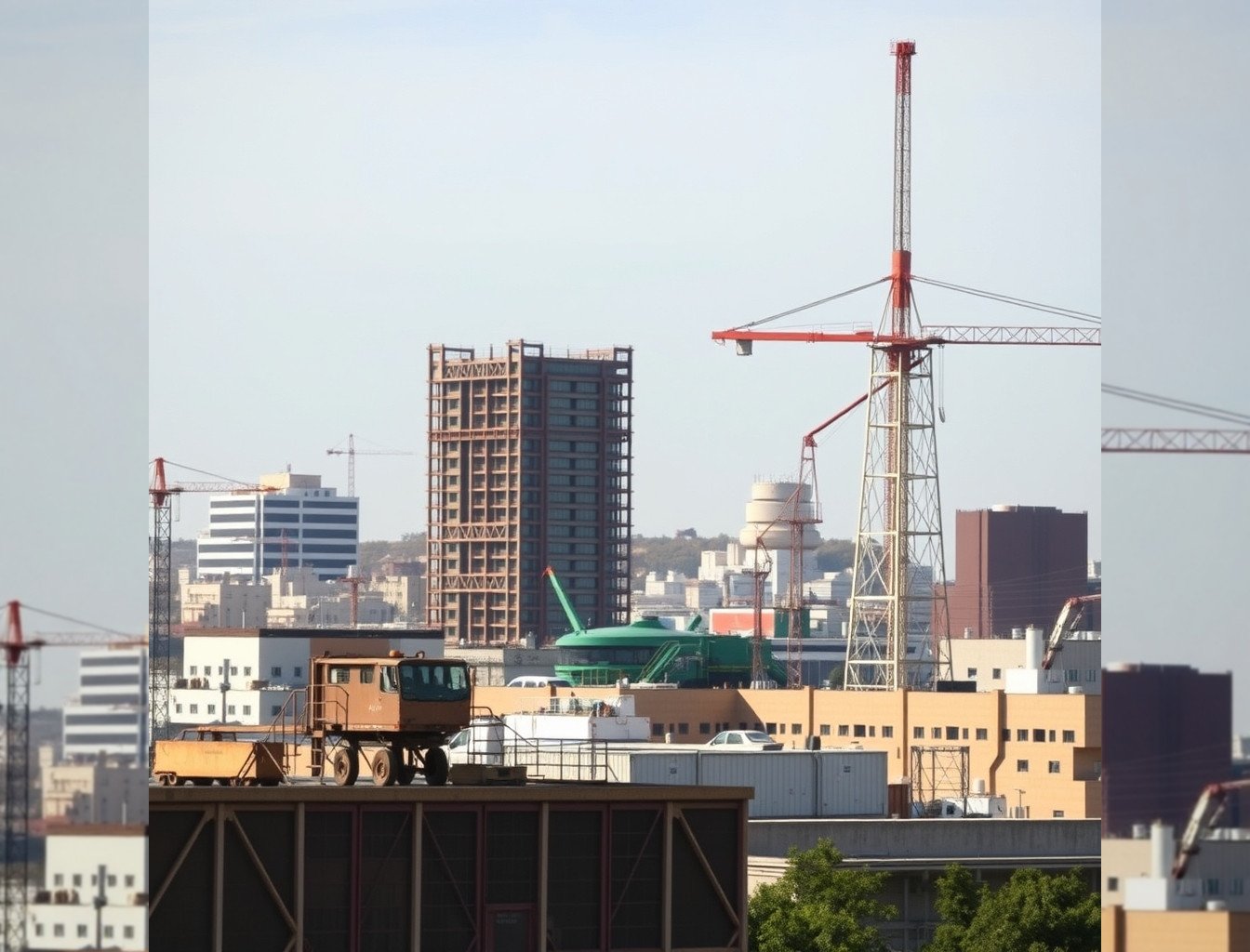
Algeria’s economic and industrial activity this week centered on energy diversification, infrastructure expansion, and regulatory adjustments. State-backed investments in hydrogen, petrochemicals, and renewables totaled over $32 billion in announced commitments. Private sector deals in manufacturing and pharmaceuticals signal local production growth. Meanwhile, fiscal vulnerabilities persist amid oil price volatility, and legal actions against activists continue to shape business and diaspora engagement.
Energy and industrial expansion: $32 billion in new commitments
Algeria’s state energy company, Sonatrach, announced a $7 billion plan to expand petrochemical and refining capacity. The investment targets increased production of fertilizers, plastics, and refined products for domestic and export markets. Separately, the government set a $25 billion target for hydrogen production by 2040, positioning Algeria as a potential supplier to Europe.
The Medlink interconnector project, linking Algeria and Tunisia to Italy, secured Italian support. The 600 MW underwater cable aims to export electricity to Europe by 2028. Algeria’s renewable energy sector also advanced, with the government outlining a development roadmap for solar and wind projects. No new large-scale solar farms were announced, but the framework prioritizes local manufacturing of panels and components.
Condor Electronics, owned by billionaire Abderrahmane Benhamadi, signed a pipe manufacturing deal with a German partner in Berlin. The agreement covers production of industrial pipes for energy and construction sectors, with a focus on export markets in Africa and Europe.
Pharmaceuticals and healthcare: local production and foreign partnerships
Algeria’s Ministry of Health signed a deal with Novo Nordisk to boost local insulin production. The agreement includes technology transfer and capacity building for domestic manufacturing. Preliminary construction began on a new Algerian-Qatari-German hospital in Algiers, a $300 million project set to open in 2026. The facility will specialize in oncology and cardiology, with 500 beds and advanced diagnostic equipment.
The African Union Commission met with Algerian health officials to discuss regional health cooperation. No specific funding or projects were disclosed, but the meeting focused on pharmaceutical production and pandemic preparedness.
Automotive and manufacturing: supply chain constraints persist
Stellantis held its second international suppliers convention in Oran, gathering 200 local and international firms. The event aimed to strengthen Algeria’s automotive supply chain, with a focus on sourcing components for the Peugeot and Citroën plants in Oran. Stellantis currently produces 50,000 vehicles annually in Algeria, down from 80,000 in 2019 due to supply chain disruptions.
Algeria’s car shortage continues, with waiting lists exceeding 12 months for some models. The government maintains import restrictions to protect local assembly plants, but production bottlenecks and component shortages limit output. No new assembly plants were announced this week.
Economic outlook: oil dependence and fiscal risks
Algeria’s economy showed mixed signals. The IMF and local analysts projected a slowdown in 2026 due to lower oil prices, which account for 90% of export revenues. The government’s 2024 budget assumes an oil price of $60 per barrel, down from $80 in 2022. Foreign exchange reserves stood at $56 billion in June 2024, covering 18 months of imports.
Fiscal vulnerabilities remain high, with public spending rising 12% in 2023 to $95 billion. Subsidies for fuel, food, and housing cost $30 billion annually. The government has not announced subsidy reforms, but energy sector investments aim to reduce domestic consumption of subsidized gas.
Legal and political environment: activism and diaspora engagement
Algerian authorities dropped charges against poet Mohamed Tadjadit and 12 Hirak activists after a year of detention. However, a crackdown on lawyers representing Hirak detainees continues, with reports of disbarment and travel bans. No new arrests were reported this week, but 50 activists remain in prison.
In France, Algerian exiles demanded “concrete guarantees” and a general amnesty before considering returns. The diaspora’s engagement with Algeria’s economy remains limited, with remittances at $2.1 billion in 2023, down from $2.4 billion in 2022. No new policies to attract diaspora investment were announced.
Desertification and climate: solar farms and land disputes
A study on large-scale Sahara solar farms warned of potential climate impacts, including reduced rainfall and vegetation cover. Algeria’s renewable energy plans include 15 GW of solar capacity by 2035, but no new projects were confirmed this week.
Moroccan farmers protested evictions from disputed land along the Algerian border. The area, known as the Guerguerat corridor, has been a flashpoint since Algeria closed the border in 1994. No resolution was announced.
Sonatrach and corruption: legal and operational updates
A French arrest warrant for an Algerian diplomat raised questions about functional immunities. The warrant relates to a 2013 corruption case involving Sonatrach and a French energy firm. Algeria rejected the warrant, citing diplomatic immunity.
Sonatrach’s anti-corruption efforts saw no new public disclosures. The company’s $7 billion petrochemical plan includes compliance measures, but no independent audits were announced.
Balance of the week
– Energy and industry: $32 billion in new commitments (hydrogen, petrochemicals, interconnector).
– Pharmaceuticals: Novo Nordisk deal and hospital construction advance local production.
– Automotive: Stellantis convention in Oran, but car shortages persist.
– Economy: Oil price risks in 2026, fiscal vulnerabilities unchanged.
– Legal: Charges dropped for 13 activists, but crackdown on lawyers continues.
– Diaspora: No new policies to attract investment or remittances.
– Climate: Solar farm study highlights risks; no new projects announced.
Key takeaway for entrepreneurs
Algeria’s energy and industrial sectors offer near-term opportunities in petrochemicals, hydrogen, and renewable components. Local manufacturing deals with foreign partners signal demand for industrial inputs. However, regulatory uncertainty and fiscal risks require contingency planning for currency and supply chain disruptions. Diaspora engagement remains low, with no new incentives for investment.
Sources
- Transnational Institute
- Schroders
- Muslim Network TV
- EnterpriseAM
- The North Africa Post
- Carnegie Endowment for International Peace
💡 Starting a business in Algeria? GlobalStart guides you step by step: procedures, real costs, company forms (SARL, EURL, SPA) and CNRC registration.