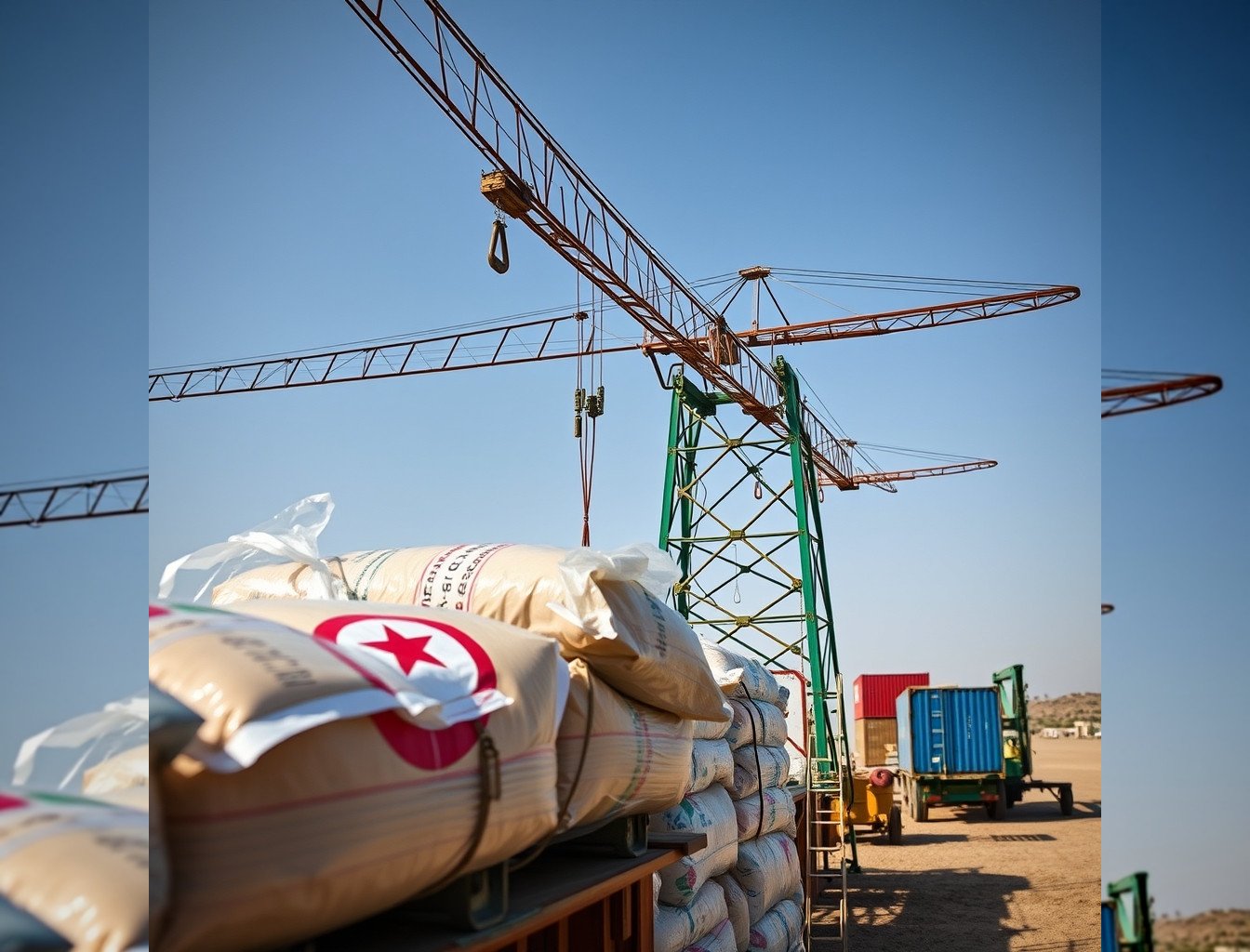
Airlines ban forces Algerian exporters to scramble for alternatives
The U.S. ban on Iranian airline operations—set to take full effect this week—has sent shockwaves through Algeria’s trade networks, forcing businesses to pivot away from Tehran as a key logistics hub. Iranian carriers like Mahan Air and IranAir once handled up to 15% of Algeria’s air cargo to and from Europe and Asia, according to the Algerian Chamber of Commerce (CCI). With flights suspended, exporters of pharmaceuticals, electronics, and agricultural products now face delays of up to 10 days and 30% higher shipping costs via alternative routes.
The disruption hits hardest in sectors where speed matters. Algeria’s $8 billion pharmaceutical industry, for instance, relies on Iranian suppliers for raw materials like paracetamol and antibiotics. “We’re already seeing stockouts in some hospitals,” said Karim Benali, CEO of PharmaMed, a mid-sized Algerian distributor. “Switching to European suppliers adds $2,000 per container—that’s a 25% markup on our margins.”
For SMEs, the fallout is immediate. Small-scale exporters of dates, olive oil, and textiles—Algeria’s fastest-growing non-hydrocarbon trade sector—now must reroute shipments through Dubai or Istanbul, adding $500–$1,500 per 20-foot container. “The cost isn’t the only issue,” warned Samira Hadj, founder of Algerian Exports Group. “Iranian customs clearance was fast and predictable. Now, we’re dealing with bureaucratic nightmares in the UAE.”
Diaspora businesses caught in the crossfire
Algerian entrepreneurs abroad are feeling the pinch too. The 3-million-strong Algerian diaspora in Europe and the Gulf—many of whom run import-export firms—are now scrambling to adjust. Take Mohamed Tazi, a London-based importer of Algerian couscous and preserved lemons. “I used to fly goods into Tehran, then ship them to Europe via IranAir’s cargo network,” he said. “Now, I’m losing $800 per shipment just in transit fees.”
The sanctions also complicate remittances. Iran’s $3 billion annual trade with Algeria—mostly in gas, pharmaceuticals, and textiles—has long been a lifeline for Algerian families sending money home. With Iranian banks cut off from SWIFT, diaspora workers are turning to informal hawala networks, which charge 5–10% fees compared to the usual 1–2% for formal transfers. “It’s a nightmare for families relying on these transfers,” said Driss Bouzidi, an economist at the Algerian Institute of Economic Studies.
For Algerian startups in tech and e-commerce, the impact is less direct but no less damaging. Companies like Algeria’s “Sheba” fintech platform—which facilitates cross-border payments—are seeing a 40% drop in transactions involving Iranian partners. “We’re not just losing business; we’re losing trust,” said Sheba’s co-founder, Yacine Cherifi. “Clients assume we’re now high-risk.”
Government moves too slowly to plug the gap
While Algerian officials have pledged to “diversify trade routes,” concrete action remains sparse. President Abdelmadjid Tebboune recently met with Iranian President Ebrahim Raisi to discuss alternatives, but no new air cargo agreements have been signed. Meanwhile, the Algerian Civil Aviation Authority (ALGCA) has yet to announce a formal backup plan for exporters.
Private sector frustration is growing. The Federation of Algerian Industries (FIA) has urged the government to fast-track partnerships with Turkish and UAE carriers, but progress is glacial. “We’re being left in the dark,” said FIA president Ali Haddad. “The state needs to act like a business, not a bureaucracy.”
For now, Algerian entrepreneurs are improvising. Some are chartering private jets for urgent shipments, while others are turning to road freight via Tunisia and Morocco—though this adds another 5–7 days to delivery times. “We’re in survival mode,” said Redouane Benali, a logistics manager at Algerian Trade Logistics (ATL). “But how long can we keep this up?”
Sources
Key takeaway for entrepreneurs
Algerian businesses must act now to secure backup suppliers and logistics partners before delays become permanent. Those with Iranian ties should diversify routes through Turkey, the UAE, or Europe—expect higher costs but plan for at least 15% budget increases in 2024. The diaspora should switch to formal remittance channels to avoid exorbitant fees, while exporters should lobby the government for emergency air cargo exemptions before trade routes collapse entirely.
💡 Starting a business in Algeria? GlobalStart guides you step by step: procedures, real costs, company forms (SARL, EURL, SPA) and CNRC registration.