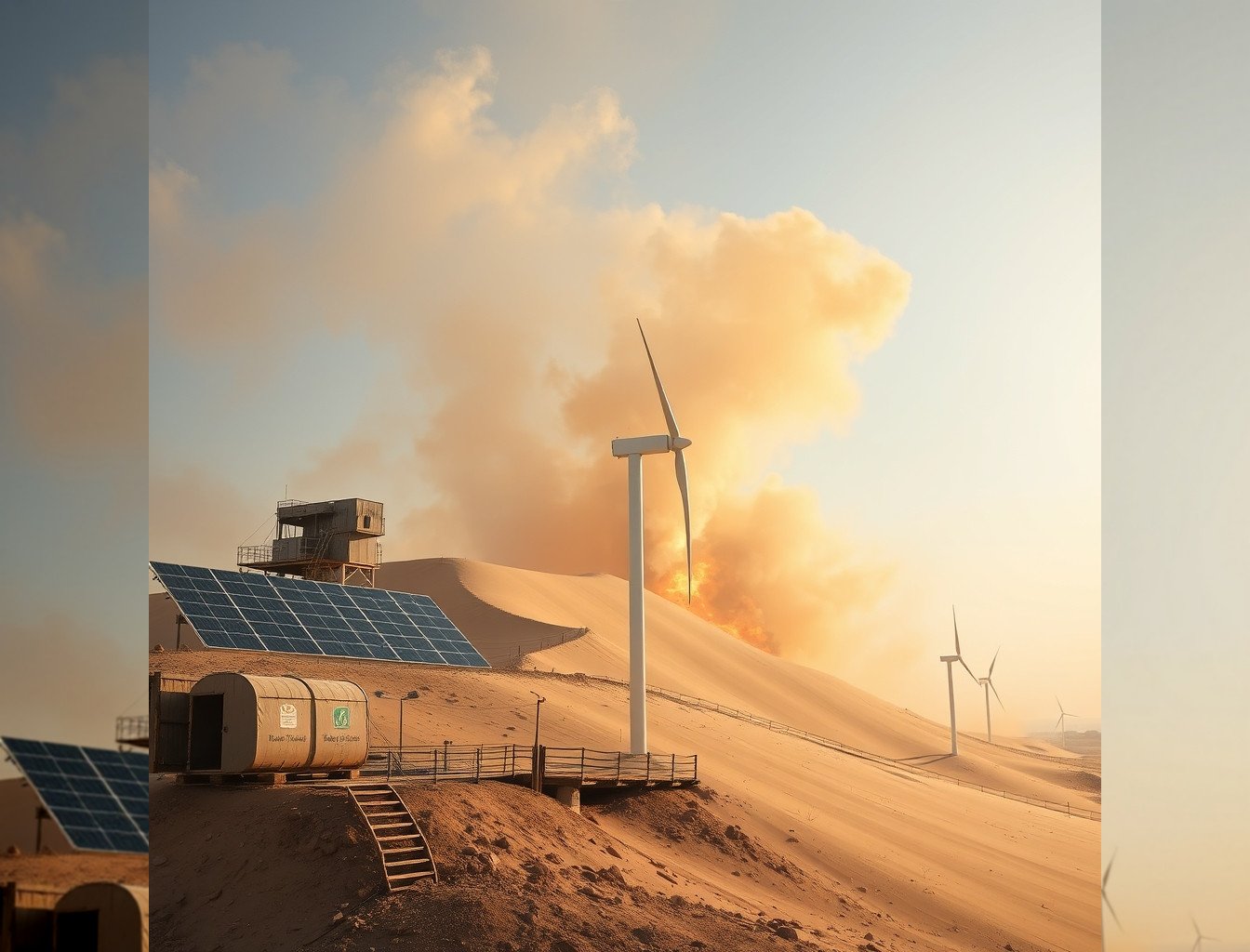
Kuwait’s recent power cuts revealed a brutal truth: oil wealth alone does not guarantee energy security. While the Gulf state exports crude, its reliance on imported gas and fragile electricity grids left industries—and even hospitals—vulnerable to outages in April 2025. The lesson for Algeria, where Sonatrach dominates the economy and renewable energy remains a niche, is stark: without diversifying supply chains and investing in domestic infrastructure, disruptions could cripple businesses and deter foreign investors.
How Kuwait’s blackouts forced a reckoning with energy diplomacy
Kuwait Petroleum Corporation (KPC) slashed crude production and refinery output in March 2026 after shipping disruptions in the Strait of Hormuz—triggered by the US-Israeli war with Iran—threatened its export routes. Yet the bigger shock came days earlier: temporary power cuts in industrial and agricultural zones on April 2, 2025. The issue wasn’t oil shortages underground but the inability to convert reserves into reliable electricity. According to middleeastmonitor.com, the outages lasted under two hours, but the message was clear: even hydrocarbon-rich nations need redundant power systems.
For Algeria, where Sonatrach’s revenues account for nearly 30% of GDP and 95% of export earnings, this is a cautionary tale. Algeria’s electricity grid, managed by Sonelgaz, has faced chronic shortages for years, forcing businesses to rely on costly generators. In 2025, industrial zones in Oran and Algiers experienced blackouts lasting up to 12 hours, pushing manufacturers to seek alternative energy sources—often at exorbitant costs. If Kuwait’s crisis shows anything, it’s that energy security is not just about production but logistics, maintenance, and backup systems.
The Strait of Hormuz effect: why Algeria’s oil trade is also at risk
Kuwait’s reduced refinery throughput in 2026 wasn’t just about domestic demand—it reflected the geopolitical fragility of global oil routes. The Strait of Hormuz, through which 40% of the world’s seaborne oil passes, became a flashpoint when Iranian UAV strikes hit KPC’s headquarters in April 2026. For Algeria, which exports 1.2 million barrels of oil daily (mostly to Europe and Asia), the Strait’s instability is a growing concern.
Algeria’s oil shipments already face delays due to aging pipelines and port bottlenecks at Arzew and Skikda. A prolonged disruption in Hormuz could force Algerian exporters to reroute tankers around the Cape of Good Hope—adding $5–10 per barrel in transport costs. Small and medium-sized businesses (SMEs) reliant on imported goods (from machinery to food) would bear the brunt, while large firms like Cevital or Sonatrach’s subsidiaries could absorb the shock. The Kuwait example proves that energy diplomacy isn’t just about OPEC quotas—it’s about securing every link in the supply chain.
Renewables as a hedge: what Algeria’s entrepreneurs can learn from Kuwait’s gas imports
Kuwait’s paradox—exporting oil while importing gas—highlights a critical gap: diversifying energy sources. The country has turned to liquefied natural gas (LNG) imports and regional power grids to offset domestic shortages. Algeria, too, imports gas (mostly from Nigeria and Qatar) to meet winter demand, but its renewable sector remains underdeveloped. Solar and wind projects, though growing, account for just 2% of the country’s energy mix—far below the 10% target set for 2030.
For Algerian entrepreneurs, this is an opportunity. The government’s 2026–2030 renewable energy plan includes incentives for private investors, such as tax breaks for solar farms and feed-in tariffs for wind projects. Yet progress is slow: bureaucracy and grid connection delays have deterred many. Kuwait’s experience shows that energy independence isn’t just about state-run projects—it’s about creating a market for private players. Algerian SMEs in agriculture (which consumes 30% of the country’s electricity) or manufacturing could benefit from microgrid solutions or partnerships with foreign firms already active in North African renewables.
The diaspora’s role: how Algerians abroad can pressure for change
Kuwait’s energy struggles have also exposed the limits of relying on foreign labor and expertise. The country employs hundreds of thousands of expat workers, including many from Algeria, to manage its oil and gas sectors. But when disruptions hit, local businesses and workers suffer first. For the Algerian diaspora—particularly those in France, Canada, and the Gulf—this is a wake-up call.
Many Algerian entrepreneurs in Europe operate in energy-intensive industries, from logistics to food processing. If Algeria’s grid instability worsens, supply chain costs will rise, squeezing margins. The diaspora’s financial remittances ($12 billion annually) could instead be channeled into domestic renewable projects or energy-efficient infrastructure. Pressure on Algerian policymakers to fast-track private-sector energy solutions—like Kuwait’s LNG imports—could accelerate change.
Sources
middleeastmonitor.com
Reuters (April 2025 power cuts)
Reuters (March 2026 KPC disruptions)
Key takeaway for entrepreneurs
Algeria’s oil-dependent economy is vulnerable to the same supply chain risks that hit Kuwait. Businesses should diversify energy sources—whether through solar microgrids, LNG partnerships, or renewable investments—to avoid crippling blackouts. The diaspora’s financial power could also push for faster reforms, turning Algeria’s energy challenges into a competitive edge for local entrepreneurs. Without action, rising costs and instability will erode profits for years to come.
💡 Starting a business in Algeria? GlobalStart guides you step by step: procedures, real costs, company forms (SARL, EURL, SPA) and CNRC registration.