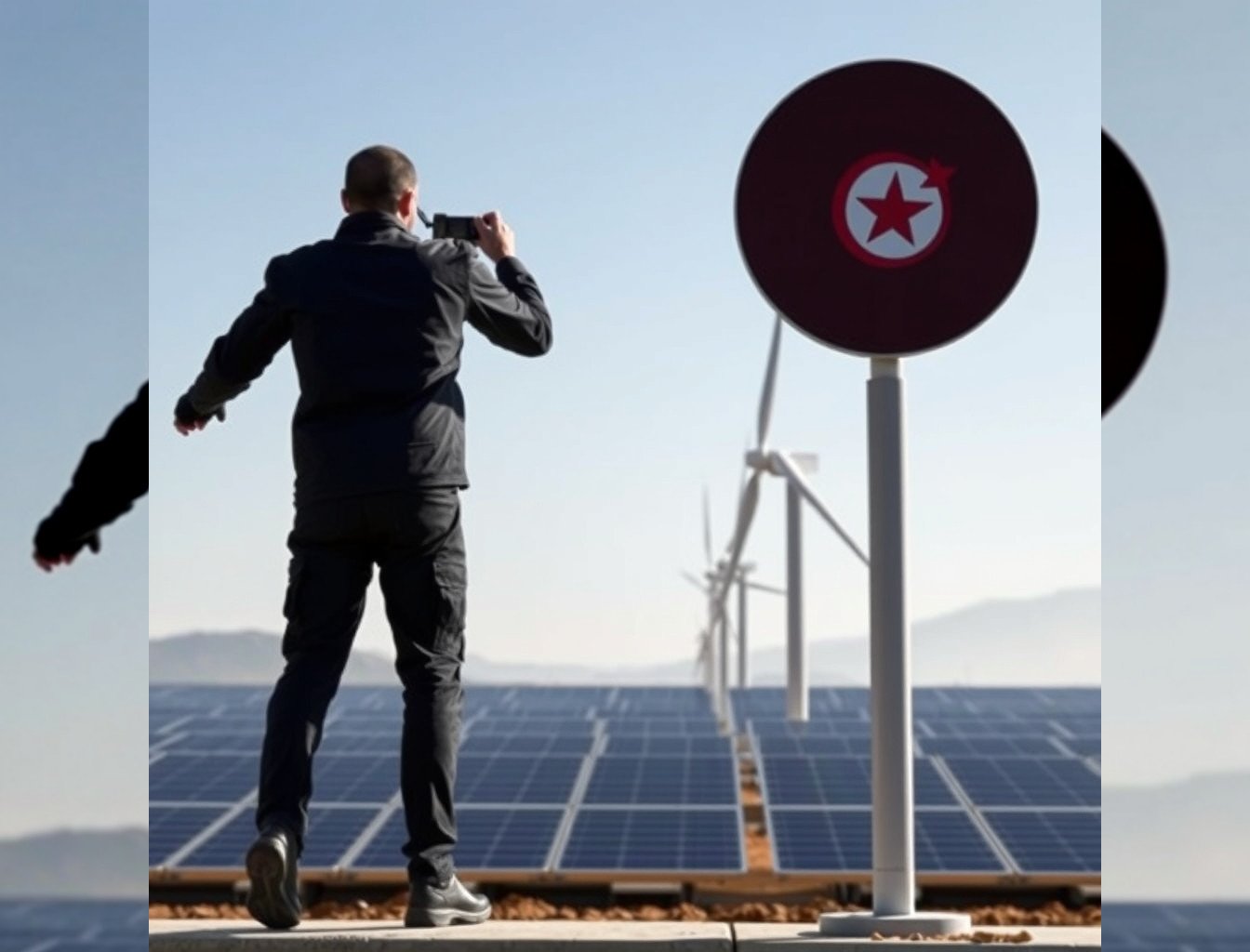
SONATRACH’s Solar Bet: Why Algeria’s 5GW Plan Means More Than Just Watts
Algeria’s state energy giant SONATRACH has quietly accelerated plans to build 5 gigawatts (GW) of solar power by 2030—a project that could attract $10 billion in foreign investment if executed swiftly. The move comes as President Abdelmadjid Tebboune pushes to diversify Algeria’s energy mix, but entrepreneurs and the Algerian diaspora must act now to capture opportunities before competitors do.
The 5GW target—equivalent to powering 2 million Algerian homes—is part of a broader strategy to reduce reliance on hydrocarbon exports, which still account for 95% of government revenue. For business founders, this shift isn’t just about solar panels. It’s about supply chains, financing, and export markets that could redefine Algeria’s economic role.
Key projects under development:
– The 1GW Hassi R’Mel solar complex (under construction near Bechar) will be Africa’s largest when fully operational.
– Private partnerships with Masdar (UAE) and ACWA Power (Saudi Arabia) signal serious foreign interest.
– Local content rules now require 40% of solar equipment to be sourced domestically, creating demand for Algerian manufacturers.
For entrepreneurs, the question isn’t if Algeria will embrace renewables—it’s how fast they can scale.
The Diaspora’s Hidden Leverage: Why Algerians Abroad Hold the Key
The Algerian diaspora—estimated at 5 million people across Europe, the Gulf, and North America—has long been a silent financial force. Now, their capital could be the difference between Algeria’s renewable ambitions and a missed opportunity.
Three ways diaspora networks are already shaping the sector:
1. Financing gaps: Algerian investors in France, Canada, and the UAE are funneling money into local renewable startups, often through green bonds or venture capital funds. A recent $200 million fund launched by Algerian expat entrepreneurs in Dubai targets solar and wind projects.
2. Technology transfers: Diaspora engineers—many trained in Germany, France, or the US—are returning to Algeria to set up maintenance hubs for solar farms. Companies like Algerian Solar Tech (AST), founded by a former TotalEnergies engineer in Paris, now supply inverters to SONATRACH projects.
3. Export opportunities: Algeria’s solar panels and batteries could soon compete in West Africa and Europe. SONATRACH’s subsidiary, Sonelgaz, is already in talks with Morocco and Tunisia to supply renewable energy solutions.
The catch? Bureaucracy remains the biggest hurdle. Entrepreneurs report delays of 6–12 months for permits, pushing some to set up operations in Tunisia or Morocco instead.
Turkey’s Energy Gambit: A Warning for Algeria’s Renewable Race
While Algeria builds its solar capacity, Turkey is turning its energy transit routes into a full-blown trading empire—and Algerian businesses risk being left behind if they don’t adapt.
How Turkey’s model threatens Algeria’s position:
– Network power: Turkey doesn’t just transport energy—it resells, re-exports, and finances it. Its TANAP pipeline (carrying Azerbaijani gas) now includes liquefaction plants for European markets.
– Private sector dominance: While SONATRACH controls 90% of Algeria’s energy, Turkey’s private companies (like Botas and TPAO) dominate gas trading, logistics, and even electricity arbitrage across the Mediterranean.
– Diaspora advantage: Turkish businesses in Europe and the US act as bridge investors, securing deals Algeria’s state-run entities can’t match.
For Algeria, the lesson is clear: To compete, it must open its energy market to private players—fast. Recent reforms allowing foreign ownership in renewables (up to 49%) are a start, but more flexibility is needed to attract the kind of agile investors Turkey has lured.
The risk? If Algeria doesn’t streamline contracts and reduce red tape, Turkish and European firms will buy into Algerian projects—then export the profits without creating local jobs.
Key takeaway for entrepreneurs
Algeria’s renewable push is real, but the window for entrepreneurs to lead—not just follow—is narrowing. Diaspora investors with technical expertise should push for faster permits and clearer tax breaks for green startups. Local manufacturers must scale up now to meet SONATRACH’s 40% local content rule before foreign firms dominate supply chains. And exporters should target West African markets—where demand for Algerian solar tech is rising—before Turkey or China fill the gap.
The $10 billion opportunity is there. But only if Algeria moves from state-led projects to a private-sector-driven energy revolution.
Sources
Source name
💡 Starting a business in Algeria? GlobalStart guides you step by step: procedures, real costs, company forms (SARL, EURL, SPA) and CNRC registration.