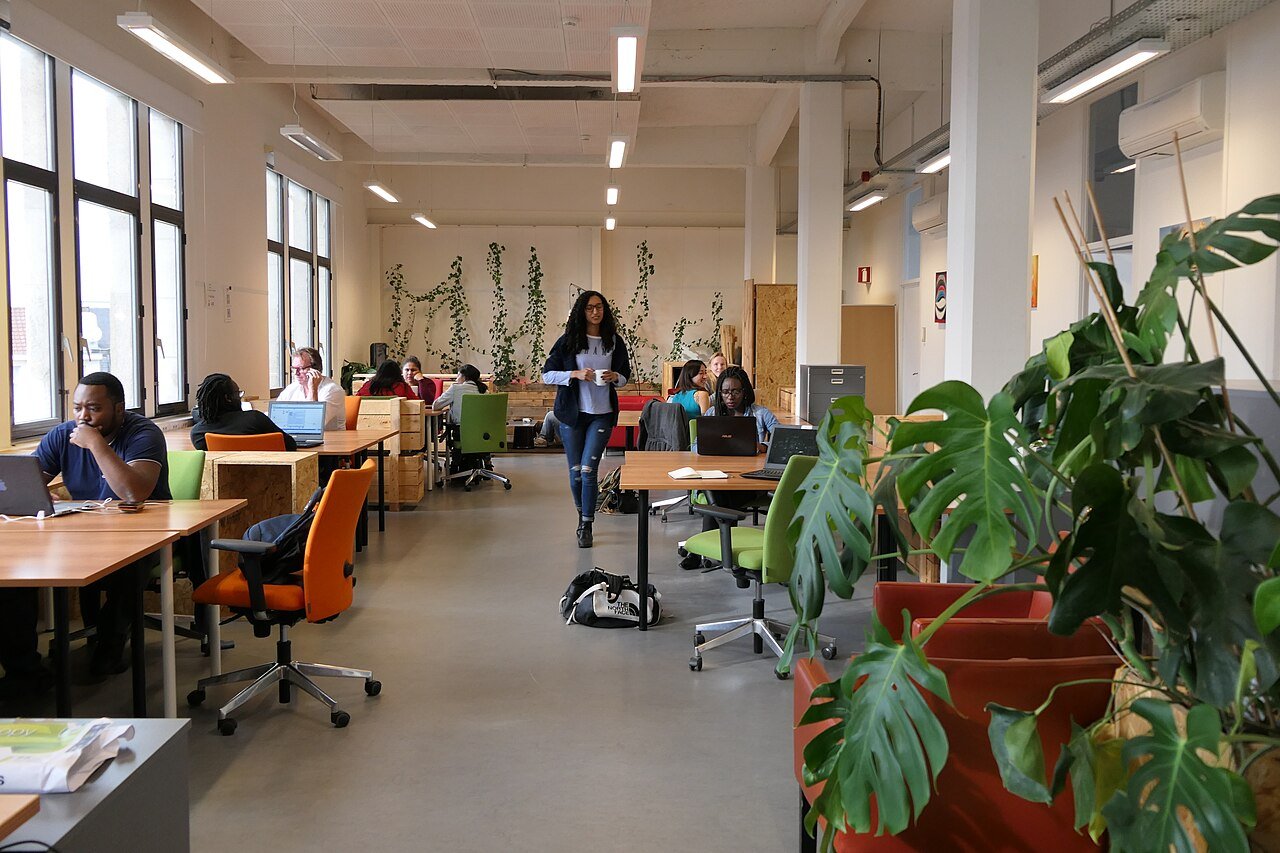
Start-up funding expands, foreign investors advance
Separately, South Africa’s E Squared Investments reported deploying R300 million (≈ $16.2 million) into start-ups in 2025, bringing its lifetime portfolio to R1.37 billion (≈ $74 million). The firm did not specify Algerian investments but confirmed interest in North African markets.
Blockchain incubator Lisk announced a $15 million fund for Web3 start-ups. The fund targets projects with organic growth, defined as user acquisition without paid marketing. Lisk operates in Algeria through partnerships with local accelerators.
These moves follow the 2023 creation of Algeria’s National Fund for Start-ups (FNS), which has disbursed DZD 2.4 billion (≈ $17.5 million) to 187 companies. FNS requires 60% of funds to be spent on local suppliers.
Manufacturing and energy attract foreign capital
Algeria also laid the foundation for its third tire plant. The $250 million facility in Sétif will produce 1.2 million tires annually, targeting domestic and African markets. The project is a joint venture between Algeria’s SNVI and China’s Linglong Tire.
In energy, Germany signed a hydrogen cooperation agreement with Algeria. The deal includes pilot projects for green hydrogen production, with a target of 500 MW capacity by 2030. Algeria aims to supply 10% of Europe’s hydrogen demand by 2040. The country’s solar potential is estimated at 14 GW, with 3 GW already installed.
These investments align with Algeria’s 2023-2027 industrial strategy, which allocates DZD 5 trillion (≈ $36.5 billion) to diversify the economy. The strategy prioritizes automotive, pharmaceuticals, and renewables.
Hydrocarbons law reform targets foreign partners
The reforms follow a 2023 decline in foreign direct investment (FDI) in hydrocarbons, which fell to $1.2 billion from $1.8 billion in 2022. Algeria’s proven gas reserves stand at 2.4 trillion cubic meters, with shale gas reserves estimated at 20 trillion cubic meters. Production reached 102 billion cubic meters in 2024, up 3% from 2023.
Sonatrach, the state-owned energy company, plans to invest $40 billion in hydrocarbons by 2027. The company seeks partners for 10 new exploration blocks, including five in the Berkine Basin.
Regional stability shapes business environment
Tensions with Mali escalated after Algeria accused Malian forces of violating its airspace. The incident follows Mali’s 2023 decision to expel Algerian diplomats. Algeria hosts 12,000 Malian refugees and maintains a $50 million annual aid program for the Sahel.
These developments coincide with Algeria’s push to position itself as a regional energy hub. The country supplies 11% of Europe’s gas via the Trans-Mediterranean pipeline. Algeria’s non-intervention policy remains official, but the government has increased military spending by 12% in 2025, reaching DZD 1.8 trillion (≈ $13.1 billion).
Political and regulatory shifts impact business climate
The appointment follows parliamentary elections in June 2024, where the ruling National Liberation Front (FLN) lost 42 seats but retained a majority. Voter turnout was 30.2%, the lowest since independence. The FLN now holds 98 of 407 seats.
Political parties continue to align on the Western Sahara issue. Algeria supports the Polisario Front’s claim to independence. The US recognized Morocco’s sovereignty over Western Sahara in 2020, leading to a diplomatic dispute with Algeria. Trade between Algeria and Morocco remains suspended since 2021.
Business registry and investor outreach expand
The government launched a campaign to attract Tanzanian investors. Algeria offers tax holidays of up to 10 years for projects in agriculture, pharmaceuticals, and renewable energy. Tanzania is Algeria’s third-largest trading partner in East Africa, with bilateral trade reaching $120 million in 2023.
Investor skepticism persists. A 2024 survey by the Algerian Business Leaders Forum found that 68% of foreign investors cite bureaucracy as the main obstacle. The government has pledged to reduce the time to start a business from 14 days to 7 days by 2026.
Cultural sectors gain infrastructure, face funding gaps
Archaeological sites attracted government attention. The Ministry of Culture allocated DZD 1.2 billion (≈ $8.7 million) to restore Timgad, a Roman city in Batna. The site received 150,000 visitors in 2023, generating DZD 45 million (≈ $327,000) in revenue. Tourism contributes 2.5% to Algeria’s GDP, compared to 8.5% in Morocco.
Algeria-France relations remain strained. France’s 2024 budget includes €10 million for cultural projects in Algeria, down from €15 million in 2023. The two countries have not signed a new cooperation agreement since 2012. Trade between Algeria and France reached €8.2 billion in 2023, with France importing €5.1 billion in hydrocarbons.
Balance of the week
Political changes included a new prime minister and a continued focus on regional stability. Business registrations rose, supported by tax incentives. Cultural sectors saw infrastructure investments but remain underfunded compared to regional peers.
Key takeaway for entrepreneurs
Algeria’s industrial strategy offers tax exemptions and local sourcing requirements for automotive and renewable energy projects. Hydrocarbons law reforms reduce state participation thresholds, improving access for foreign partners. Start-up funding is available through multiple channels, but bureaucratic delays remain a risk. Regional instability in the Sahel may disrupt supply chains for businesses reliant on cross-border trade.
Sources
- Media Stellantis
- RFI
- dailynews.co.tz
- Global Finance Magazine
- tech dot africa
- Tech In Africa
💡 Starting a business in Algeria? GlobalStart guides you step by step: procedures, real costs, company forms (SARL, EURL, SPA) and CNRC registration.